



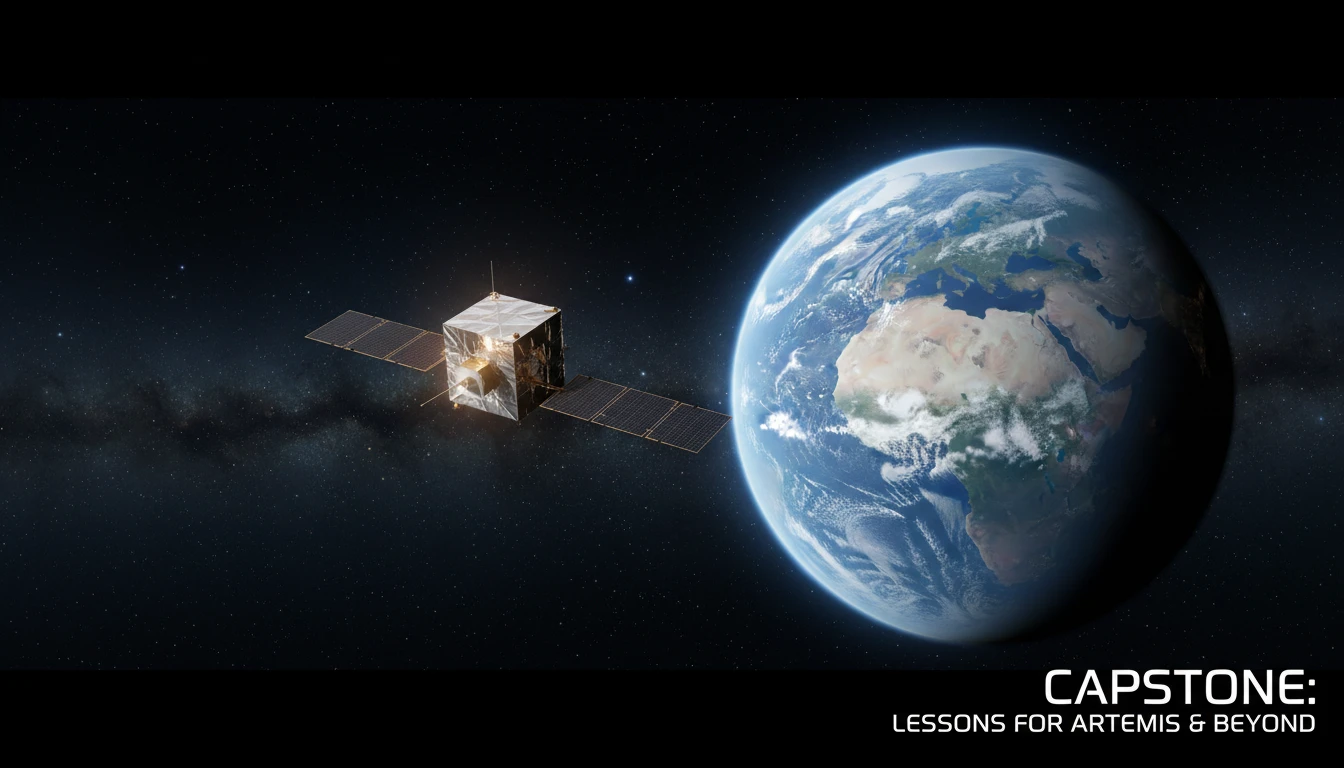


Meet CAPSTONE, The Little Spacecraft That Could
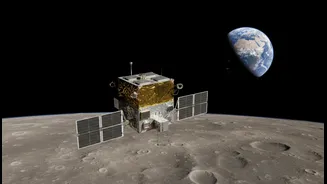
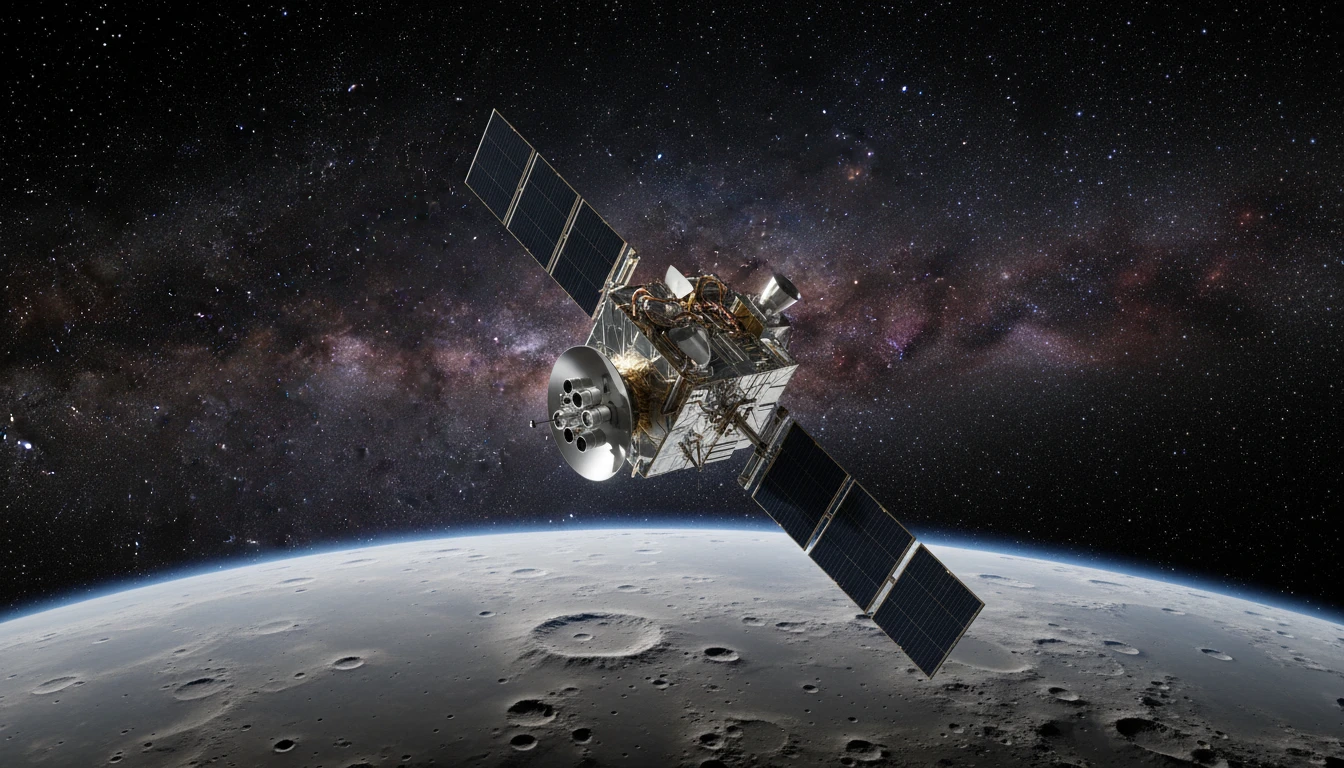
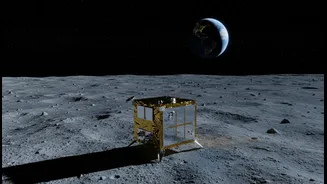
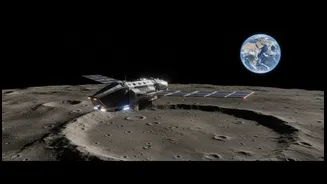
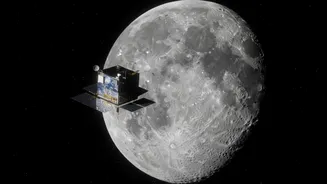
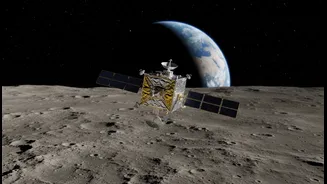
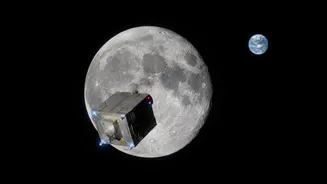
The mission, officially named the Cislunar Autonomous Positioning System Technology Operations and Navigation Experiment (CAPSTONE), was a trailblazer. Launched in June 2022, this relatively low-cost CubeSat had a monumental task: to test a unique and highly
efficient lunar orbit, proving it could work for future missions. Owned and operated by the company Advanced Space for NASA, CAPSTONE became the first-ever commercial mission to operate at the Moon. After a four-year mission that exceeded all its primary goals, NASA's official activities with the spacecraft concluded in June 2026, marking a major success for both the agency and its commercial partners.
The 'GPS' and 'Expressway' for the Moon
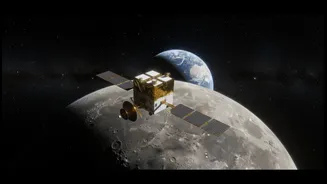
CAPSTONE had two main jobs. First, it had to prove the stability of a special path around the Moon called a Near-Rectilinear Halo Orbit (NRHO). Think of it as a long, looping expressway that requires minimal fuel to maintain, balanced perfectly between the gravity of the Earth and Moon. This is the exact orbit planned for the future Gateway lunar outpost, a key piece of the Artemis program. Second, the mission tested a groundbreaking navigation technology called the Cislunar Autonomous Positioning System (CAPS). This system allows spacecraft to determine their own position by communicating with other lunar orbiters, like NASA's Lunar Reconnaissance Orbiter, without needing constant instructions from Earth. Essentially, it's the beginning of a GPS-like network for the Moon.
Why This Mission is a 'Landmark'
Being the first to fly in this complex orbit is a landmark achievement in itself. CAPSTONE successfully validated that the NRHO is as stable and efficient as computer models predicted, significantly reducing risks for future, more expensive missions. The mission also demonstrated that autonomous, software-driven navigation is possible in deep space. This is crucial for managing the expected increase in traffic around the Moon, as more countries and companies set their sights on our celestial neighbour. By proving these technologies work on a smaller, more affordable scale, CAPSTONE has shown that powerful deep-space exploration doesn't always require a blockbuster budget.
Paving the Way for Artemis and Beyond
Every piece of data sent back by CAPSTONE directly feeds into NASA's Artemis program, which aims to establish a sustained human presence on and around the Moon. By proving the viability of the NRHO, CAPSTONE has given mission planners confidence in the orbital mechanics for the Gateway station, which will serve as a staging point for lunar landings. The successful test of its autonomous navigation software means future spacecraft, including crewed missions, can operate more independently and safely. This reduces the reliance on the limited number of deep space communication antennas on Earth, freeing them up for critical tasks. In short, CAPSTONE has served as the essential pathfinder, testing the route and the tools before astronauts follow.
A Successful End and a New Beginning
While NASA has concluded its direct involvement, the CAPSTONE spacecraft isn't done yet. Its owner, Advanced Space, will continue to operate the craft as a testbed for developing new technologies. The success of its extended mission proved that hardware already in space can be repurposed with new software, a cost-effective strategy for future exploration. The mission has transformed from a pathfinder into a permanent fixture in the lunar environment—a small but mighty research lab in orbit. Its legacy is a proven orbital highway and a new set of navigation tools that will underpin the next generation of exploration, not just of the Moon, but eventually Mars and deeper into the solar system.