




The Soul of Tradition: Bonedi Bari Pujas
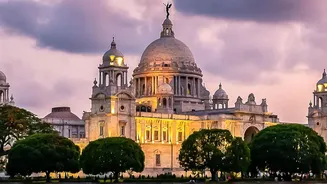
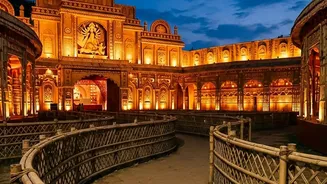
Long before the first community pandal was ever erected, Durga Puja was an intimate affair, celebrated within the grand courtyards of Kolkata’s aristocratic families. These are the Bonedi Baris—ancestral mansions of former zamindars (landowners) and wealthy
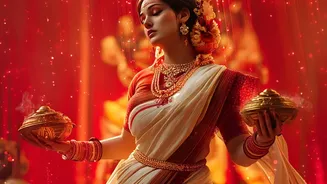
merchants—where the festival’s soul is preserved in centuries-old traditions. Stepping into a Bonedi Bari during Puja is like travelling back in time. The atmosphere is not of a public spectacle but of a sacred family gathering. Here, the focus is on unwavering ritual, with pujas performed according to ancient family manuscripts. The idols, often crafted in the traditional 'ek-chala' style (where all deities are under a single arch), are adorned with exquisite 'daaker saaj' (beaten silver or foil) ornamentation. The experience is personal, serene, and deeply spiritual, offering a glimpse into the very origins of the festival in the city.
A Legacy of the Landed Gentry
The history of Bonedi Bari pujas is the history of Kolkata itself. The oldest recorded family puja, that of the Sabarna Roy Choudhury family, dates back to 1610, predating the city's official founding. In the 18th and 19th centuries, these celebrations became grand displays of wealth and status. The puja hosted by Raja Nabakrishna Deb at his Shobhabazar Rajbari in 1757, following the Battle of Plassey, famously included British officials like Robert Clive as guests, turning a religious ceremony into a significant social event. These pujas were initially exclusive, but over time, they opened their gates, allowing the public to witness the age-old customs that define Bengal’s aristocratic past. Many of these families, like those of Jorasanko and Pathuriaghata, continue their traditions today, each with unique rituals passed down through generations.
The Spectacle of Modernity: Thematic Pandals
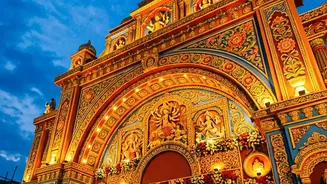
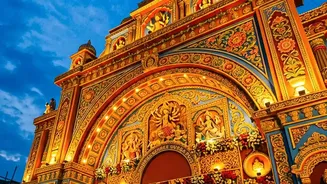
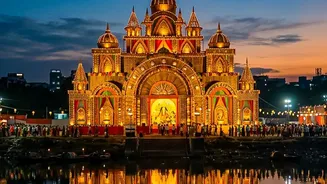
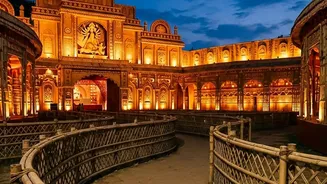
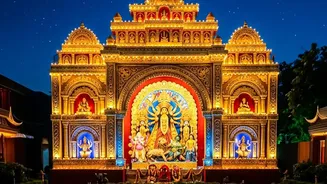
In stark contrast to the quiet reverence of the Bonedi Baris is the explosive creativity of the 'sarbojanin' or community pandals. What began in the early 20th century as simple neighbourhood gatherings has morphed into the world's largest public art festival. Today, thousands of pandals transform Kolkata's streets into a massive, open-air gallery. These temporary structures are no longer just shelters for the idols; they are immersive, thematic installations. Each year, committees compete to create the most innovative and awe-inspiring pandal, drawing millions of 'pandal-hoppers' who walk the city streets day and night. The scale is monumental, the energy is electric, and the experience is one of collective celebration and sensory overload, driven by dazzling lights, the beats of the 'dhaak' (drum), and the massive crowds.
Artistry Without Limits
The modern pandal is a canvas for boundless imagination. The 'theme puja' movement, which gained momentum in the 1980s and '90s, revolutionised the festival. Artists and designers began using pandals to recreate everything from the Vatican City to scenes from Indian mythology, or to make powerful statements on social and environmental issues. This has fostered a massive creative industry, with artisans, sculptors, and lighting designers working for months to bring these ambitious concepts to life. Technology now plays a huge role, with multimedia elements and cut-edge techniques creating spellbinding visual effects. The focus has shifted from just the idol to the entire environment, making the pandal itself a star attraction and a testament to contemporary artistic expression.
Embracing Both Worlds for the Full Experience
A visitor to Kolkata during Durga Puja is presented with a beautiful choice: the deep-rooted heritage of the old mansions or the dazzling innovation of the public squares. But the true magic of the festival lies in experiencing both. They are not competing traditions but two sides of the same coin, each enriching the other. The Bonedi Baris offer context, a connection to the festival's spiritual core. The pandals offer spectacle, a celebration of community and modern artistry. To understand Durga Puja in its entirety, one must spend a quiet morning in the colonnaded courtyard of a North Kolkata Rajbari and an electrifying evening navigating the labyrinthine queues of a South Kolkata theme pandal. It is this duality that makes Kolkata’s Durga Puja a UNESCO-recognized Intangible Cultural Heritage of Humanity.