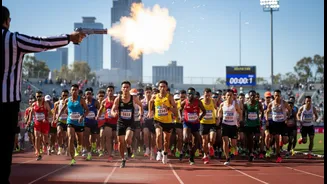









The Allure of a Fast Start
The opening kilometers of a marathon are a sensory overload. The roar of the crowd, the tightly packed runners, and months of pent-up energy create a powerful cocktail that often leads to a common, critical error: starting too fast. Many runners, especially
less experienced ones, fall into the trap of thinking they can “bank” time while their legs are fresh. This strategy feels logical in the moment, but physiology and a growing body of evidence from large-scale race analyses show it’s a recipe for a painful second half. The excitement makes your goal pace feel deceptively easy, but this early surge comes at a steep, often unseen, cost later in the race.
The Physiological Price of Early Speed
Going out too fast isn't just a tactical mistake; it triggers a cascade of negative physiological responses. When you push beyond a comfortable aerobic effort in the initial stages, your body burns through its limited and most accessible fuel source—glycogen—at an accelerated rate. This forces an oxygen debt that your body struggles to repay for the rest of the race. You accumulate fatigue-inducing byproducts like lactate faster than your body can clear them, and your core body temperature begins to climb prematurely. Research analysing millions of recreational runners has confirmed this, showing a strong correlation between a fast start and a significant slowdown in the final 10 kilometers. Put simply, the seconds you gain in the first 5K can cost you whole minutes, or more, in the final 5K.
A Smarter Strategy: The Conservative Opening
So, what does the research suggest is the optimal approach? The consensus is a conservative start. This doesn’t mean jogging, but rather intentionally running the first few kilometers slightly slower than your overall goal pace. Many coaches and pacing models now recommend starting anywhere from 5 to 15 seconds per mile slower than your target marathon pace for the first three to five kilometers. This controlled beginning allows your aerobic system to ramp up efficiently without creating an early oxygen debt. It conserves precious glycogen, keeps your heart rate from spiking, and sets you up to maintain a steady effort through the challenging middle miles of the race. This strategy should feel almost painfully slow at first, which is a sign you're doing it right.
Negative Splits: The Science-Backed Gold Standard
The ultimate goal of a conservative start is to enable an even split or, ideally, a negative split—running the second half of the marathon faster than the first. This isn't just a strategy for elite athletes; it's rooted in how the body best handles prolonged endurance efforts. By saving energy early on, you have the physical and mental resources to maintain or even slightly increase your effort when others are fading. Data from major marathons consistently shows that runners who execute a negative split not only achieve better finish times but also report a more positive race experience. The feeling of passing people in the final kilometers, rather than being passed, provides a powerful psychological boost when you need it most.
Putting It Into Practice
Mastering the art of the slow start doesn't happen on race day; it’s a skill honed in training. During your long runs, consciously practice beginning at a pace that feels too easy before settling into your planned rhythm. Use a GPS watch to monitor your pace in the first few kilometers and learn what that conservative effort feels like. On race day, be disciplined. Let the crowds surge ahead. Trust your training and your strategy. Remember that the marathon is a test of energy management, and the decisions you make in the first 20 minutes have an outsized impact on your final 20 minutes. A patient start is the hallmark of a smart, well-prepared marathoner.