
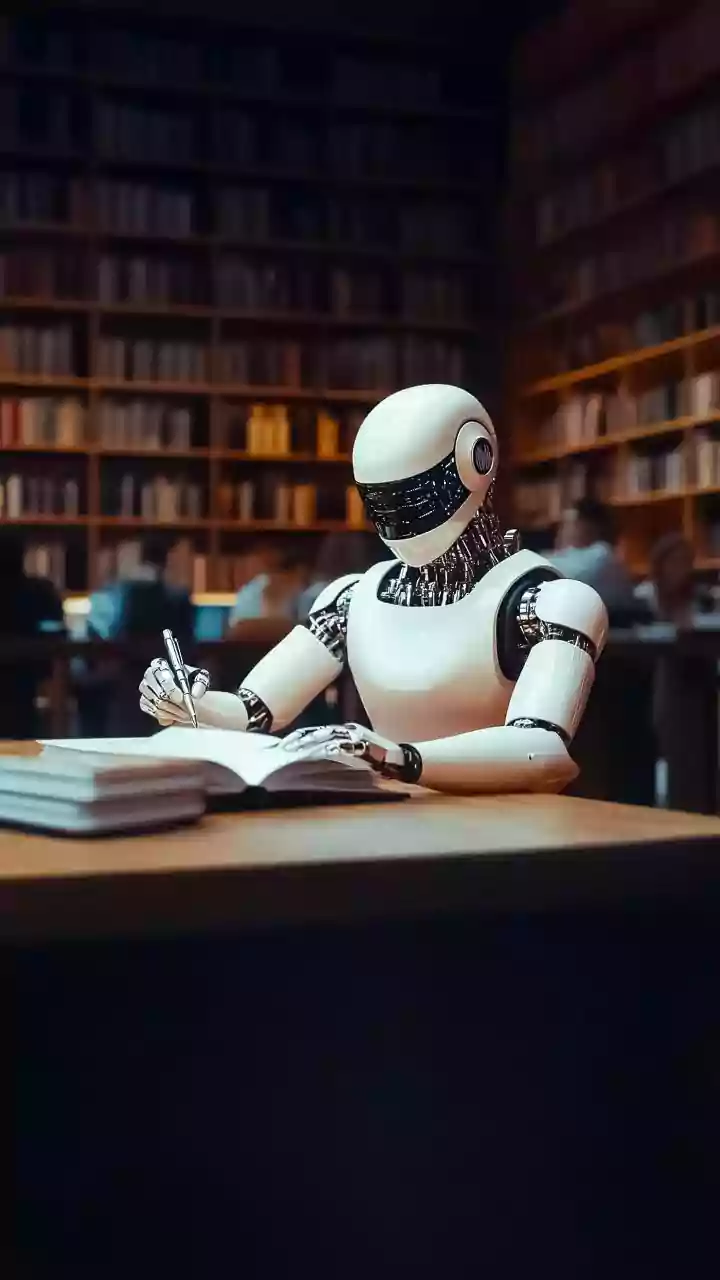







Beyond Automation to Augmentation
The initial fear surrounding AI focused on automation and job displacement. While it's true that AI is automating routine and repeatable tasks, the more profound shift is toward augmentation—a model where AI enhances human capabilities rather than replacing
them. Think of it less as an autonomous worker and more as a sophisticated co-pilot. This partnership allows humans to offload repetitive, data-heavy work and dedicate their focus to what they do best: strategic thinking, emotional intelligence, and complex problem-solving. A 2026 report noted that employees using AI are spending more time on high-value work, with many producing work they couldn't have a year ago. The consensus among leaders is clear: the most valuable skills, such as moral judgment and creativity, are irreplaceable.
The New Creative and Scientific Partner
In fields that rely on ingenuity, from software development to art, AI is becoming a powerful collaborator. Developers use AI assistants like GitHub's Copilot to write and test code, freeing them up to focus on higher-level system architecture and design. In creative industries, AI acts as a tool for ideation, helping artists, writers, and musicians brainstorm and explore new possibilities. It can analyze vast datasets to find novel connections and patterns, providing a springboard for human inspiration. This synergy doesn't diminish human creativity; it amplifies it, allowing creators to execute their vision faster and with greater fidelity. The AI is the paintbrush, not the painter.
Transforming High-Stakes Decisions in Healthcare
Nowhere is the power of human-AI collaboration more evident than in healthcare. AI algorithms can analyze medical images like X-rays and scans with incredible speed and precision, flagging anomalies that even a trained human eye might miss. This doesn't replace radiologists but serves as a powerful second opinion, enhancing diagnostic accuracy. Studies have shown that when clinicians and AI models work together on complex cases, they achieve significantly better results than either could alone. The AI handles the tireless data processing, while the doctor brings clinical expertise, empathy, and an understanding of the individual patient. This partnership is leading to earlier detection of diseases, more personalized treatment plans, and ultimately, better patient outcomes.
The Human-in-the-Loop Imperative
For this collaboration to succeed, the 'human-in-the-loop' (HITL) model is essential. This approach ensures that human oversight remains a critical part of AI systems. Humans are needed to train AI models, validate their outputs, and correct their mistakes. This is crucial for mitigating biases that may exist in training data and for handling ethical grey areas where machines lack context and judgment. More than half of respondents in one report noted that AI can produce incomplete or low-quality outputs, reinforcing the need for human supervision. Keeping humans in the loop not only improves the accuracy and reliability of AI systems but also builds trust and ensures accountability, which is especially vital in high-stakes fields like finance and healthcare.