





Why August is Prime Time for Saturn
All through August 2026, Saturn is making a grand entrance into the evening sky, becoming brighter and more prominent as it heads towards its annual “opposition” in early October. Opposition is when Earth passes directly between Saturn and the Sun. While
the peak is a little later, this entire period is a fantastic window for viewing. Throughout August, the planet rises earlier each evening, making it increasingly convenient to observe. It starts the month rising around 11 PM and by the end of August, it will be visible by 9 PM, giving you plenty of time to find it.
How to Find the Ringed Giant
Finding Saturn is straightforward this month. You don't need to be an expert to locate it. Look towards the eastern sky in the late evening. Saturn will be situated in the constellation Pisces, which isn't known for its bright stars, meaning Saturn itself will be one of the most noticeable objects in that area. It will appear as a bright, steady, yellowish point of light. Unlike twinkling stars, planets shine with a constant glow. As the night progresses, Saturn will track across the sky, reaching its highest point around midnight. Several stargazing apps can help you pinpoint its exact location in real-time if you want a digital guide.
Naked Eye, Binoculars, or Telescope?
What you see depends entirely on your equipment, but you can start with just your eyes. To the naked eye, Saturn will look like a particularly bright, non-twinkling star. It’s a great way to orient yourself and appreciate its place in the sky. If you have a pair of decent binoculars (7x50 or 10x50 are great), you'll get a better view. While you likely won’t distinguish the rings clearly, you will notice that Saturn isn’t a perfect point; it will appear as a tiny, slightly elongated oval. This is the first clue that you are looking at something special. You might even spot its largest moon, Titan, as a faint companion dot nearby.
Seeing the Rings: Your First Telescope View
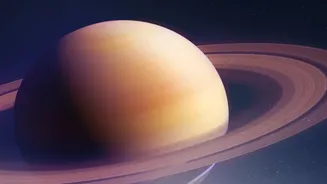
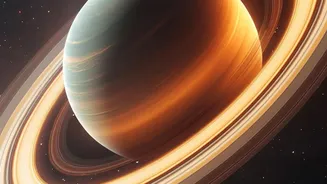
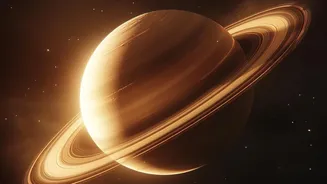
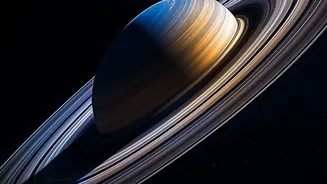
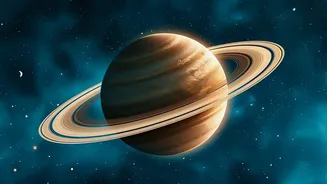
This is the moment that turns casual observers into lifelong astronomers. Seeing Saturn’s rings for the first time is an unforgettable experience. The good news is you don’t need a massive, expensive telescope. Even a small beginner's telescope with a magnification of 25x or 50x can reveal the rings as a distinct structure separate from the planet. A 4-inch or 6-inch telescope on a clear night will provide a stunning view, potentially showing the gap between the planet and the rings, and even the dark gap within the rings themselves, known as the Cassini Division. The sight is often described as a gasp-inducing moment, transforming a bright dot into a breathtaking, three-dimensional world.
Tips for a Successful Saturn Hunt
To make the most of your stargazing session, follow a few simple tips. First, try to get away from bright city lights. The darker your location, the more your eyes can pick up. Second, give your eyes time to adapt to the dark; it takes about 20 to 30 minutes to achieve full night vision. If you need a flashlight, use one with a red filter, as red light doesn't spoil your night vision as much. Third, check the weather forecast for a clear, cloudless night. Finally, patience is key. Spend time just looking and letting the details emerge. The longer you look, the more you’ll see, especially during moments when the Earth's atmosphere becomes momentarily still, granting you a perfectly sharp image.