







The Gravity of the Situation on Earth
Many of modern medicine’s most powerful drugs, from cancer therapies to autoimmune treatments, work by targeting specific proteins in the body. To design an effective drug, scientists must first understand the precise, three-dimensional structure of its
target protein. This is often done by growing the protein into a highly ordered crystal and then analyzing it with X-rays. The challenge is that on Earth, gravity interferes with this delicate process. It causes convection currents in the solution and makes the dense crystals settle, resulting in small, often-flawed structures that are difficult to analyze. This fundamental obstacle can slow down or halt the development of new medications for diseases that are currently difficult to treat.
An Orbiting Laboratory Solution
In the microgravity environment of space, the limitations of Earth-based crystallization disappear. Without the constant pull of gravity, protein molecules can assemble themselves into crystals more slowly and with greater order. The lack of sedimentation and convection allows for the growth of larger, more uniform, and higher-quality crystals than what is typically possible on the ground. Research on the International Space Station (ISS) has repeatedly demonstrated this benefit. For over two decades, experiments have shown that space-grown crystals provide clearer and more detailed structural data. This higher-resolution information is critical for structure-based drug design, allowing scientists to create more effective and targeted therapies.
The New Space Race Is Commercial
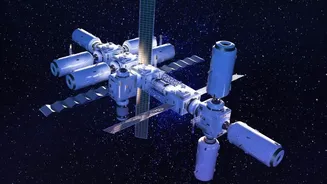
While the ISS has been a crucial platform for this research, the future of orbital manufacturing lies with private companies. A new generation of commercial players is building the infrastructure to turn this scientific promise into a viable business. Companies like Axiom Space are developing commercial space stations intended to host advanced life sciences labs, essentially creating the world's first orbital R&D parks. Others, like Varda Space Industries, are taking a different approach with unmanned, autonomous 'factory' capsules. These spacecraft are designed to launch, manufacture pharmaceutical ingredients like protein crystals in orbit, and then return the finished product to Earth for use by pharmaceutical companies. This shift marks a pivotal moment where space is no longer just a destination for exploration, but a platform for industrial production.
Breakthroughs on the Horizon
The potential applications are vast, promising to accelerate drug discovery for a range of ailments including cancer, muscular dystrophy, and autoimmune diseases. For example, Merck has used the ISS to improve the formulation of its blockbuster cancer drug, Keytruda. Experiments in microgravity helped them develop a more stable crystalline version of the drug that can be administered via a simple injection rather than a lengthy IV infusion, significantly improving the patient experience. Similarly, research on a protein associated with Duchenne Muscular Dystrophy has led to the identification of promising inhibitor compounds. These successes demonstrate a clear pathway from orbital research to tangible medical benefits on Earth.
Navigating the Challenges Ahead
Despite the immense promise, building factories in space is not without its challenges. The cost of launching materials into orbit remains high, and the logistics of manufacturing in such a remote and harsh environment are complex. Companies must design fully autonomous systems that can operate flawlessly hundreds of miles from the nearest technician. Furthermore, the process involves not just growing the crystals, but safely returning them to Earth through the extreme heat of atmospheric reentry. Varda Space Industries' successful missions, which involved growing crystals of the antiviral drug ritonavir and returning them, have served as a critical proof-of-concept, showing that these hurdles can be overcome. As launch costs continue to fall and commercial space stations become operational, the economic case for in-space manufacturing is expected to become increasingly compelling.