


Why Venus? Earth's Hellish Twin
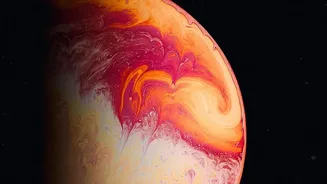
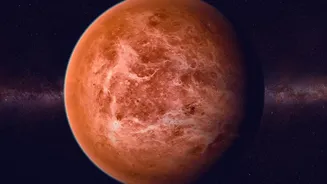
Venus is often called Earth's twin due to its similar size and mass, but the comparison ends there. The second planet from the Sun is a terrestrial nightmare, boasting surface temperatures hot enough to melt lead—around 470 degrees Celsius—and a crushing
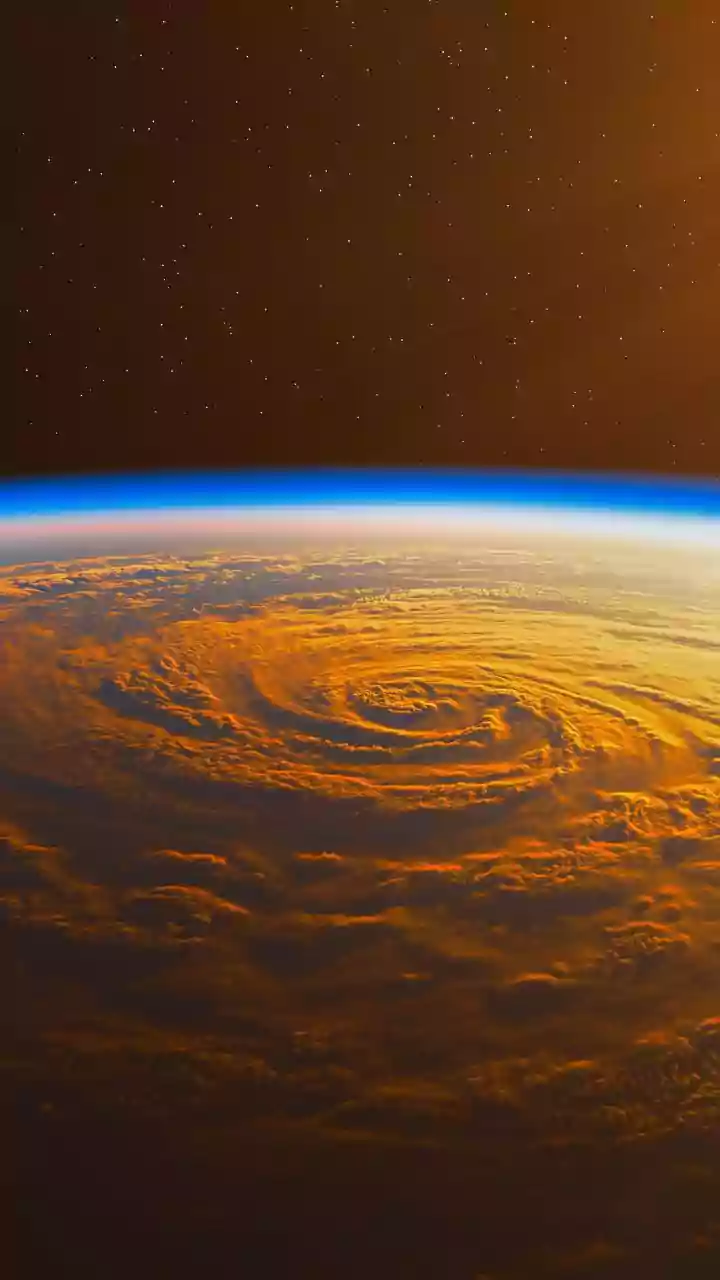
atmospheric pressure over 90 times that of Earth's. Its skies are permanently shrouded in thick clouds of corrosive sulphuric acid. Yet, it's this hostile environment that makes Venus so compelling. Scientists believe Venus may have once been more like Earth, possibly with liquid water oceans, but suffered a runaway greenhouse effect. Studying Venus is like looking at a cautionary tale for our own planet, offering invaluable insights into climate change, atmospheric dynamics, and how a once-habitable world can transform so dramatically.
Shukrayaan: India's Next Interplanetary Leap
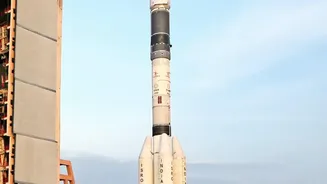
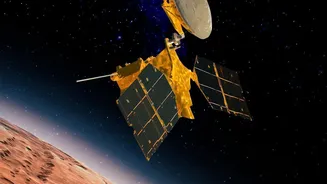
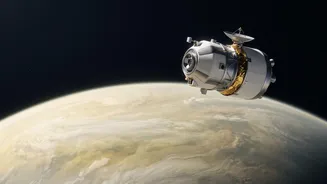
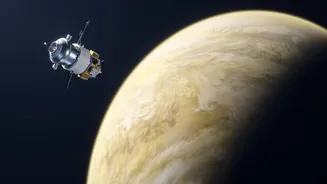
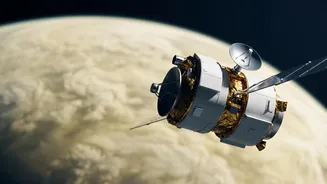
Shukrayaan, meaning 'Venus Craft' in Sanskrit, is ISRO's first dedicated mission to our planetary neighbour. Following preliminary studies that began over a decade ago, the mission aims to place a 2,500 kg orbiter into a long-term elliptical path around Venus. The launch is planned for March 2028, a date chosen to take advantage of an optimal alignment between Earth and Venus that minimises fuel consumption. Once it arrives, the spacecraft will perform detailed investigations for over four years, making it a marathon of scientific observation. The core objectives are threefold: to map the surface and subsurface, analyse the complex atmospheric chemistry, and study the interaction between the Venusian atmosphere and the constant stream of particles from the Sun, known as solar wind.
The Science Beneath the Clouds
The headline feature of Shukrayaan is its powerful suite of instruments designed to peer through the planet's opaque cloud cover. The primary instrument is a high-resolution Synthetic Aperture Radar (SAR), an advanced version of the one used on Chandrayaan-2. This radar can effectively see through the clouds day or night, creating detailed maps of surface features like volcanic hotspots and lava flows with a resolution expected to be four times greater than NASA's Magellan mission from the 1990s. For the first time ever on a Venus mission, Shukrayaan will also carry a ground-penetrating radar to study the planet's subsurface geology. Other sensors will focus on the atmospheric chemistry, aiming to understand the composition of the toxic clouds and the dynamics of its super-rotating winds, which whip around the planet much faster than the planet itself spins.
A Formidable Challenge
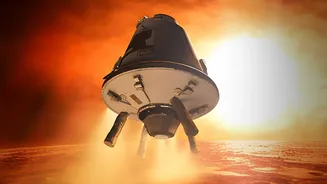
Sending a mission to Venus is one of the most difficult tasks in planetary exploration. The extreme heat, crushing pressure, and corrosive acid clouds create an environment where spacecraft struggle to survive. The longest any probe has ever lasted on the Venusian surface is just over two hours, a record set by the Soviet Venera 13 in 1981. Even for an orbiter like Shukrayaan, the challenges are immense. The planet's proximity to the Sun means the spacecraft must endure intense solar radiation, which can damage sensitive electronics and disrupt communications. ISRO will also attempt a complex manoeuvre called aerobraking for the first time, using the friction of Venus's upper atmosphere to gradually lower the orbiter's altitude into its final scientific orbit, a fuel-efficient but technically demanding process.
India Joins a New Race to Venus
ISRO is not alone in its renewed interest in Venus. This mission positions India as a key player in a new global wave of Venus exploration. NASA has its own missions planned, VERITAS and DAVINCI+, though they have faced budget-related delays. The European Space Agency (ESA) also has a mission called EnVision on the horizon. Shukrayaan will feature international collaboration, with a Swedish payload to study the solar wind's interaction with the Venusian ionosphere and a collaborative instrument from Russia to analyse atmospheric gases. By successfully executing this mission, India will not only unlock secrets about Earth's twin but also solidify its status as a major force in deep space exploration, continuing the proud legacy of Mangalyaan and Chandrayaan.