



The Vision: Hydrogen for Heritage
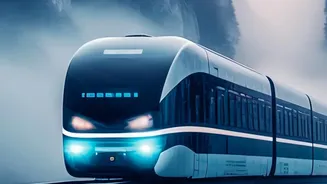
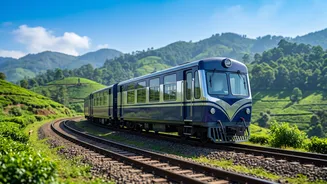
Indian Railways has launched a forward-thinking project named 'Hydrogen for Heritage'. The goal is to run 35 hydrogen-powered trains on some of the country's most scenic and historically significant routes. These include UNESCO World Heritage sites like
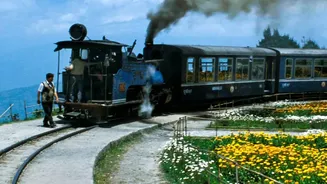
the Kalka-Shimla Railway, the Darjeeling Himalayan Railway, and the Nilgiri Mountain Railway, among others. The initiative aims to replace ageing diesel locomotives on these ecologically sensitive corridors, preserving their charm while eliminating carbon emissions. This aligns with India's larger goal of achieving Net Zero carbon emissions by 2070 and decarbonizing its entire rail network by 2030. By retrofitting old train rakes with new technology, the project strikes a unique balance between preserving the past and building a sustainable future.
How the Technology Works
So, how does a train run on hydrogen? It's essentially an electric train that carries its own power plant. The core of the system is a hydrogen fuel cell. Inside this cell, hydrogen stored in high-pressure tanks on the train reacts with oxygen taken from the air. This electrochemical reaction generates electricity to power the train's motors. The only by-products are heat and water vapour, making it a zero-emission mode of transport. To make the system more efficient, any excess electricity generated is stored in onboard batteries. This stored energy provides an extra boost when the train needs more power, like when accelerating or climbing steep gradients, a common feature of India's heritage hill railways.
The Trials and Progress
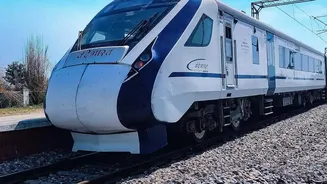
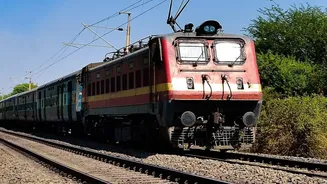
The first phase of this ambitious plan involves a pilot project on the 89-km Jind-Sonipat section of the Northern Railway. A Diesel Electric Multiple Unit (DEMU) rake was retrofitted with a hydrogen fuel cell system by Medha Servo Drives. India's first indigenous hydrogen train was flagged off on this route on July 17, 2026. This prototype has undergone successful trials, reaching speeds of 120 kmph, with plans for regular operation at up to 110 kmph. The experience gained from the Jind-Sonipat pilot, including the establishment of hydrogen production and refuelling infrastructure, will be crucial for the wider rollout on the more challenging heritage routes.
Why This Matters for Heritage Routes
The application of hydrogen technology on heritage lines is particularly significant. These narrow-gauge tracks, with their sharp curves and steep gradients, often run through pristine natural environments. Replacing diesel engines with silent, non-polluting hydrogen trains will drastically reduce the carbon footprint and noise pollution, enhancing the tourist experience. Furthermore, electrifying these routes with overhead lines is often impractical and could compromise their heritage status, as noted in feasibility studies for the Kalka-Shimla line. Hydrogen trains offer a clean alternative without requiring extensive and visually disruptive infrastructure, thus protecting the aesthetic and historical integrity of these beloved railways.
Challenges on the Path to a Green Future
Despite the promise, the transition is not without its hurdles. The initial costs are substantial, with an estimated budget of ₹80 crore per train and an additional ₹70 crore per route for ground infrastructure. While costs are expected to decrease over time, the current expense of producing 'green' hydrogen (made using renewable energy) remains high. Developing a comprehensive hydrogen production, storage, and refuelling network across remote and hilly terrains presents a significant logistical challenge. There are also technical complexities in retrofitting modern fuel cell systems onto vintage rolling stock and ensuring absolute safety in handling and storing highly flammable hydrogen gas onboard.