




The Science of the Sizzle
The magic of a great crust boils down to chemistry and physics. When the surface of a food gets hot and dry, two key reactions occur: the Maillard reaction and caramelization. The Maillard reaction, which kicks in around 140°C, is a complex process between
amino acids and sugars that creates hundreds of new, savoury flavour compounds and a deep golden-brown colour. Caramelization happens at slightly higher temperatures (around 160°C) and involves only the breakdown of sugars, contributing sweet, nutty notes. For these reactions to happen efficiently, the surface must be dry. Water can't get hotter than its boiling point (100°C), which is too low for browning to occur. So, the first goal is to drive moisture away from the surface as quickly as possible. This allows the temperature to climb high enough to create that flavourful, crispy layer.
Managing the Moisture Gradient
Creating textural contrast is a game of managing moisture. You want a dry exterior to encourage browning, but a moist interior to prevent the food from becoming tough and dry. This difference between the dry outside and wet inside is called the moisture gradient. For foods like roasted meats or vegetables, achieving this starts with a simple step: patting the surface completely dry with paper towels before cooking. Don't crowd the pan, as this traps steam released by the food, effectively lowering the surface temperature and preventing a good sear. High initial heat is also your friend; it helps evaporate surface moisture quickly before the inside has a chance to overcook.
The Paradox of Steam in Baking
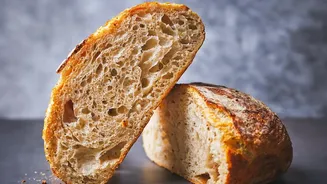
When it comes to baking bread, the process seems contradictory. To get a shatteringly crisp crust, you first need to introduce moisture. Professional bakers inject steam into their ovens for the first part of the bake. At home, this is often replicated by baking inside a covered Dutch oven, which traps the steam released from the dough itself. This initial steam keeps the surface of the dough moist and flexible, delaying crust formation. This allows the loaf to expand to its full potential, an effect known as 'oven spring'. After about 15-20 minutes, the lid is removed. This releases the steam, allowing the now-dry surface to reach the high temperatures needed for the Maillard reaction to create a thin, glossy, and intensely crispy crust.
Application in Frying
Frying is the most extreme example of creating this contrast. When food is submerged in hot oil, typically at 175–205°C, the surface moisture instantly and violently flashes into steam. This rapid dehydration creates a porous, dry structure on the outside. This newly formed crust acts as a barrier, slowing down further moisture loss from the interior and limiting how much oil is absorbed. The result is the classic 'crispy outside, juicy inside' effect that defines great fried food. If the oil is too cool, the crust forms too slowly, allowing more moisture to escape and more oil to seep in, leading to a soggy, greasy result.