


Understanding the Enemy: What Is Root Rot?
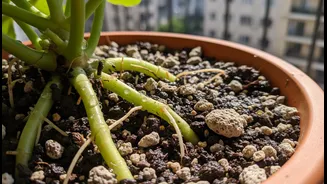
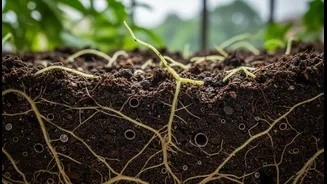
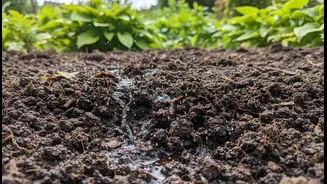
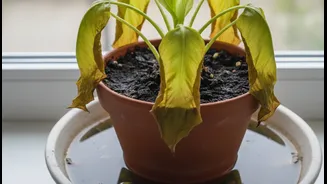
Root rot is exactly what it sounds like: the decay of a plant's root system. It typically starts when soil becomes waterlogged from overwatering or poor drainage, cutting off oxygen supply to the roots. Without oxygen, roots suffocate and can no longer
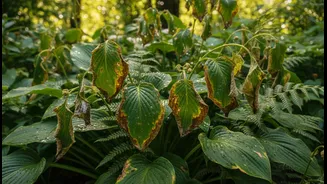
absorb water or nutrients. This creates a perfect environment for fungi and bacteria to thrive, turning healthy, firm, white roots into a mushy, brown or black mess. The first signs you might notice above the soil are yellowing leaves, wilting despite moist soil, and a general lack of vigour.
The Balcony Pot Problem
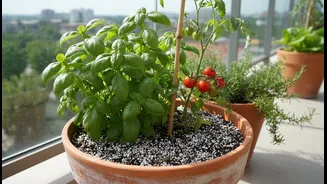
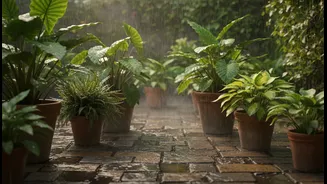
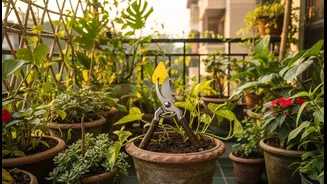
Unlike plants in the ground, which have endless space for excess water to drain away, balcony plants are confined to containers. Regular garden soil, which works fine in a flowerbed, becomes dense and compacted inside a pot. During prolonged heavy rains, this compacted soil holds onto water like a sponge, leaving no air pockets. The drainage hole at the bottom of the pot is often not enough to prevent the entire soil mass from becoming saturated. This makes balcony plants particularly vulnerable to root rot during wet seasons.
The Hero of Aeration: Perlite
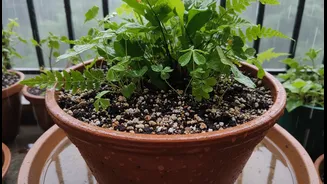
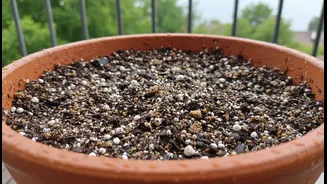
If you've ever noticed small, white, lightweight specks in commercial potting soil, you've seen perlite. Perlite is a volcanic glass that is heated until it expands, creating an incredibly porous and lightweight material. Its primary job in a potting mix is not to provide nutrients but to improve soil structure. By adding perlite, you are creating thousands of tiny air pockets within the soil. These pockets do two crucial things: they allow excess water to drain through quickly, and they ensure that roots have access to the oxygen they need to breathe, even when the soil is moist.
The Heavy Lifter: Coarse Sand
While perlite creates air pockets, coarse sand creates drainage channels. It's important to stress the word 'coarse'. Fine sand, like play sand or beach sand, has tiny, rounded particles that will actually fill in air gaps and make your soil more compact. Beach sand also contains harmful salt. Horticultural sand, or coarse river sand, has larger, sharper particles. When mixed into soil, these particles create pathways for water to escape the pot quickly, preventing it from pooling around the roots. Together, perlite and coarse sand form a powerful duo against waterlogging.
The Perfect Monsoon-Ready Potting Mix
Creating your own rain-proof soil mix is simple and gives you complete control. A reliable recipe for most balcony plants in India is to combine your ingredients by volume, not weight. Start with a base of 40% garden soil and 30% compost or vermicompost for nutrients. The crucial part is the remaining 30%: make this a mix of perlite and coarse sand. For plants that are very sensitive to moisture, like succulents, you can increase the perlite and sand content. For most flowering plants and vegetables, a 15% perlite and 15% sand mix works well. Simply combine all ingredients in a large tub before filling your pots.
Beyond the Soil: Extra Protection Tips
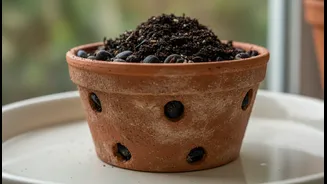
While the right soil mix is your best defence, a few other habits can help. First, ensure every pot has adequate drainage holes; if not, drill more. Second, consider placing pots on 'pot feet' or bricks to elevate them slightly off the ground. This small gap prevents water from pooling underneath and blocking the drainage hole. Also, be mindful not to add to the problem by watering your plants when the soil is already saturated from the rain. Finally, good air circulation between pots can help soil dry out faster, so avoid overcrowding your balcony space.