



The Sun’s Unseen Temper
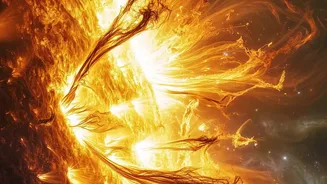
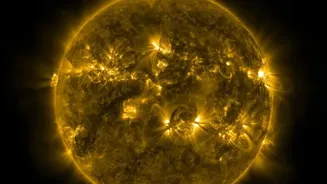
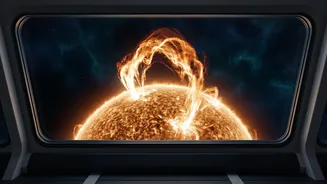
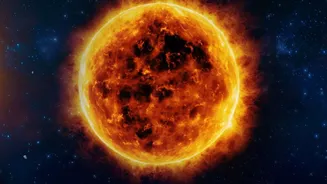
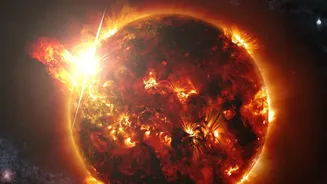
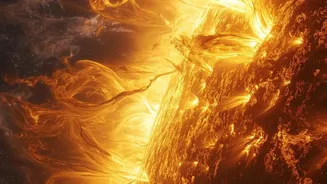
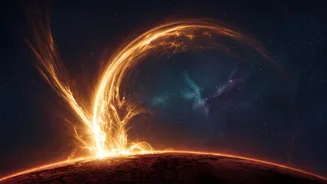
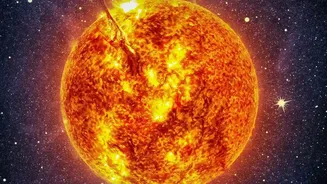
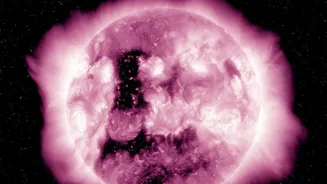
Our sun is not just a benign source of light and heat. It's a dynamic star that occasionally throws massive temper tantrums. These events, known as solar storms, include phenomena like solar flares and Coronal Mass Ejections (CMEs). A CME is a colossal
eruption of plasma and magnetic fields from the sun's outer atmosphere, the corona. These clouds of charged particles can travel at immense speeds, sometimes reaching Earth in less than a day. While many miss our planet, those that are Earth-directed can have significant consequences for our technology-dependent society. The interaction of these solar particles with Earth's magnetic field is what we call 'space weather', and CMEs are the primary drivers of its most extreme forms.
Satellites in the Firing Line
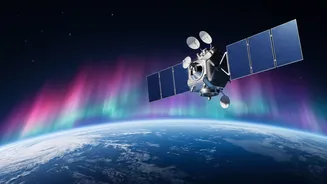
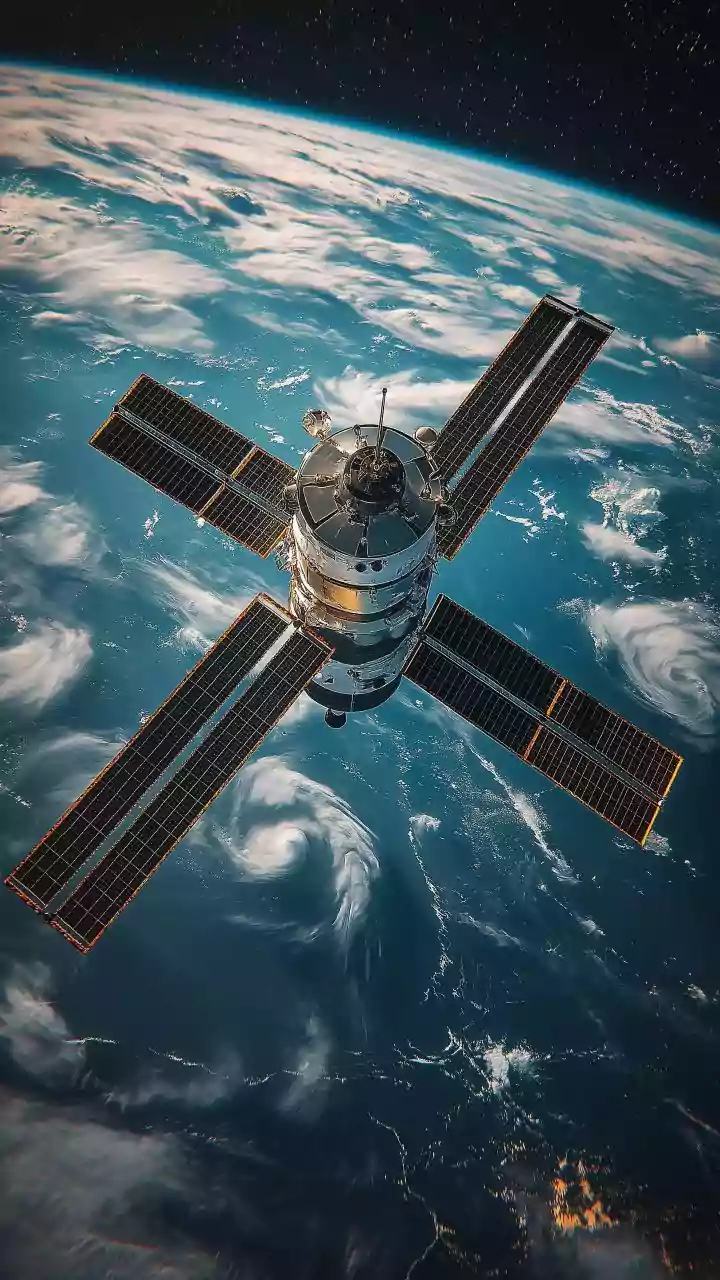
Satellites, particularly those in Low Earth Orbit (LEO) and Geosynchronous Orbit (GEO), are highly vulnerable to space weather. When a solar storm hits, it can impact them in several ways. Firstly, it can heat and expand Earth's upper atmosphere, increasing atmospheric drag. This friction can cause satellites to lose altitude and, in severe cases, even fall out of orbit and burn up, as happened to a batch of Starlink satellites in 2022. Secondly, the high-energy particles from a storm can damage sensitive electronics, causing malfunctions, data corruption, or permanent failure. This phenomenon, known as spacecraft charging, can create electrical discharges that harm sensors and other components. Finally, solar storms can disrupt the radio signals used for communication and GPS, leading to blackouts and inaccurate positioning data.
The Challenge of Early Warnings
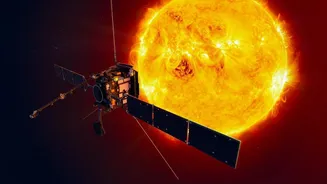
For decades, predicting exactly when and where a solar storm will impact Earth has been a major challenge. While scientists can see a CME leaving the sun, determining its specific trajectory and intensity is complex. Previous prediction models were either too slow or lacked the precision to give specific, actionable warnings for different locations on the ground. Forecasters relied on data from satellites like the Solar and Heliospheric Observatory (SOHO) to make inferences, but a more rapid and precise system was needed to protect our critical infrastructure, from power grids to communication networks. A few minutes of warning can be the difference between safeguarding a multi-billion dollar satellite and losing it forever.
Enter DAGGER: NASA’s AI Shield
To solve this problem, NASA and an international team of researchers developed an AI-powered model called DAGGER (Deep Learning Geomagnetic Perturbation). This advanced system uses a form of AI called deep learning to analyze real-time data from a fleet of NASA satellites that monitor the solar wind—the stream of particles constantly flowing from the sun. By finding connections between the solar wind data and the resulting geomagnetic activity on Earth, DAGGER can produce rapid and accurate global forecasts. It is the first model to combine the speed of AI with real-world measurements from space to generate frequently updated predictions for specific locations worldwide.
A 30-Minute Head Start
The key benefit of DAGGER is its ability to provide a 30-minute warning before a geomagnetic disturbance strikes. While that might not sound like much, in the world of satellite operations and power grid management, it's a game-changer. This lead time allows satellite operators to take protective measures, such as temporarily shutting down sensitive components or reorienting spacecraft to minimize exposure. Power grid managers can prepare their systems to handle the induced electrical currents that can damage transformers. Essentially, DAGGER acts like a global siren for space weather, giving authorities crucial time to mitigate the worst effects and prevent catastrophic failures. The model was successfully tested against past storms from 2011 and 2015, proving its ability to accurately forecast their impacts.