



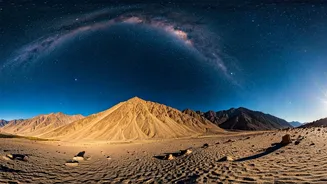


The July Celestial Spectacle
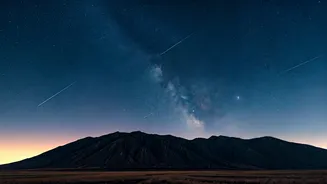
The phrase “meteor outbreak” perfectly captures the energy of the July skies. While not a single event, July marks the beginning of the Northern Hemisphere’s prime meteor season. The month sees the start of two significant annual showers: the Southern
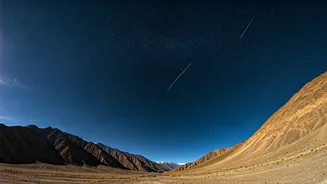
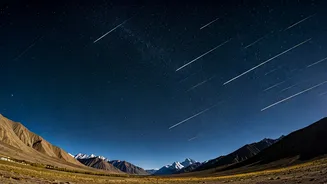
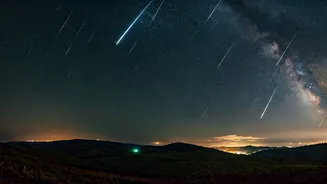
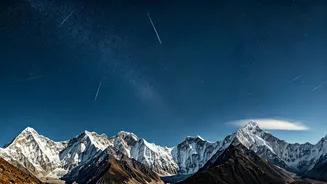
Delta Aquariids, which become active in mid-July, and the famed Perseids, which begin their long performance around July 17. This overlap means that on any given clear night towards the end of the month, photographers have the chance to capture meteors streaking from multiple points in the sky. While the peak of the Delta Aquariids at the end of July 2026 will be challenged by bright moonlight, the shower is known to produce steady activity, and the concurrent Alpha Capricornids are famous for occasional brilliant fireballs that can outshine the moon. This confluence of events is what draws photographers to their tripods in eager anticipation.
The High-Altitude Advantage
One of Ladakh's most significant assets is its elevation. With much of the region sitting above 10,000 feet, you are quite literally closer to the stars. This isn't just a poetic notion; it’s a crucial technical advantage. At high altitudes, the atmosphere is thinner and more stable. There are fewer particles of air, dust, and moisture to scatter and distort the faint light from stars and meteors. The result is a sky of exceptional clarity and sharpness. Stars that twinkle in lower elevations appear as crisp, steady points of light. This atmospheric transparency allows cameras to capture fainter details of the Milky Way and the fleeting trails of meteors with far greater precision, turning a good shot into a breathtaking one.
A Sanctuary From Light Pollution
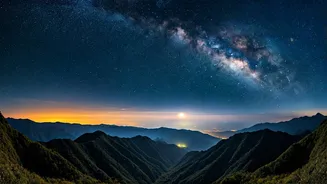
For any astrophotographer, the greatest enemy is artificial light. In a world where true darkness is a vanishing resource, Ladakh is a sanctuary. Its remote location, nestled deep within the Himalayas, means it is naturally shielded from the light pollution of major urban centers. This commitment to darkness has been formalized with the creation of the Hanle Dark Sky Reserve, India's first such designated area. Located at an altitude of 4,500 metres, the reserve is centered around the Indian Astronomical Observatory. Here, local communities have worked with scientists to minimize light spill, ensuring the skies remain pristine. For photographers, this means skies so dark that the Milky Way casts a visible shadow and even faint meteors are rendered with stunning clarity.
The Rain Shadow Secret
While much of India is drenched by the monsoon in July, Ladakh remains uniquely dry. Tucked into the rain shadow of the great Himalayan range, it is shielded from the moisture-laden clouds that spoil stargazing opportunities elsewhere. This results in a high-altitude desert climate with extremely low humidity and an abundance of clear, cloudless nights—around 300 a year, according to some estimates. This meteorological quirk is perhaps the most critical factor for a successful photography trip. It provides a reliable window for capturing the cosmos, allowing photographers to plan expeditions with a higher degree of confidence that their nights will be spent shooting, not waiting for clouds to pass.
A Canvas Unlike Any Other
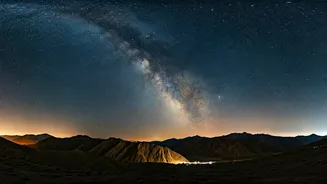
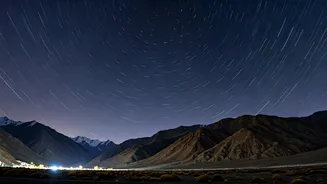
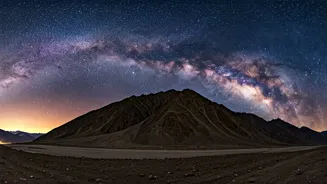
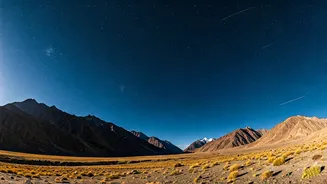
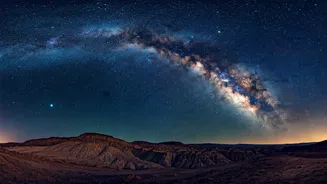
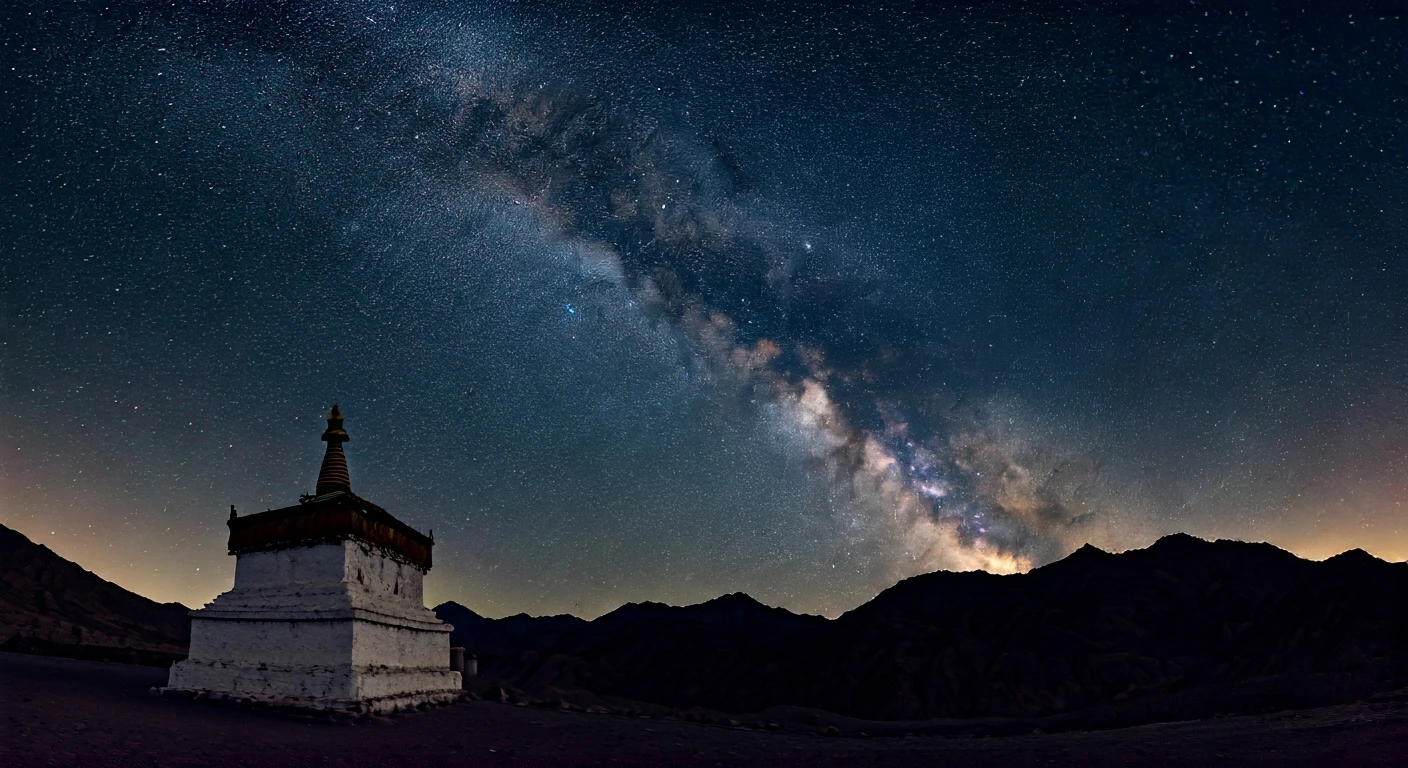
A great astrophoto isn't just about the sky; it’s about the earth below it. This is where Ladakh truly elevates itself from a great location to an iconic one. The region's unearthly landscapes provide dramatic and compelling foregrounds that add scale, context, and beauty to celestial images. Imagine a meteor streaking over the impossibly blue, reflective surface of Pangong Tso, or the arc of the Milky Way rising behind a centuries-old monastery in the Nubra Valley. Photographers can frame their shots with jagged peaks, ancient stupas, or the serene waters of high-altitude lakes like Tso Moriri. These elements provide a powerful sense of place, transforming a picture of the stars into a story about our planet's connection to the universe.