






Why the Sector Is Booming Now
The single biggest catalyst for this change was the government's decision in 2020 to open the space sector to private companies, a move formalised by the Indian Space Policy 2023. This led to the creation of the Indian National Space Promotion and Authorisation
Centre (IN-SPACe), a single-window agency designed to promote, authorise, and supervise all space activities by private firms. Its goal is to nurture a vibrant ecosystem outside of the Indian Space Research Organisation (ISRO). This policy shift has unleashed a wave of innovation, with the number of private space startups skyrocketing from just one in 2014 to over 400 by 2026. Investors have taken note, pouring in cumulative funding of around $600 million to fuel this growth. The government is also providing financial backing through initiatives like a Venture Capital Fund to help startups bridge the high-cost, long-gestation period of space technology development.
Key Areas of Private Innovation
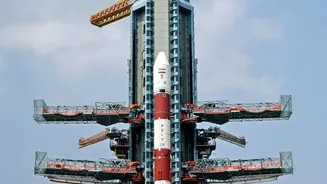
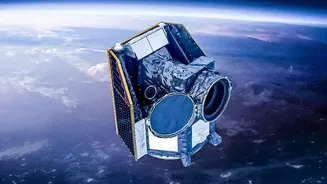
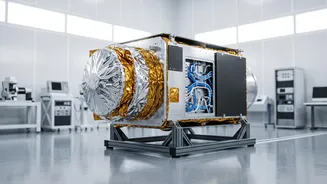
The new space boom isn't just about one type of company. The private sector is diversifying into three main areas. First is launch vehicle development, with startups like Skyroot Aerospace and AgniKul Cosmos building rockets to offer cost-effective satellite launch services. Skyroot made history as the first private Indian company to place payloads in orbit with its Vikram-1 rocket. The second major area is satellite manufacturing and operations. Companies like Dhruva Space and Pixxel are building satellites for various applications. Pixxel, for instance, is developing a constellation for high-resolution hyperspectral imaging. The third, and perhaps largest, commercial opportunity is in downstream applications. This involves using satellite data to provide 'decision intelligence' for sectors like agriculture, infrastructure, and climate monitoring, a field where firms like SatSure are making their mark.
Emerging Roles You Should Know
The popular image of a space career being limited to rocket scientists and astronauts is now outdated. The private sector is hiring for a much wider range of roles. Some of the most in-demand positions include: - Space Systems Engineer: This role involves overseeing the entire lifecycle of a spacecraft, from design and integration to testing and launch. - Satellite Data Analyst: One of the fastest-growing fields, these professionals interpret vast amounts of data from Earth observation satellites for commercial use in farming, urban planning, and disaster management. - Aerospace Software Engineer: Software is at the heart of modern space missions. These engineers develop flight software, mission planning algorithms, and autonomous navigation systems. - Propulsion Engineer: Specialising in the design and testing of rocket engines and spacecraft propulsion systems, this is a core role in launch vehicle startups. - GIS and Remote Sensing Specialist: These experts use Geographic Information Systems (GIS) to analyse geospatial data, a critical skill for companies leveraging satellite imagery. - Avionics Engineer: This role focuses on the electronic systems used in spacecraft, including navigation, communication, and control systems.
Building the Right Skill Set
To land a job in this competitive field, a strong foundation in engineering fundamentals (aerospace, mechanical, electronics) is often required. However, startups are increasingly looking for a diverse range of skills. Proficiency in programming languages like Python, C++, and MATLAB is highly valued across both hardware and software roles for simulation, data analysis, and embedded systems. Data literacy—the ability to work with large datasets from telemetry or remote sensing—is another crucial skill for downstream application roles. Beyond technical abilities, companies prize systems thinking, which is the ability to understand how complex subsystems interact within a spacecraft or ground station architecture. A portfolio of hands-on projects, such as building a CubeSat, participating in coding competitions, or contributing to open-source aerospace software, can often be more valuable than just grades.
How to Get Your Foot in the Door
The path into the space industry depends on your target. While ISRO has a formalised recruitment process (ICRB), private companies are more flexible. Following and engaging with key companies like Skyroot Aerospace, Agnikul Cosmos, Pixxel, and Dhruva Space on professional networking platforms is a good start. Many of these startups hire aggressively from top engineering colleges like the IITs and NITs, but they also value practical experience and look for talent on job portals. For those still studying, pursuing a degree in Aerospace, Mechanical, Electronics, or Computer Science Engineering provides a solid entry point. Additionally, specialised courses in remote sensing, GIS, and embedded systems can give you a competitive edge. Building a network, attending industry webinars, and working on personal projects relevant to space technology can help you stand out when opportunities arise.