





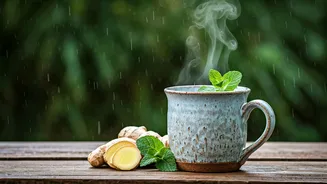




The Immunity Booster: Fuel Your Defences
The monsoon is notorious for bringing a spike in viral fevers, colds, and stomach infections. Your first line of defence is a robust immune system, and it starts in your kitchen. This is the season to favour warm, cooked meals over cold, raw salads. Incorporate
immunity-boosting spices like turmeric (haldi), ginger (adrak), and black pepper (kali mirch) into your daily diet. A warm bowl of dal or a vegetable soup is not just comforting but also light on the digestive system, which tends to be weaker during this season. Ayurveda suggests avoiding leafy green vegetables unless they are thoroughly washed in warm water and cooked, as they can harbour germs and dirt. It’s also wise to be cautious with street food, especially anything that is uncooked or exposed to the elements. Hydration is key, but opt for boiled or filtered water. Sipping on herbal teas like tulsi or ginger tea throughout the day can also help keep infections at bay.
The Home Armour: Banish Damp & Pests
Your home environment plays a huge role in your well-being. The constant dampness can lead to mould and mildew, which can trigger allergies and respiratory issues. Ensure your home is well-ventilated. Open windows for a few hours on sunny or dry days to let fresh air circulate. Wardrobes can become breeding grounds for fungus; placing camphor balls, neem leaves, or silica gel packets can help absorb excess moisture and keep your clothes fresh. The monsoon also means mosquitoes. Prevent water from stagnating in and around your house—in coolers, plant pots, or discarded tyres—as these are breeding grounds for dengue and malaria-carrying mosquitoes. Using mosquito nets at night is a simple and effective protective measure. Burning camphor or diffusing essential oils like citronella, lemongrass, or eucalyptus can also act as natural insect repellents, leaving your home smelling fresh and protected.
The Skin & Hair Shield: Combat Humidity
High humidity can wreak havoc on your skin and hair. The sticky weather can lead to clogged pores and acne breakouts. For your skin, the mantra is to keep it clean and dry. Use a gentle, non-soap cleanser twice a day. Fungal infections, especially in skin folds, are common. An anti-fungal dusting powder can be a saviour. Avoid heavy, oil-based moisturisers and opt for lighter, water-based formulas. Hair fall also tends to increase during the monsoon. The excess moisture in the air swells up the hair shaft, making it weak and prone to breakage. Try not to get your hair wet in the rain, but if you do, wash it with a mild shampoo as soon as possible. Rainwater can be acidic and dirty. A regular champi (oil massage) with coconut or neem oil before washing can nourish the scalp and strengthen the roots. Don't tie up wet hair, as this can lead to dandruff and more breakage.
The Mental Wellness Kit: Beat the Blues
The grey, overcast skies and reduced sunlight can sometimes lead to a low mood or a feeling of lethargy, often called the 'monsoon blues'. It's important to be mindful of your mental state. Maintain a regular routine, even if you are spending more time indoors. If you can't go out for a walk or run, try simple indoor exercises, yoga, or dancing to get your body moving and release endorphins. This is a great time to pick up an indoor hobby you've been putting off—reading, painting, cooking, or learning a new skill online. Stay connected with friends and family, even if it's virtually. Sometimes, a warm cup of masala chai and a good conversation are all you need. If you find the persistent low mood affecting your daily life, don't hesitate to speak to a mental health professional.