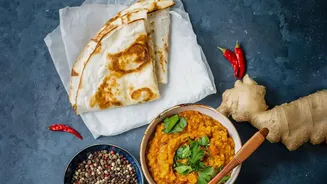







It's a familiar feeling: the rajma or dal you made for dinner was good, but the leftovers you heat up for lunch the next day are somehow transcendent. It’s not your imagination. A quiet, complex chemical process unfolds in the fridge overnight.
The Slow Dance of Flavour Molecules
The most
significant change happening in your pot overnight is flavour melding. When you first cook a dish like rajma, the different ingredients—beans, tomatoes, onions, ginger, garlic, and a host of spices—are all present, but their flavours remain distinct. Think of it as a party where everyone has arrived but is still standing in separate corners. As the dish cools and rests, a process called molecular diffusion takes over. The flavour compounds from each ingredient begin to migrate, intermingle, and distribute themselves evenly throughout the gravy and into the beans themselves. The sharp, individual notes of spices like cinnamon or clove mellow out, blending into a more harmonious and rounded profile. What tasted like 'dal with tadka' on day one now tastes like a single, cohesive dish on day two.
The Science of a Silky Texture
Beyond flavour, the texture also undergoes a remarkable transformation. Lentils and beans are primarily composed of starches and proteins. The initial cooking process begins to break them down, but the work continues long after the stove is off. As the dal or rajma rests, proteins continue to slowly break down into smaller amino acids. This gradual process results in a creamier, more integrated texture that feels silkier in your mouth. At the same time, another process called starch retrogradation occurs. As the cooked starches cool, their molecules realign and restructure, which can trap flavour compounds and slightly thicken the gravy. This contributes to a richer mouthfeel and ensures the spices are suspended throughout the dish rather than settling.
Fat-Soluble Aromatics Do Their Best Work
The tadka, or tempering, is a crucial step that introduces fat-soluble flavours into the dish. Spices like cumin, mustard seeds, and asafoetida (hing) release their essential aromatic compounds when bloomed in hot ghee or oil. Initially, these flavours are concentrated in the oil itself. However, over time, these fat-soluble compounds slowly disperse and infuse into the entire dish. The fat acts as a carrier, helping to distribute the complex notes of the spices deep into the lentils and beans. This is why the aromatic depth of a day-old dal often seems so much greater; the flavours have had the time to fully penetrate the ingredients instead of just coating them.
Reheating and Reviving the Aromas
The magic isn't complete until you reheat the dish. While resting melds flavours and transforms texture, gentle reheating plays a final, crucial role. The aromatic compounds that have been integrating overnight are volatile, meaning they are released into the air when warmed. Gently reheating your dal or rajma allows these aromas to be released, enhancing the sensory experience before you even take the first bite. However, there is a catch: boiling the leftovers too aggressively can have the opposite effect, driving off the delicate top notes you waited so patiently for. A gentle simmer is all that’s needed to revive the dish to its full, flavourful potential, completing the chemical journey from good to great.