





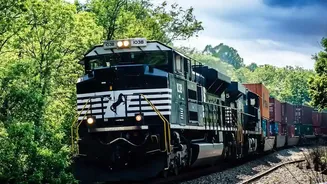
A Historic Day for Indian Railways
On Tuesday, September 8, 2026, the final sections of the Western Dedicated Freight Corridor (WDFC) were inaugurated, marking the full operational launch of the ambitious 1,506-kilometre network. Spanning from Dadri in Uttar Pradesh to the Jawaharlal Nehru
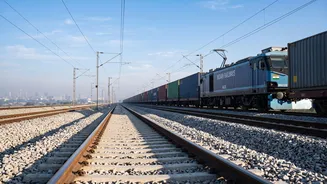
Port (JNPT) near Mumbai, the WDFC is a high-capacity, high-speed rail line built exclusively for transporting goods. The project, which has been nearly two decades in the making, is designed to separate freight and passenger traffic, a move that promises to revolutionize India's logistics and, crucially, decongest existing railway lines.
Untangling a Congested Network
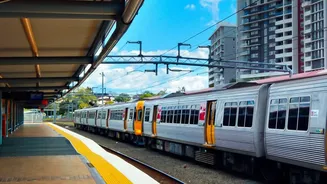
Until now, both passenger trains and slower, heavier goods trains have shared the same tracks. In a high-density network like Mumbai's, passenger services are given priority, forcing freight trains to wait, which creates bottlenecks and slows down the entire system. The Mumbai suburban railway is one of the most intensively used systems in the world, carrying millions more passengers than its designed capacity, leading to what is known as 'super-dense crush load'. By shifting the bulk of goods traffic to the new, dedicated corridor, Indian Railways can reclaim valuable capacity on the tracks that serve millions of daily commuters. This separation is the core principle of the Dedicated Freight Corridor (DFC) project, aiming to make both passenger and goods transport more efficient.
What This Means for Mumbai Commuters
The most significant benefit for Mumbai is the potential to introduce more local train services. With freight trains moving to their own exclusive high-speed highway, the existing lines on the Western and Central railways will be freed up. This allows the Mumbai Railway Vikas Corporation (MRVC), the body responsible for upgrading the suburban network, to plan and run additional passenger services. This could mean reduced waiting times, less crowding during peak hours, and a more reliable timetable. The move is a foundational step in modernizing the city's transport lifeline, which has long struggled to keep pace with population growth. Officials state that decongesting the Mumbai rail network is a key objective of the WDFC's completion.
Beyond the Commute: Economic Ripples
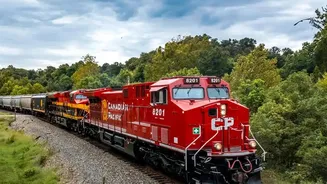
The impact of the DFC extends beyond passenger comfort. By providing a direct, high-speed connection to JNPT, India's largest container port, the corridor will slash logistics costs and transit times for businesses. Goods that once took days to move can now be transported much faster, boosting export competitiveness and strengthening the supply chain. Freight trains on the DFC can be longer, heavier, and run at average speeds of up to 90-100 km/h, a significant jump from the 25 km/h on congested routes. This efficiency is expected to encourage a shift from road to rail for freight movement, which also carries environmental benefits by reducing carbon emissions.
The Road Ahead
While the freight corridor is now fully operational, the benefits for Mumbai's passenger network will not be instantaneous. Indian Railways and MRVC will need to recalibrate schedules and potentially undertake signalling and track upgrades to maximise the newly available capacity. Furthermore, plans are already in motion to procure hundreds of new air-conditioned local train rakes for Mumbai, a process that is being expedited. The first of these new-generation trains is expected to be ready by 2027. The completion of the WDFC is a critical enabler, creating the space needed for these future upgrades to be effective and truly transform the daily travel experience for millions.