

The New Moon King
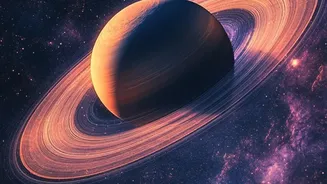
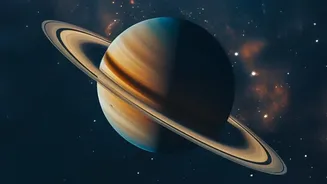
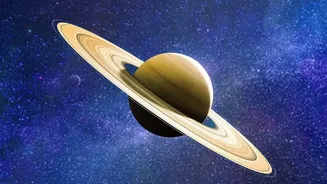
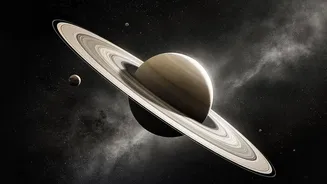
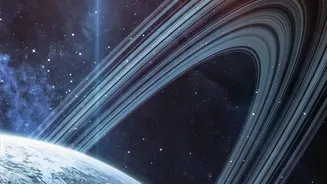
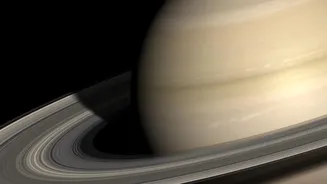
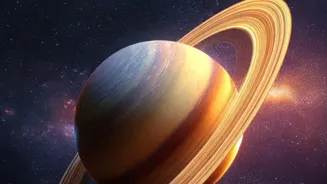
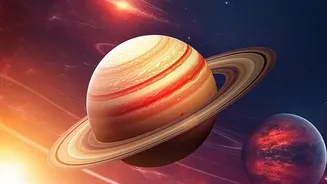
Not long ago, Jupiter held the title for the planet with the most moons. That has changed dramatically. A flood of recent announcements has propelled Saturn far into the lead, with its confirmed moon count soaring to 293 as of mid-2026. This surge is thanks
to powerful ground-based telescopes and sophisticated detection techniques that can spot faint, tiny objects orbiting far from the planet. Discoveries in 2023, 2025, and 2026 added huge batches of new worlds, including a single announcement of 128 moons in March 2025. These aren't large, spherical bodies like our own Moon, but small, often kilometer-sized objects that tell a unique story.
A Family of Irregular Storytellers
The vast majority of these newfound moons are classified as "irregular." This means they have large, tilted, and often elliptical orbits. Many even travel in a retrograde direction, orbiting opposite to Saturn's rotation. This is a crucial clue, suggesting they weren't formed along with Saturn from the same primordial disc of gas and dust. Instead, they are thought to be ancient wanderers—asteroids or comets from the outer solar system that were captured by Saturn's immense gravity billions of years ago. Astronomers group them into families like the Inuit, Gallic, and Norse groups based on their similar orbits, hinting they may be fragments of larger parent bodies that were shattered by collisions after being captured.
Rewriting Saturn's Violent History
This picture of a chaotic past is one of the biggest changes to our understanding of the Saturnian system. The sheer number of irregular moons and their clustered orbits suggest a history filled with cosmic smash-ups. A larger captured object might have collided with another moon or asteroid, breaking into the dozens of smaller fragments we are cataloging today. Studying these tiny, distant worlds is like planetary archaeology. Their properties and orbits allow scientists to piece together the timeline of events in the early solar system, a period that was far more dynamic and destructive than the relatively orderly system we see now.
Not Just Rocks, But Hidden Oceans
While the irregulars tell a story of capture and collision, other recent discoveries have transformed our view of Saturn's inner moons. Well-known satellites like Enceladus are now understood to harbor vast liquid water oceans beneath their icy shells, venting water into space through massive plumes. More shockingly, in 2024, scientists found evidence of a global ocean hiding under the cratered, seemingly dead surface of Mimas—a moon previously thought to be a frozen, inactive ball of ice. This discovery suggests that the conditions necessary for life could exist in more places than ever imagined, forcing us to reconsider what makes a world 'active' and where to look for life beyond Earth.