








An Unexpected Urban Spectacle
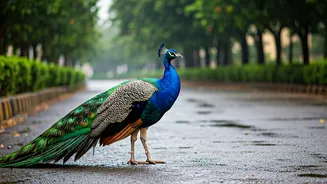
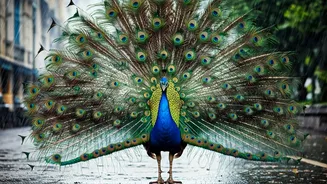
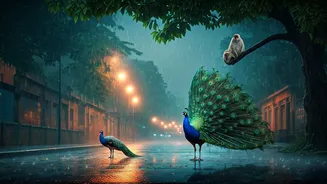
Imagine this: on a busy street like Pedder Road, amongst the yellow-and-black taxis and the ceaseless motion of a metropolis, a peacock struts calmly. Another perches on a high-rise balcony, its magnificent train a stark, beautiful contrast to the concrete
jungle behind it. These aren't imagined scenes but real moments captured across Mumbai, especially after the first monsoon showers arrive. Social media has been flooded with videos of these sightings, from South Mumbai's Kemps Corner to the green pockets around Malabar Hill, delighting residents who find a moment of unexpected wonder in their day. The appearance of India’s national bird in such densely populated urban areas is a rare and welcome surprise, a reminder of the nature that persists and thrives on the edges of city life.
The Monsoon's Ancient Call
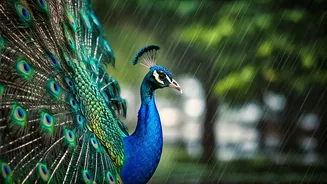
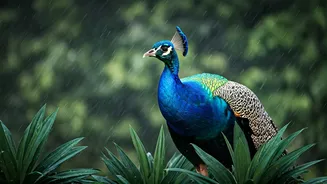
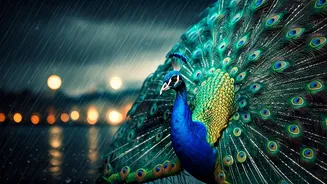
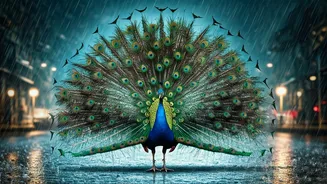
There's a scientific and deeply ingrained reason these sightings coincide with the rains. The monsoon season, typically spanning from June to September, is the peacock's breeding season. The drop in temperature, increased humidity, and the sound of thunder act as powerful triggers for their famous courtship rituals. The dance of the peacock, where the male fans its spectacular train into a shimmering, quivering semi-circle, is a sight steeped in Indian culture and lore. It's a performance designed to attract a mate, a vibrant cabaret of green, gold, and blue. For centuries, poets and writers have linked the peacock's dance to the joy and relief brought by the monsoon rains, which are essential for life across the subcontinent. This behaviour transforms a simple bird sighting into a profound natural event.
Where the Concrete Meets the Wild
While these sightings seem random, they often originate from specific green lungs within the city. Areas like the wooded grounds of the Raj Bhavan, the Sanjay Gandhi National Park, and the serene, tree-filled expanse of Doongerwadi (the Parsis' Tower of Silence) in Malabar Hill serve as important habitats for these birds. As the monsoon cools the air, the peacocks are likely encouraged to venture from these pockets of tranquility into the surrounding urban landscape. Their presence is a testament to the delicate balance between urban development and nature. These birds are not just visitors; they are residents, a part of Mumbai's rich biodiversity that often goes unnoticed until the drama of the monsoon brings them into the spotlight.
A Symbol of Grace and Resilience
The peacock holds a revered place in Indian culture, symbolizing grace, beauty, and even royalty, as seen in the Mughal-era Peacock Throne. In Hindu mythology, its feathers adorn Lord Krishna's crown, and it is the vehicle of Kartikeya, the god of war. Its image is woven into art, architecture, and folklore, representing everything from prosperity to compassion. To see this culturally significant bird thriving in a bustling city like Mumbai is to witness a story of resilience. It serves as a living connection to a history and mythology that are still deeply felt today. Their presence offers a moment of continuity, linking the city's modern identity to an ancient past.