







The Wisdom of Warmth
Across the country, the monsoon brings a shared culinary philosophy rooted in ancient wisdom, particularly Ayurveda. The rainy season, or 'Varsha Ritu', is believed to weaken our digestive fire ('agni'). To counteract this, traditions favour warm, freshly
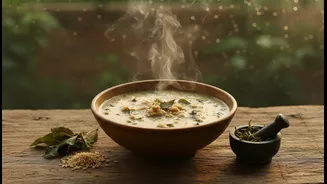
cooked, and lightly spiced meals. This is why you'll see a surge in the popularity of soups, steamed dishes, and foods seasoned with immunity-boosting spices like ginger, turmeric, and black pepper. These ingredients are not just for flavour; they are valued for their antimicrobial and digestive properties, which are especially beneficial in the damp, humid weather when the risk of infections is higher. Avoiding raw or cold foods is a common guideline, as cooked meals are safer and easier for the body to process.
Western India's Crispy Comforts
In Maharashtra and Gujarat, the sound of rain is almost synonymous with the sizzle of frying. Crispy onion fritters known as Kanda Bhaji, along with Batata Vada, become staples. This craving for fried food isn't just about indulgence; it provides a satisfying textural contrast to the damp, sluggish weather. Mumbai's streets come alive with vendors selling roasted corn on the cob (bhutta), seasoned with lemon, salt, and chilli powder, a snack that evokes nostalgia for many. Further south along the coast, Maharashtrian households might prepare Bombil Bhujna, a fragrant curry made with Bombay duck, perfectly suited for a rainy day meal with rice. In Gujarat, locals turn to steamed snacks like Methi na Muthiya and Handvo, offering a lighter yet equally flavourful option.
Eastern India's Soulful Staples
Travel east, and the monsoon menu takes on a different flavour. In Bengal, the rainy season is incomplete without Khichuri. This one-pot dish of rice and lentils is the ultimate comfort food, often cooked with seasonal vegetables and a dollop of ghee. It’s typically served with an assortment of fried accompaniments known as 'telebhaja', such as Beguni (eggplant fritters) or even a prized piece of fried Hilsa fish, a monsoon delicacy. In the northeastern state of Meghalaya, a comforting bowl of Nakham Bitchi, a traditional soup made from dried fish and vegetables, provides warmth and is known for its health benefits.
Southern Soothers and Steamed Delights
In the southern states, the focus shifts to warming, soupy preparations and steamed dishes that are easy on the digestive system. In Tamil Nadu and Kerala, a peppery, tangy broth called Rasam is a household essential. Made with tamarind, tomatoes, and a host of spices like black pepper and cumin, it can be sipped on its own or eaten with steamed rice. The love for fried snacks remains, with Parippu Vada (lentil fritters) from Kerala being a popular tea-time accompaniment. Steamed foods are also preferred for their lightness; options like Idiyappam (string hoppers) in Tamil Nadu and Neer Dosa in Karnataka are favoured during this season.
The Heart of the North
In North India, the combination of chai and pakoras is an unbreakable monsoon ritual. Roadside stalls and home kitchens alike produce endless batches of these gram-flour fritters, made with everything from potatoes and onions to spinach and paneer. Another fried delight, the Samosa, filled with spiced potatoes and peas, is equally cherished. In Rajasthan, while rainfall is less abundant, the season is still celebrated with dishes like Ghewar, a disc-shaped sweet made from flour and ghee, which is believed to provide warmth and aid digestion. The state is also famous for its Mirchi Vada, a large green chilli stuffed with a spicy potato filling and deep-fried.