
The Foundation: Why Cut and Method Matter
The way you cut a vegetable directly impacts how it cooks and, ultimately, how it tastes. A fine dice cooks much faster than a large chunk and will absorb more flavour from oils and spices. The size and shape determine the surface area that makes contact
with the heat, influencing everything from texture to aroma. A carrot sliced into long, thin ribbons for a grill will offer a sweet, charred flavour, an experience completely different from the same carrot finely diced for a soup. By thinking about the cut and cooking method as a pair, you gain control over the final dish, turning simple produce into something special.
Mastering the Cuts
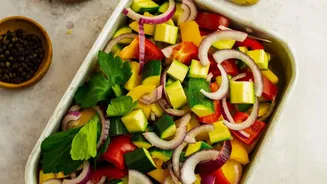
You don’t need to be a culinary school graduate to expand your cutting repertoire. Understanding a few basic styles is enough to create significant variety. A 'dice' (small, uniform cubes) is perfect for quick-cooking dishes like stir-fries or as a flavour base in soups and sauces. 'Julienne' (thin, matchstick-like strips) is ideal for salads and slaws, offering a pleasing texture. Slicing into 'rounds' or 'coins' is great for vegetables like carrots and cucumbers for salads, while cutting on a 'bias' (angle) creates more surface area, which is excellent for sautés. Don't underestimate keeping vegetables whole or in large 'chunks' for roasting, which develops a deep, sweet flavour as they caramelise.
Choosing Your Cooking Method
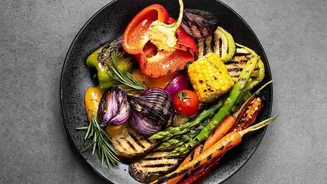
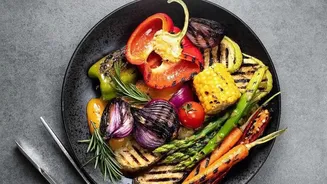
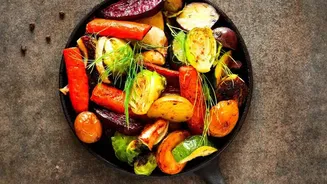
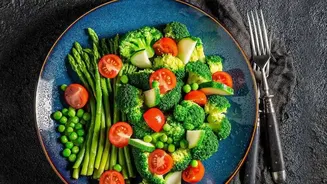
Your cooking method is the other half of the flavour equation. Roasting in a hot oven brings out the natural sugars in vegetables like carrots, pumpkins, and sweet potatoes, making them tender on the inside and slightly crispy on the outside. Stir-frying over high heat is perfect for diced or julienned vegetables, keeping them crisp and vibrant. Steaming is a gentle method that preserves nutrients and the natural taste of delicate vegetables like broccoli and green beans. Grilling imparts a smoky char that works wonders on larger cuts of vegetables like bell peppers, brinjal (eggplant), and corn.
Summer & Monsoon Seasonal Pairings
Let's apply this to the bounty of the summer and monsoon seasons. Take bottle gourd (lauki), a summer staple. Instead of the usual curry, try peeling it into long, wide ribbons and quickly sautéing them with garlic and herbs for a pasta-like dish. Okra (bhindi), notorious for its sliminess, can be transformed by cutting it lengthwise and roasting or grilling it at high heat until the edges are crispy and charred. During the monsoon, fresh corn ('bhutta') is everywhere. While delicious grilled whole, you can also slice the kernels off the cob and stir-fry them with peppers and onions for a quick side dish.
Autumn & Winter Seasonal Pairings
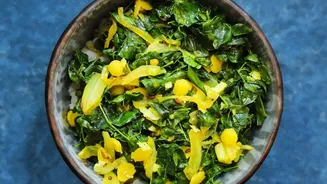
As the weather cools, the vegetables get heartier. Carrots, plentiful in autumn and winter, are a great example. Instead of just dicing them for a sabzi, try cutting them into thick batons and roasting them with honey and cumin until caramelised. Cauliflower, another winter favourite, is incredibly versatile. Cut it into thick 'steaks' for grilling or roasting, or break it into florets and blanch them for a crunchy addition to salads. Winter leafy greens like spinach and mustard greens can be finely chopped (chiffonade) and quickly wilted into dals and soups right at the end of cooking to preserve their fresh flavour and bright colour.