




A New Perspective From the Moon
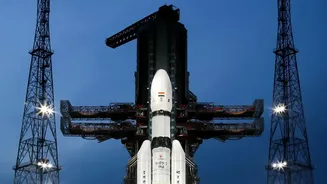
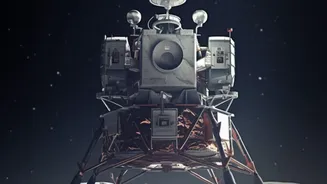
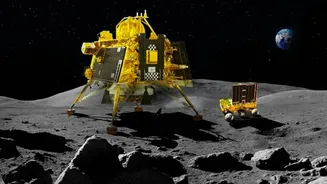
The world watched in August 2023 as India’s Chandrayaan-3 mission successfully soft-landed near the lunar south pole, a monumental achievement. While the Vikram lander and Pragyan rover began their on-site analysis of the Moon's surface, the Propulsion
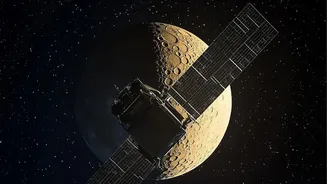
Module that carried them into lunar orbit embarked on an extended mission of its own. Aboard this module was a singular, ingenious instrument with a unique objective: to turn its gaze away from the Moon and study Earth. This wasn't just for a scenic picture; it was a calculated scientific manoeuvre to see our home planet as if it were a distant exoplanet. The goal was to capture the unique signatures of a life-bearing world, creating a template for future astronomical searches.
Introducing the SHAPE Payload
The instrument at the heart of this experiment is called SHAPE, which stands for Spectro-polarimetry of a HAbitable Planet Earth. Developed by ISRO's U. R. Rao Satellite Centre, SHAPE is a compact and lightweight spectro-polarimeter. It was designed to analyse the light reflected from Earth in the near-infrared wavelength range. The Propulsion Module was initially intended only to transport the lander to the Moon. However, ISRO engineers cleverly added SHAPE as a value-addition, making use of the module's remaining fuel and operational life to conduct bonus science. This decision transformed the orbiter into a lunar observatory for studying Earth.
What Does SHAPE Actually Measure?
SHAPE performs two key measurements: spectroscopy and polarimetry. Spectroscopy breaks down light into its constituent colours or wavelengths, much like a prism. This spectrum reveals the chemical composition of a planet's atmosphere and surface. For example, specific wavelengths are absorbed by gases like oxygen, water vapour, and carbon dioxide, leaving dark bands in the spectrum that act as chemical fingerprints. Polarimetry measures the orientation of light waves as they travel. When light reflects off clouds or oceans, its waves become polarized. By measuring this polarization, scientists can learn about the presence and properties of clouds in a planet's atmosphere, a key factor for habitability. SHAPE analyses Earth's light as a single, integrated point, just as we would see a distant exoplanet, to capture these combined signatures.
Earth’s Unique Fingerprint
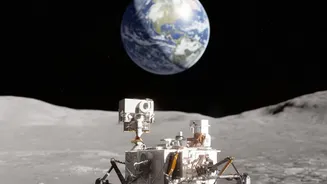
From its vantage point in lunar orbit, SHAPE has been collecting data on Earth's 'disc-integrated' light. This provides scientists with a definitive spectro-polarimetric fingerprint of a known habitable planet. The data shows how Earth's signature changes as the planet rotates, revealing different surfaces like oceans, landmasses, and cloud cover. It also observes these signatures at various phase angles, similar to how we see the Moon in different phases. This information is crucial because it helps scientists create robust models to understand what to look for when observing exoplanets. Recent papers published by ISRO scientists confirm the instrument's successful operation and its ability to measure these vital biosignatures, validating its use as a benchmark for future missions.
Paving the Way to Find Other Earths
The ultimate purpose of the SHAPE experiment is to aid in the search for life beyond our solar system. To date, astronomers have confirmed over 5,000 exoplanets, but knowing which ones might host life is a monumental challenge. Most are too far away to be imaged directly. Instead, we must analyse the faint light from their host stars that passes through or reflects off their atmospheres. By understanding the detailed light signatures of our own living planet, scientists can better interpret the data from powerful future telescopes. SHAPE's observations provide a vital reference point, helping to distinguish a potentially habitable, Earth-like exoplanet from a barren rock. It's a clever use of our own planet as a laboratory to prepare for one of humanity's greatest quests.