





The High-Stakes Monsoon Gamble
Indian agriculture is deeply intertwined with the monsoon, which delivers about 75% of the country's annual rainfall. The livelihoods of over half the population depend on it. However, climate change is intensifying the risks. Farmers now face delayed
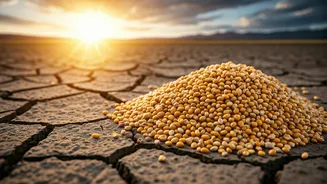
rains, prolonged dry spells, and sudden, intense downpours that can wash away crops. This volatility makes farming water-intensive crops like rice and wheat, the staples of the Green Revolution, an increasingly precarious enterprise. A failed monsoon can lead to widespread crop failure, financial distress, and threats to the nation's food security.
Enter the Climate-Smart Grains
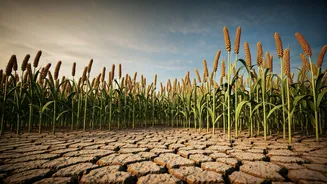
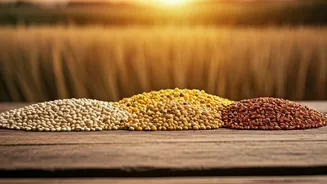
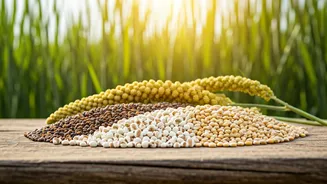
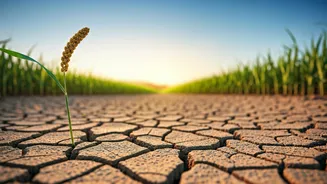
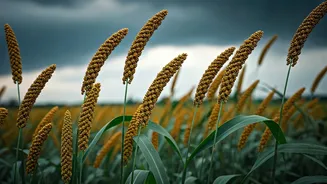
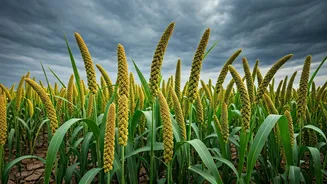
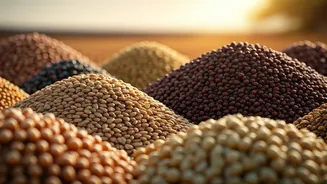
Millets, a group of hardy cereals including jowar (sorghum), bajra (pearl millet), and ragi (finger millet), are re-emerging as a powerful solution. Once dismissed as 'coarse grains', these crops are now celebrated as 'nutri-cereals' and climate-smart powerhouses. Their key advantage lies in their incredible resilience. Millets require significantly less water than rice—in some cases, less than 30%—and can thrive in arid conditions and on marginal, less fertile lands where other cereals would fail. This makes them exceptionally suited for India's rain-fed agricultural regions, which are most vulnerable to erratic weather.
Built for Extremes: The Science of Resilience
The ability of millets to withstand climate shocks is rooted in their biology. Many varieties have deep root systems that are efficient at seeking out and retaining soil moisture. They have shorter growing cycles—some as quick as 60-70 days—allowing them to evade peak drought periods. Furthermore, millets are remarkably tolerant of high temperatures, with some varieties able to grow in temperatures above 40°C, a threshold at which the pollen viability of rice collapses. This combination of drought resistance, heat tolerance, and adaptability makes them a far safer bet for farmers navigating an uncertain climate.
De-Risking the Farmer's Balance Sheet
Beyond agronomic benefits, millets offer significant economic advantages. Their cultivation demands fewer costly inputs like chemical fertilizers, pesticides, and, crucially, irrigation. This lowers the initial investment for smallholder farmers, reducing their financial risk if a season turns bad. By providing a more assured harvest even in difficult years, millets help stabilize farm incomes. While the profitability per hectare has historically lagged behind heavily subsidized crops like rice and wheat, rising market demand and government support are starting to shift the economic calculus in favour of these resilient grains.
A National Push for an Ancient Grain
The resurgence of millets is not just a grassroots movement; it's backed by a significant policy push. The Indian government, recognizing millets' potential for climate adaptation and nutritional security, has rebranded them as 'Shree Anna' (the mother of all grains). Initiatives like the National Food Security Mission, Production Linked Incentive (PLI) schemes, and state-level millet missions are encouraging cultivation, developing value chains, and promoting consumer awareness. The United Nations' declaration of 2023 as the International Year of Millets, at India's behest, has further boosted their global profile, creating new market opportunities for farmers.