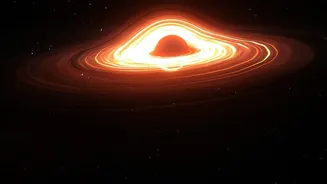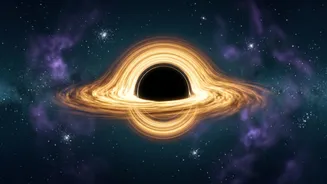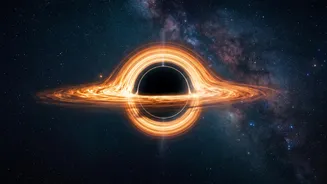



Scientists estimate there are 100 million black holes in our galaxy, yet we've found fewer than 100. Now, you can help close that gap. A new project is calling for volunteers to join the cosmic hunt for these hidden giants, no PhD required.
The Search for the Invisible
Black holes
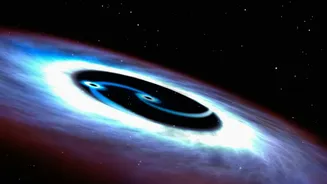
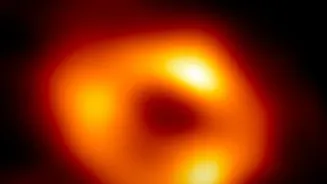
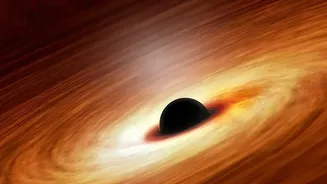
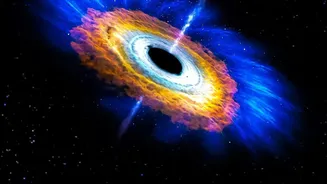
are famously elusive. As the collapsed cores of massive stars, their gravitational pull is so immense that not even light can escape, making them invisible to traditional telescopes. Astronomers estimate the Milky Way should be teeming with millions of these objects, but only about 70 have been located so far. So where are the rest? Many are likely 'dormant,' meaning they aren't actively feeding on nearby gas or stars, a process that would otherwise make them glow brightly in X-rays. These quiet black holes drift silently through the cosmos, often in binary pairs with a companion star, their presence given away only by their immense gravity.
Introducing the Black Hole Hunters
To find these missing millions, researchers from institutions like the University of Southampton have launched a citizen science project called Black Hole Hunters. Hosted on the Zooniverse platform, the project empowers anyone with an internet connection to become a cosmic detective. The goal is to spot a specific phenomenon known as 'gravitational self-lensing'. This occurs when a black hole in a binary system passes in front of its companion star from our point of view. The black hole's gravity acts like a natural magnifying glass, briefly making the star appear brighter. Finding these periodic peaks in brightness is the key to uncovering a hidden black hole.
Your Mission: Spot the Signal
You don't need a degree in astrophysics to participate. The project uses data from telescopes like NASA's Transiting Exoplanet Survey Satellite (TESS). An advanced AI system first sifts through millions of stars, flagging potential candidates where the brightness appears to change over time. Your job is to look at simple graphs, called light curves, showing these changes. The research team provides clear examples of the tell-tale lensing signal you're looking for—a distinct, short peak in the star's brightness. Your task is simply pattern recognition; identifying which graphs show the signature of a potential black hole.
Why Human Eyes Are Essential
While artificial intelligence is powerful, it's not perfect. Many other cosmic phenomena can cause a star's brightness to vary, and AI can sometimes get confused. The human brain remains one of the best tools for spotting subtle or unusual patterns that algorithms might miss. By having thousands of volunteers inspect the candidates flagged by the AI, the project combines the speed of machine learning with the nuanced perception of the human eye. This collaborative approach is crucial for efficiently narrowing down the vast dataset to a shortlist of promising targets for followup observations with powerful telescopes.
How to Join the Hunt
Getting started as a Black Hole Hunter is simple. Just visit the Black Hole Hunters project on the Zooniverse website. You can sign up for a free account and begin classifying star data immediately from your computer or smartphone. The platform includes a brief tutorial that explains exactly what you're looking for. The project is accessible to a global audience, with materials available in several languages, including Hindi. Every classification you make helps scientists prioritise which star systems to examine more closely. As project colead Dr Adam McMaster says, any volunteer 'might be the one to discover a black hole'.