


How Do Hydrogen Trains Work?
At its heart, a hydrogen train is an electric train that generates its own power. Instead of drawing electricity from overhead lines or burning diesel, it uses a fuel cell. Inside this cell, hydrogen stored in onboard tanks reacts with oxygen taken from the
air. This electrochemical reaction produces three things: electricity to power the motors, heat, and pure water vapour as the only emission. This makes them a zero-emission alternative to the diesel locomotives currently used on many non-electrified routes, eliminating pollutants like carbon dioxide and particulate matter. Excess energy generated can be stored in batteries to provide a power boost when accelerating or climbing steep gradients.
Why 'Hydrogen for Heritage' Makes Sense
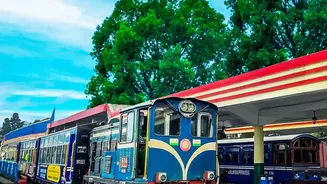
The decision to debut this technology on heritage routes is a strategic one. Many of these lines, like the Kalka-Shimla, Nilgiri Mountain, and Darjeeling Himalayan Railways, are UNESCO World Heritage Sites running through ecologically sensitive and beautiful landscapes. Replacing noisy, polluting diesel engines with quiet, zero-emission hydrogen trains will significantly reduce the environmental impact on these fragile ecosystems. Furthermore, electrifying these narrow-gauge tracks is often difficult and would spoil the natural beauty. The 'Hydrogen for Heritage' project plans to run 35 such trains across several historic routes, turning them into showcases for green tourism and sustainable transport.
The Journey from Prototype to Passenger
The journey began with successful trials of a prototype on the Jind-Sonipat section of the Northern Railway. This pilot project involves retrofitting existing Diesel Electric Multiple Unit (DEMU) trains with new hydrogen fuel cell systems, a cost-effective approach compared to building entirely new trains. The experience gained from the Jind-Sonipat operations, including the setup of hydrogen production and refueling infrastructure, will be critical for the wider rollout on the more challenging hill railways. These initial tests have proven the technology's viability, paving the way for deployment on routes like the iconic Kalka-Shimla line.
Challenges on the Track Ahead
Despite the promise, the transition to hydrogen power is not without its hurdles. One of the main challenges is the cost. Both the fuel cell technology and the production of 'green' hydrogen (made using renewable energy) are currently expensive. The initial running costs for these trains are expected to be higher than their diesel counterparts, though they are projected to decrease as the technology scales up. Building the necessary infrastructure for producing, storing, and safely refueling with hydrogen along remote railway lines is another significant undertaking. Experts acknowledge these hurdles but see them as surmountable steps toward achieving India's larger climate goals.
A Greener Future for Indian Railways
The 'Hydrogen for Heritage' project is a vital part of Indian Railways' ambitious goal to become a net-zero carbon emitter by 2030. It aligns perfectly with the National Green Hydrogen Mission, which aims to make India a global hub for the production and use of this clean fuel. While full electrification of the broad-gauge network remains the primary goal, hydrogen trains offer a clean and practical solution for routes where electrification is not feasible. This pioneering effort not only preserves the charm of India's beloved toy trains but also positions Indian Railways as a global leader in adopting sustainable transport technologies.