
Beyond the Blink-and-Miss-It Runway
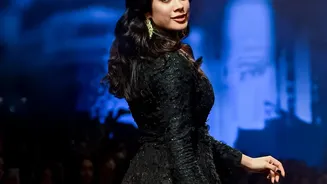
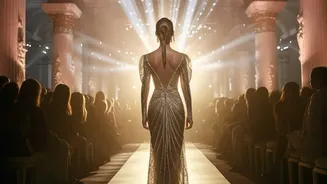
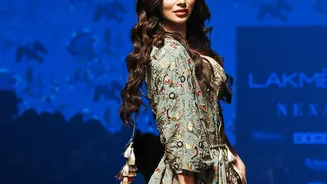
For decades, the format of the haute couture show was as established as the art form itself: a raised runway, a brisk procession of models, and a whirlwind of photographers capturing moments that last mere seconds. This format is designed for drama, energy,
and creating a singular, powerful statement about a collection's theme. The focus is on the overall look, the silhouette in motion, and the immediate impact. But this velocity comes at a cost. The very essence of couture—the hundreds, sometimes thousands, of hours of painstaking handwork, the intricate beading, the innovative fabric manipulation—is nearly impossible to appreciate as a garment flashes by. The traditional runway communicates the dream, but not always the reality of the immense craftsmanship involved.
From Motion to Museum
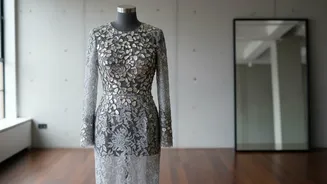
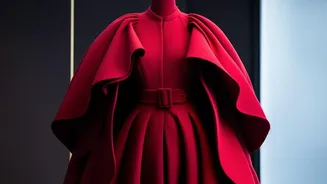
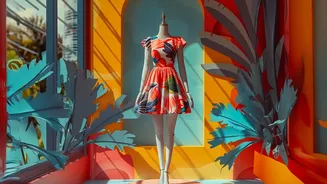
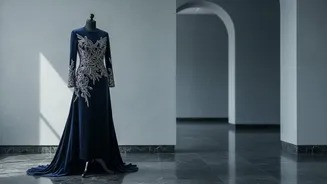
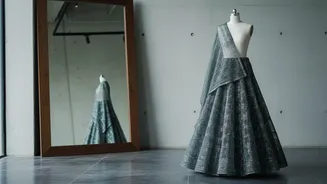
Increasingly, couture houses are breaking from this tradition, opting for formats that feel more like art installations or museum exhibitions. This can take many forms. Some designers present their collections on static mannequins or models who stand still, allowing viewers to walk around and inspect the garments from every angle. Others create immersive environments that tell a story. Dior, for instance, has repeatedly transformed its show sets at the Musée Rodin into temporary public exhibitions. After the official runway presentation, the elaborate, art-filled spaces are opened to visitors for several days, allowing them to experience the scenography and sometimes even view the collection's pieces up close, in dialogue with works of art.
A Deeper Appreciation of Craft
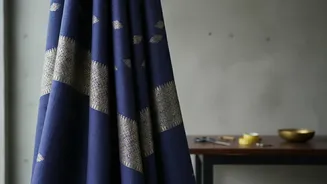
The primary benefit of this shift is a newfound focus on the 'haute' in haute couture—the high level of artistry. When a garment is stationary, the eye is free to wander and discover the details. You can see the texture of the fabric, the complexity of an embroidered pattern, or the architectural precision of a seam. Valentino's Pierpaolo Piccioli has been praised for salon-style presentations that emphasize the sacred process of dressmaking, turning a show into an exercise in craftsmanship. This slower, more deliberate format turns viewers from passive spectators into active observers. It fosters a deeper understanding that these are not just clothes, but unique, handcrafted objects that can take a team of artisans months to create. The story is no longer just the theme of the collection, but the skill of the human hands behind it.
Fashion as Immersive Storytelling
These exhibition-style formats also allow for more powerful and immersive storytelling. Rather than a linear progression of looks, designers can create a whole world for the audience to step into. The setting becomes a crucial part of the narrative. Recent Schiaparelli shows under Daniel Roseberry have been celebrated for their blend of fashion and surrealist art, creating an intelligent conversation with culture that extends beyond the clothes. Similarly, some presentations have used unique apparatuses to control the viewing experience, forcing a more focused kind of observation. This approach aligns couture more closely with performance art or installation art, creating a multisensory experience that lingers long after the show is over. It reframes the collection not as a series of individual items, but as a cohesive artistic statement.
A Strategic Shift for a New Era
This move is not purely artistic; it is also a savvy strategic decision. In an age dominated by social media, a static, beautifully lit garment can be more impactful on a phone screen than a blurry runway video. It allows for detailed shots that showcase quality and are eminently shareable. Furthermore, by presenting collections in a museum-like context, brands elevate their status, reinforcing the idea of fashion as a legitimate art form. This attracts a new audience of art lovers and collectors, and it justifies the astronomical prices of couture. By slowing down the pace and inviting closer inspection, brands are redefining luxury not as fleeting glamour, but as timeless, collectible craft. It’s a powerful way to assert couture’s relevance and value in a world saturated with fast fashion.