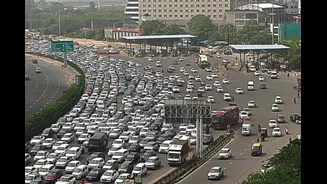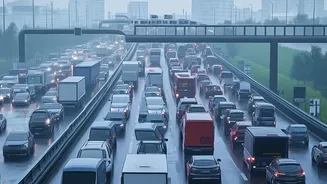




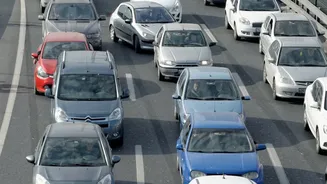
As winter approaches, Delhi is once again bracing for its annual battle with air pollution. Starting November 1, new vehicle restrictions will be in effect, significantly impacting commuters from neighbouring NCR cities like Gurugram, Noida, and Ghaziabad.
What Exactly Are the New Rules?
The Delhi government is implementing a ban on certain categories of vehicles to curb vehicular pollution, which is a major contributor to the city's poor air quality in winter. The primary rule affecting daily commuters is a ban on the entry of vehicles registered outside Delhi that do not meet Bharat Stage VI (BS-VI) emission standards. This means older petrol and diesel cars, specifically those that are BS-III or BS-IV compliant, will not be allowed to enter the city. These restrictions are part of a broader Winter Action Plan and will be in place from November 1, 2026, to January 31, 2027. This is separate from, but complementary to, the Graded Response Action Plan (GRAP), which may impose even stricter curbs if the air quality deteriorates to 'Severe' levels.
Does This Apply to My Car?
Yes, if you live in an NCR city and drive to Delhi for work or any other reason, this rule applies to you. The restriction is on any vehicle with a non-Delhi registration (e.g., Haryana, Uttar Pradesh) that is not BS-VI compliant. Transport department estimates suggest this will affect over 10 lakh vehicles across Gurugram, Faridabad, Noida, and Ghaziabad. For example, Gurugram and Faridabad have nearly two lakh such vehicles, while Noida and Greater Noida have over four lakh. To check your car's emission standard, you can look at your vehicle's Registration Certificate (RC) or visit the official Parivahan Vahan portal online. Broadly, cars manufactured before April 2020 are unlikely to be BS-VI compliant.
Which Vehicles Are Exempt?
The ban is not absolute and has several important exemptions. All BS-VI compliant vehicles, regardless of where they are registered, are allowed to enter Delhi. Additionally, all electric vehicles (EVs) and cars running on Compressed Natural Gas (CNG) are exempt from this restriction. Vehicles used for essential and emergency services, such as ambulances and fire tenders, will also be permitted entry. If your car falls into one of these categories, you will be able to commute into Delhi without issue, provided you have other valid documents.
What About 'No PUC, No Fuel'?
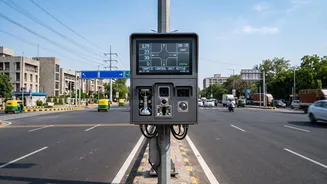
Alongside the entry restrictions, Delhi is strictly enforcing the 'No PUC, No Fuel' rule across the city. This means that even if your vehicle is allowed to enter Delhi (for instance, if it's a BS-VI car), you will not be able to refuel at any petrol, diesel, or CNG station without a valid Pollution Under Control (PUC) certificate. This rule applies to all vehicles, including those registered in Delhi. Authorities plan to use Automatic Number Plate Recognition (ANPR) cameras at hundreds of fuel stations to ensure compliance.
How Will the Ban Be Enforced and What's the Penalty?
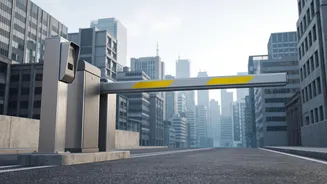
Enforcement will be strict at all major border checkpoints connecting Delhi with its neighbouring cities. Expect increased police presence and checks at key entry points like the DND Flyway, Chilla, Kalindi Kunj, Badarpur, and the Delhi–Gurugram expressway. AI–powered ANPR cameras are also being deployed to automatically flag non–compliant vehicles. If you are caught driving a banned vehicle in violation of these rules, you could face a hefty fine. Under the Motor Vehicles Act, the penalty can be as high as ₹20,000. Driving without a valid PUC certificate can also lead to a fine of ₹10,000.
What Are My Commuting Alternatives?
For the many commuters whose vehicles will be barred, planning an alternative is crucial to avoid disruption and fines. The most reliable option is public transport. The Delhi Metro network offers extensive connectivity across the NCR and is not affected by these rules. Using feeder services to reach your nearest metro station is a practical solution. Other options include inter–state buses that are compliant (CNG, electric, or BS–VI diesel), carpooling with someone whose vehicle is permitted, or using app–based cab services, ensuring the vehicle you book is compliant. For those with the option, working from home during this period is also being encouraged by the government.