





An Ominous Signal
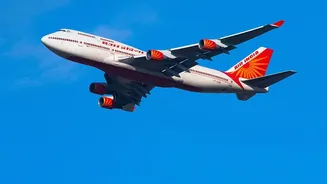
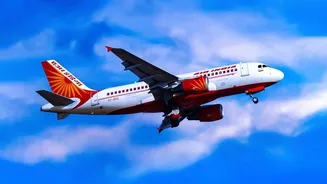
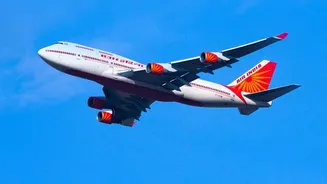
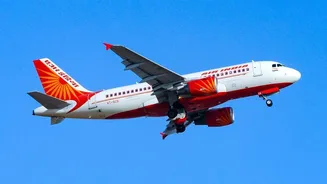
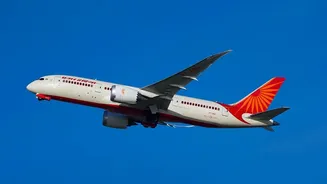
On the morning of October 14, 2026, as the Boeing 787 Dreamliner cruised towards its destination, air traffic control (ATC) in Ahmedabad received a startling transmission: Squawk 7500. This four-digit transponder code is an internationally recognised
signal for unlawful interference, including a potential hijacking. Although the signal lasted only a few seconds, it was enough to trigger a high-level security response. While some reports suggested the pilot may have activated the code by mistake, others indicated the pilot denied doing so, pointing instead to a possible technical glitch. Regardless of the cause, once the code is transmitted, safety protocols are non-negotiable.
Sudden Diversion to Jaipur
With the alert active, authorities in the Delhi airport's control room made a swift decision: the flight would not proceed to the capital. As a precaution, AI 2030 was ordered to divert to the nearest suitable airport, which was Jaipur. Passengers were informed that the plane would be making an unscheduled landing for 'security reasons'. Understandably, this caused confusion and concern on board. One passenger later recounted that seeing firefighters after landing made them think there had been an engine failure, while the presence of other security personnel suggested a more serious threat. The flight landed safely at Jaipur International Airport at approximately 9:35 AM and was immediately directed to a remote isolation bay, away from the main terminal building.
Hours of Uncertainty on the Ground
On the tarmac in Jaipur, a full-scale security operation unfolded. Teams from the Bureau of Civil Aviation Security (BCAS), the Anti-Terrorist Squad (ATS), and local police surrounded the aircraft. For about two hours, passengers remained on the plane with little information. Finally, they were asked to disembark for a comprehensive security check. Everyone on board, along with their luggage, underwent a thorough screening process while the aircraft itself was meticulously searched by security agencies. The pilots were also questioned to determine the source of the alert. Despite the initial scare, which some early reports had linked to a bomb threat, nothing suspicious was found.
Cleared for Takeoff
After several hours of checks and investigation on the ground in Jaipur, security agencies officially cleared the aircraft, crew, and passengers. Air India confirmed in a statement that the diversion was a response to a 'perceived security concern' and reiterated that the safety of its passengers and crew is its highest priority. The airline apologised for the significant disruption and delay, which stretched over five hours. Passengers reboarded the same aircraft, which then completed the final leg of its journey, eventually landing at Delhi's Indira Gandhi International Airport in the afternoon. The Directorate General of Civil Aviation (DGCA) has launched a formal investigation to definitively establish what led to the triggering of the hijack alert.