








A Digital Lifeline on the Front Lines
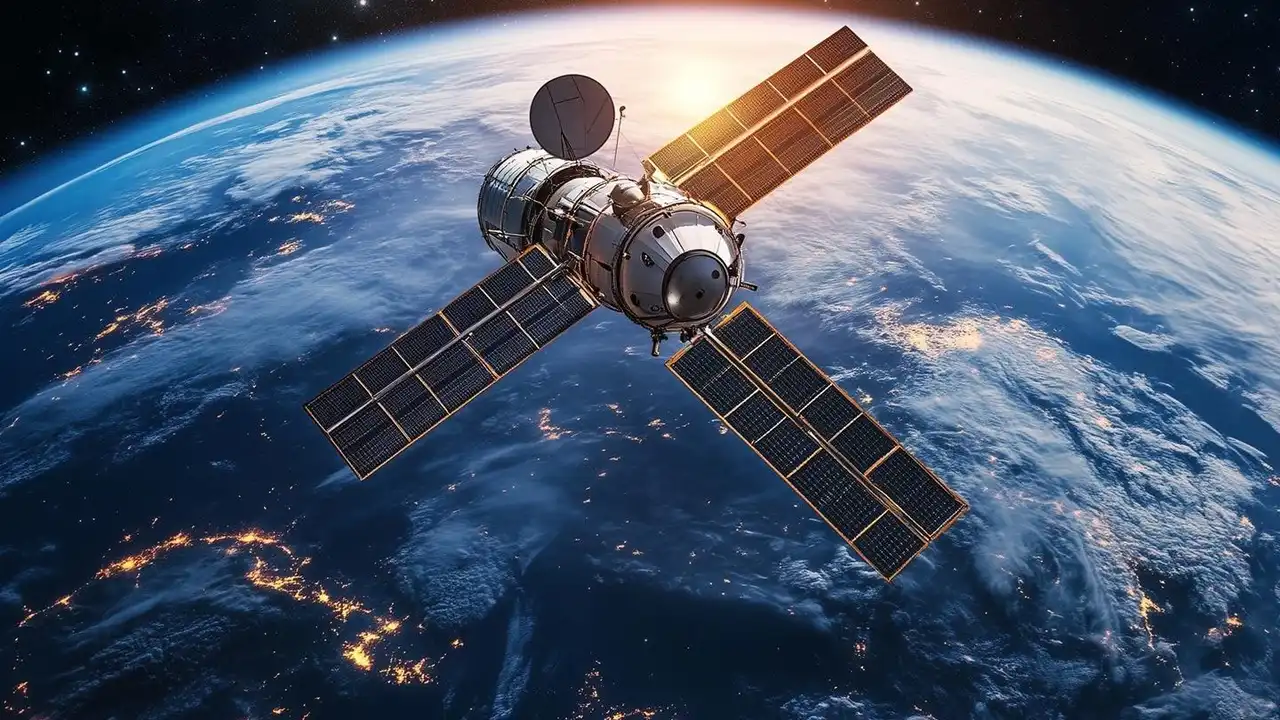
Since the full-scale Russian invasion in 2022, Starlink has become an indispensable tool for Ukraine. When Russian attacks destroyed conventional telecom networks, thousands of portable Starlink terminals provided vital internet access for civilians,
hospitals, and the government. More critically, the military came to rely on its high-speed, low-latency connection for everything from basic communication to coordinating precision strikes and controlling its formidable drone fleet. The system's ability to operate in remote areas while largely overcoming Russian jamming tactics offered a significant battlefield advantage. It is, as one Ukrainian military analyst stated, vital to both the civilian population and the armed forces.
The 'Off' Switch: What Are the Restrictions?
In mid-October 2026, Ukrainian military units suddenly experienced significant disruptions. The issue centered on Starshield, the military-grade version of Starlink operated by SpaceX but contracted for use by the Pentagon. According to Ukrainian officials, a speed cap of approximately 160 kilometers per hour (100 mph) was imposed without warning. When a device, such as a fast-moving interceptor drone, exceeded this speed, the connection would drop, causing missions to fail. Ukrainian President Volodymyr Zelenskyy confirmed the impact, stating the restriction prevents the use of certain drones against Russia's jet-powered Shaheds. To confirm their suspicions, Ukrainian officials tested terminals in EU countries, where they operated normally at speeds over 180 km/h, suggesting the limitation was specific to Ukraine.
A Geopolitical Hot Potato
The question of who ordered the restriction has become a point of international dispute. SpaceX CEO Elon Musk has stated that Starshield systems are owned and controlled by the U.S. government, and any limits are decided by the U.S. military and president. However, U.S. officials have given conflicting reports, with some denying that a high-level policy decision was made or that the president personally requested it. President Zelenskyy, meanwhile, has asserted he believes the message to limit the service came from the American government, which SpaceX then technically implemented. This public disagreement highlights the unprecedented scenario of a private CEO and his company acting as arbiters of a critical military technology, with Musk having previously expressed fears of his technology being used to escalate the conflict.
The Pentagon's Role and Lingering Uncertainty
To stabilize the situation and remove it from the whims of a commercial entity, the U.S. Department of Defense secured a contract with SpaceX to provide Starshield services to Ukraine. This was intended to ensure service availability and give the Pentagon control over where the network operates within the country. Despite this, the October 2026 disruptions occurred, and Ukrainian officials reported that inquiries to both SpaceX and the Pentagon were initially met with silence. While service was partially restored, the incident has left a deep sense of unease. It exposed a critical vulnerability: Ukraine's military operations are deeply intertwined with a commercial service, and even with government contracts in place, access can become unreliable.
The Search for Alternatives
The Starshield disruption has intensified Ukraine's and Europe's search for alternatives to avoid over-reliance on a single American company. EU officials have acknowledged that, in the short term, Europe has no comparable replacement for Starlink's capabilities. However, President Zelenskyy has confirmed that substantive discussions are underway with European nations to develop sovereign capabilities, both for satellite communications and air defense. Ukraine is also reportedly exploring other options, such as Amazon's developing satellite network and the OneWeb system from Europe's Eutelsat. While none of these are immediate fixes, the latest crisis has served as a stark warning that in the new era of techno-warfare, digital sovereignty is as important as territorial sovereignty.