






The Freedom of Off-Grid Power
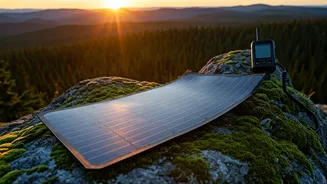
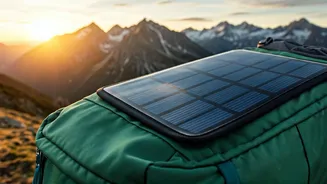
Whether you're trekking in the Himalayas, camping in the Western Ghats, or simply preparing for an unexpected power cut at home, the need for reliable power is universal. Portable solar panels have emerged as a game-changer, transforming sunlight into
usable energy for your essential gadgets. They provide freedom from the grid, allowing you to charge smartphones, GPS devices, cameras, and even power banks, ensuring you stay safe, connected, and able to capture your memories, no matter how remote your location.
How Do They Actually Work?
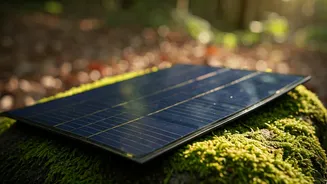
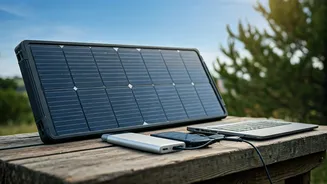
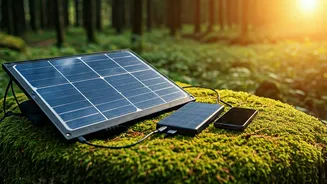
The technology sounds complex, but the concept is simple. Portable solar panels consist of photovoltaic (PV) cells, typically made from silicon. When sunlight (photons) strikes these cells, it excites electrons, creating a direct current (DC) of electricity. This current is then channelled through built-in ports, such as USB-A or USB-C, to directly charge your devices. Many modern panels don't have an internal battery; they are designed to charge your devices or a separate power bank when the sun is out. Think of them not as a battery, but as a portable, sun-powered wall outlet.
Key Features to Look For
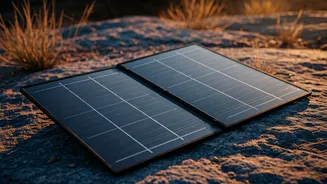
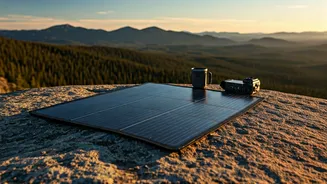
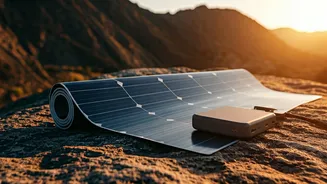
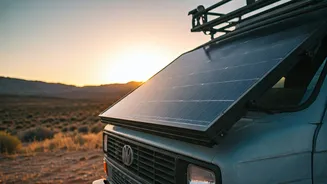
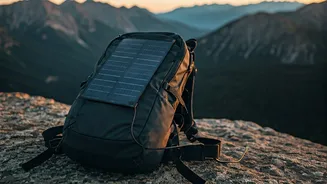
Choosing the right panel can feel daunting, but focusing on a few key factors will simplify your decision. First, consider wattage. A higher wattage generally means faster charging, but also a larger and heavier panel. For just a smartphone, a 10-20 watt panel is sufficient. For larger devices or charging multiple gadgets, look for 25 watts or more. Second, check the physical design. Is it foldable and lightweight for backpacking? Is it rigid and waterproof for mounting on a vehicle? Durability is crucial; look for panels made with rugged fabric like ETFE, which is resistant to water, scratches, and UV damage. Finally, inspect the output ports. Modern panels should have at least one USB-C port for faster charging and a standard USB-A for wider compatibility.
Decoding Watts, Amps, and Volts
Understanding power ratings is essential. Wattage (W) is the overall power output (Volts x Amps). While manufacturers prominently advertise peak wattage, this is measured in perfect, direct sunlight. Real-world output will almost always be lower. Amperage (A), or amps, determines the speed of the current. A 2.4A port will charge a phone much faster than a 1A port. Most modern smartphones benefit from at least 2A. Voltage (V) needs to be compatible with your device, but thankfully, most panels with USB ports are standardised at 5V, making them safe for almost all small electronics. For charging larger battery stations, you'll need panels with a higher voltage DC output.
Tips for Maximum Efficiency
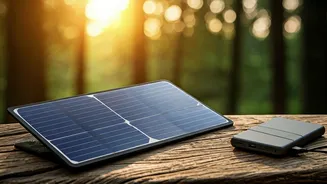
Getting the most out of your solar panel requires a bit of strategy. First, always angle the panel directly towards the sun. As the sun moves, you may need to reposition it every hour or so for optimal charging. Even a slight shadow from a tree branch can significantly reduce output. Second, it's often best to charge a power bank with the solar panel, and then use the power bank to charge your devices. Power banks have stable charging inputs and can store energy collected during peak sun hours for use at night or on cloudy days. Finally, keep your panels clean. Dust, pollen, and smudges can block sunlight and reduce efficiency, so a quick wipe with a soft cloth can make a noticeable difference.