



The Allure of Ancient Stones
To truly understand Portugal, you must walk its rural streets. These are not merely paths from one place to another; they are chronicles of a nation, paved with granite, schist, and limestone. In the countryside, away from the bustling crowds, the country's
authentic character reveals itself in the architecture, the landscapes, and the quiet rhythm of daily life. From hilltop fortresses that once guarded against invaders to secluded mountain hamlets that have remained unchanged for centuries, each village offers a unique window into the past. Exploring these historic streets is an invitation to disconnect from the modern world and immerse yourself in a story that has been unfolding for thousands of years.
Monsaraz: A Whitewashed Medieval Dream
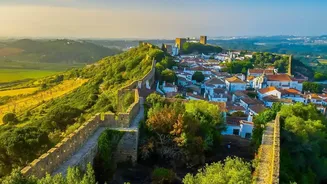
In the heart of the Alentejo region, the fortified village of Monsaraz rises dramatically above the vast Alqueva Lake. Entering its ancient walls feels like stepping into a different era. The narrow, uneven cobblestone lanes are flanked by brilliant whitewashed houses, their schist stone foundations a testament to the village's medieval origins. This strategic stronghold has been occupied by Romans, Visigoths, and Moors before being reclaimed by the Knights Templar in the 12th century. As you wander, every corner reveals a new vista of the sweeping golden plains below. The 14th-century castle, now home to a bullfighting arena, offers breathtaking panoramic views, especially at sunset when the sky over the largest artificial lake in Europe puts on a spectacular show.
Monsanto: The Village Built of Boulders
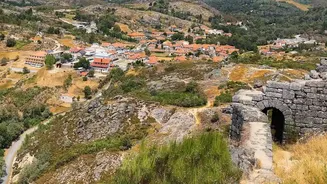
Prepare to be astonished by Monsanto, a village so unique it was once voted 'the most Portuguese village in Portugal'. Perched on a steep hill near the Spanish border, Monsanto's defining feature is the gigantic granite boulders that are integrated into its very structure. Houses are built between, under, and even on top of these colossal stones, with doorways carved directly into the rock. Winding stone paths and rugged steps navigate this incredible landscape, leading up to the ruins of a 12th-century Templar castle at the summit. The appearance of the village has barely changed since the medieval era, creating a powerful sense of permanence and ingenuity. Exploring Monsanto feels like walking through a fantasy novel, where nature and human habitation has merged into one.
Piódão: The Hidden Schist Hamlet
Deep within the Serra do Açor mountains lies Piódão, a village often likened to a nativity scene due to its amphitheatre-like layout on a steep hillside. What makes Piódão so distinctive is its uniformity; nearly every building, from the houses to the pavements, is constructed from schist, a dark, slate-like stone abundant in the region. This creates a harmonious, earthy palette, beautifully contrasted by the vibrant blue paint on many doors and windows. For centuries, Piódão's isolation helped preserve its unique character; until the 1970s, it was accessible only by foot or on horseback. Today, walking its winding, narrow streets is an immersive experience, a journey back to a simpler, more communal way of life.