




Meet the Carotenoids
The story of vitamin A from plants is really the story of carotenoids. These are the natural pigments that give many fruits and vegetables their bright red, yellow, and orange colours. There are over 600 types, but they fall into two main camps. The first
is 'provitamin A' carotenoids, like beta-carotene, which the body can convert into active vitamin A (also called retinol). The second group is 'non-provitamin A' carotenoids, which the body doesn't turn into vitamin A but which have other important antioxidant functions. This distinction is the key to understanding the difference between carrots and spinach.
Carrots: The Beta-Carotene Powerhouse
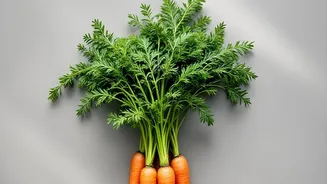
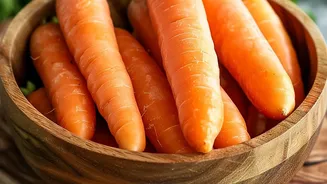
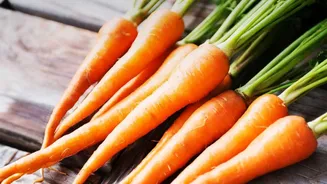
Carrots are famous for one thing above all: beta-carotene. This orange pigment is the most well-known provitamin A carotenoid. When you eat a carrot, enzymes in your intestine get to work, converting that beta-carotene into retinol, the active form of vitamin A. This form is essential for several critical bodily functions. It supports healthy vision (especially night vision), a robust immune system, cell growth, and skin health. Interestingly, your body is smart about this conversion; it only converts what it needs, which makes getting vitamin A from carrots very safe. Studies show that the beta-carotene from carrots is also more readily converted to vitamin A than the beta-carotene from spinach.
Spinach: A Champion for Eye Health
While spinach does contain some beta-carotene, its real superstars are two different carotenoids: lutein and zeaxanthin. These fall into the 'non-provitamin A' category, meaning they aren't converted into vitamin A. Instead, they perform a different, highly specialised job. Lutein and zeaxanthin are powerful antioxidants that accumulate in the retina of your eye, specifically in the macula. Here, they act like internal sunglasses, helping to protect your eyes from damage caused by sunlight and filtering harmful blue light. Research has strongly linked diets rich in lutein and zeaxanthin to a lower risk of age-related eye conditions like macular degeneration and cataracts.
Getting the Most from Your Veggies
How you prepare these vegetables matters. Carotenoids are fat-soluble, which means your body absorbs them better when you eat them with a little bit of fat. So, roasting carrots in olive oil or adding a vinaigrette to your spinach salad isn't just for flavour—it boosts nutrient absorption. Cooking also helps. The heat breaks down the tough cell walls of the vegetables, releasing more of the carotenoids and making them more available for your body to use. Studies show that cooked carrots and spinach can provide more bioavailable carotenoids than when they are eaten raw.
The Verdict: A Team Effort
So, which is better? The answer is neither. Carrots and spinach are not competitors; they're teammates with different specialities. If your goal is to supply your body with the building blocks to make vitamin A, carrots are the clear winner due to their high concentration of highly convertible beta-carotene. However, if you're focused on protective antioxidants for long-term eye health, spinach and its high levels of lutein and zeaxanthin are indispensable. One provides the direct precursor for a vital vitamin, while the other offers targeted protection for a crucial organ. Thinking of it as a competition misses the point of a balanced diet, which is to get a wide variety of nutrients that work together.