



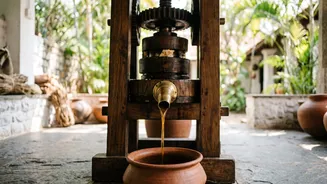

What is a Wooden Ghani?
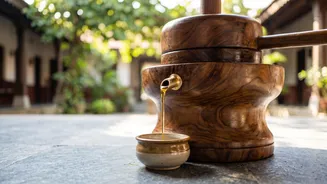
A wooden ghani, known regionally in India as a 'chekku' or 'kolhu', is a traditional oil press that has been used for centuries. It consists of a large wooden mortar and a heavy wooden pestle. Oilseeds, like sesame, are placed into the mortar, and the pestle—once
turned by bullocks but now often by a slow-moving motor—rotates and crushes the seeds. The entire process is slow and mechanical, relying on pressure to extract the oil rather than industrial heat or chemical solvents. The simple genius of this ancient machine lies in its material and its pace; the wood absorbs friction heat, ensuring the oil is extracted at a very low temperature.
The Science of Gentle Extraction
The key to the wooden-ghani method is that it is a true 'cold-pressing' technique. The slow rotation of the wooden pestle generates minimal friction, keeping the oil's temperature below 45°C. This is crucial because many of the most valuable nutrients in sesame seeds are sensitive to heat. High temperatures, common in modern industrial extraction, can degrade or destroy these compounds. By keeping things cool, ghani extraction ensures that the delicate nutrients are preserved. The resulting oil is raw, unfiltered, and nutritionally dense, retaining the seed's natural goodness.
Nutrients Lost in Modern Refining
To appreciate what the ghani method saves, it helps to understand what modern refining loses. Most commercially available oils are extracted using high heat and chemical solvents like hexane. This industrial process is designed for maximum yield and a long shelf life. However, the high temperatures destroy antioxidants, vitamins, and the natural structure of healthy fatty acids. The oil is then often bleached and deodorised, which further strips it of beneficial compounds like polyphenols and phytosterols. What remains is often a nutritionally compromised product compared to its cold-pressed counterpart.
A Boost of Flavour and Wellness
Wooden-ghani sesame oil is not just nutritionally superior; it offers a richer culinary experience. The gentle process preserves the deep, nutty, and aromatic flavour of the raw sesame seeds, which can elevate any dish. But the benefits extend beyond taste. The oil is rich in natural antioxidants like sesamol and sesaminol, which help protect the body from cellular damage. It also retains a healthy profile of polyunsaturated and monounsaturated fats, which are linked to better heart health. Furthermore, the unrefined oil is a good source of Vitamin E, a powerful antioxidant known for its benefits to skin and overall health.
Making the Switch in Your Kitchen
Incorporating wood-pressed sesame oil into your daily routine is simple. Its rich, authentic flavour makes it ideal for tempering dals and vegetables, creating marinades, or mixing into chutneys and dressings. You can even use it for the Ayurvedic practice of oil pulling for oral health. When shopping, look for labels that specify 'wood-pressed', 'ghani', 'chekku', or 'kolhu' to ensure you are getting the genuine article. The oil may appear cloudier than refined versions and have natural sediment at the bottom—these are signs of its purity and minimal processing.