







The Vanishing Ink
For decades, the ink stamp in a passport was the definitive record of entry. Now, in the name of efficiency and security, many popular destinations have stopped stamping passports altogether. Major travel hubs like Australia, the United Kingdom, Singapore,
and the United States have been using digital systems for years. The European Union's 29 Schengen Area countries are the latest to join this trend, with the full rollout of their automated Entry/Exit System (EES) in 2026, which replaces manual stamping with a digital record of biometric data. This system logs your name, travel document, fingerprints, and facial image, along with the date and place of entry and exit. This shift means that the physical proof you once relied on is gone, making personal vigilance more important than ever.
Why You Must Track Your Stay
Without a physical stamp, it is easy to lose track of your 'admit until' date. However, the consequences of overstaying, even by a single day, can be severe. In the U.S., an overstay automatically voids your visa for future travel. An overstay of more than 180 days can lead to a three-year ban from re-entering the country, while overstaying by a year or more can result in a ten-year ban. The EU's new EES is specifically designed to automatically detect overstayers, which could lead to fines or future entry bans. Beyond immigration penalties, a clear travel history is often required for visa applications for other countries, residency permits, or even tax purposes. An inability to provide accurate dates can create significant and costly administrative hurdles down the road.
Accessing Official Digital Records
Thankfully, the countries implementing these systems provide ways to access your official records. For travellers to the United States, the key is the Form I-94, the official Arrival/Departure Record. While once a paper card, it is now an electronic record upon entry. You can access your most recent I-94, as well as your travel history for the last five years or more, via the official U.S. Customs and Border Protection (CBP) I-94 website or the CBP One app. This record will show your class of admission and, most importantly, your 'admit until' date. Similarly, while the EU's EES is a border management tool, your data is stored, and being aware of your entry date is crucial for calculating your allowed 90-day stay within any 180-day period.
Your Personal Tracking Toolkit
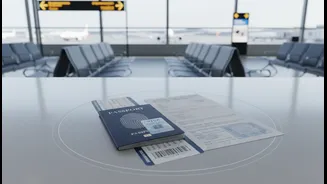
While official sites are the ultimate source of truth, maintaining your own records provides an essential backup and quick reference. Every time you enter a country, make it a habit to check your official digital record online as soon as possible to ensure all details are correct. Take a screenshot of your I-94 or any other digital entry confirmation and save it to a dedicated folder on your phone or cloud storage. Don't discard your boarding passes; they serve as a physical reminder and proof of a flight. You can also create a simple spreadsheet or use a note-taking app to log your entry and exit dates, destination, and the airline you flew. For those who travel frequently, this small administrative task can prevent major headaches, especially when calculating complex stay limits like the Schengen 90/180 rule.
When Your Records Matter Most
A meticulous personal travel log becomes invaluable in several scenarios. If you encounter an error in your official travel history—for instance, a departure that was never recorded—your own records like boarding passes can help you prove you left the country on time. This is particularly important for land border crossings, which can sometimes fail to be recorded electronically. Furthermore, when applying for residency, citizenship, or a new visa, immigration authorities will require a detailed history of your time in their country and elsewhere. Having your dates readily available, supported by digital and physical proof, demonstrates that you are an organised and compliant traveller, smoothing the path for your application's approval.