





The Dolphin Push-Up is a powerhouse for building shoulder strength and core stability, but its true potential is unlocked with one key detail: controlled elbow movement. Here’s how to master this crucial component for safer, more effective results.
Understanding the Dolphin Push-Up
A hybrid
of a plank, a push-up, and the Dolphin Pose found in yoga, the Dolphin Push-Up is a dynamic bodyweight exercise that primarily targets the shoulders, specifically the deltoids. It also engages the upper back, chest, core, and triceps. The movement involves starting in a forearm plank, lifting your hips up and back into a 'V' shape, and then lowering the chest and head forward towards the hands before pushing back. Unlike traditional push-ups that focus heavily on the chest, this exercise places a unique emphasis on shoulder strength and mobility, making it an excellent addition to any routine focused on upper body conditioning.
The 'Why' Behind Elbow Control
The core of this exercise's effectiveness and safety lies in how you manage your elbows. When performing a Dolphin Push-Up, the goal is to keep your elbows directly under your shoulders and prevent them from flaring out to the sides. This controlled alignment achieves several important things. First, it ensures that the work is being done by the deltoids and supporting shoulder muscles, rather than being transferred into the joints. Flared elbows can put unnecessary strain on the rotator cuff and elbow joints, increasing the risk of injury. Second, maintaining this narrow, controlled path builds tremendous stability in the shoulder girdle. This stability is crucial not only for advancing in your fitness but also for everyday functional movements.
Common Mistakes to Avoid
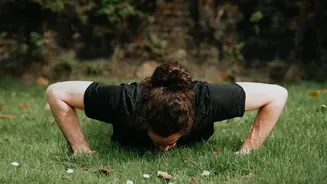
The most frequent error in Dolphin Push-Ups is allowing the elbows to splay outwards as you lower your body. This often happens due to a lack of shoulder strength or mobility. When the elbows flare, the exercise loses its primary benefit and becomes a less effective, higher-risk movement. Another common mistake is letting the shoulders shrug up towards the ears. This indicates that the trapezius muscles are overcompensating for weaker deltoids. Focus on keeping your shoulders depressed and away from your ears throughout the entire range of motion. Finally, avoid rushing the movement. The Dolphin Push-Up is about control, not speed. A slower, more deliberate tempo will build more strength and reinforce proper form.
A Step_by_Step Guide to Proper Form
To perform the Dolphin Push_Up with perfect elbow control, follow these steps:
1. Start in a forearm plank position. Your elbows should be directly under your shoulders, and your forearms parallel to each other, like the number 11. Clasping your hands can make it easier initially, but parallel forearms are the goal.
2. Engage your core and walk your feet in towards your elbows, lifting your hips high into an inverted 'V' shape. This is your starting position, similar to Dolphin Pose in yoga.
3. Inhale as you slowly lower your head and chest forward, aiming for a point just in front of your hands. Critically, keep your elbows hugged in and stationary. Do not let them slide out.
4. As you lower, your shoulders will travel past your elbows. Keep your gaze slightly forward.
5. Exhale and press firmly through your forearms to push your body back to the starting 'V' position. Feel the work in your shoulders and upper back as you push away from the floor.
Modifications and Drills
If you find your elbows flaring out, it's a sign you need to build more foundational strength. Instead of struggling through poor form, regress the exercise. A great drill is to simply hold the starting Dolphin Pose for 30–60 seconds, focusing on pressing the forearms into the floor and keeping the elbows in. You can also place a yoga block between your hands to gently force your arms to remain parallel. For a less intense version of the pushup itself, perform the movement from your knees. This reduces the amount of body weight you have to press, allowing you to concentrate entirely on the controlled elbow path before progressing to the full version.