





A Data Flood from Deep Space
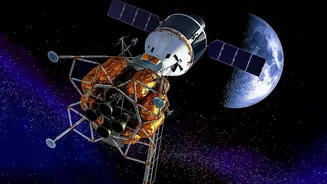
When the Orion spacecraft returned, it didn't just bring back its four astronauts; it carried an unprecedented scientific bounty. In early October 2026, NASA released the full dataset to the public: over 800 gigabytes of information. This massive collection
includes more than 11,000 high-resolution images, 8.5 hours of audio recordings detailing the crew's observations, and even the astronauts' own annotated notes and sketches. For months, specialized teams have been poring over this information, and their findings are beginning to paint a new, more complex picture of the Moon.
The Real Colours of the Moon
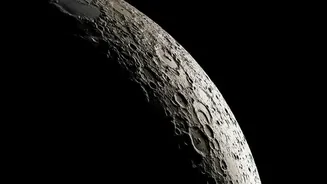
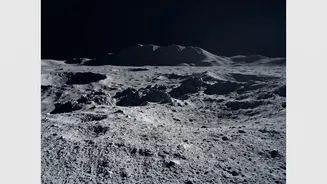
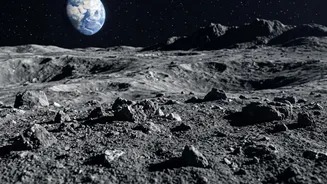
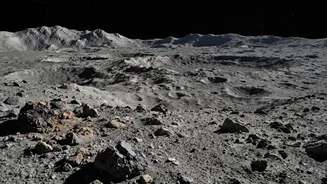
One of the most surprising revelations has come from simple human observation. The Artemis II crew, trained for years in geological observation, reported a lunar surface far more colourful than the monochrome grey we see from Earth. They described seeing subtle browns, tans, and even 'swamp-like' greens and 'jaundiced yellow' hues. These colours are not just beautiful; they are scientific clues. The different shades can indicate the presence of specific minerals, such as iron-rich and titanium-rich volcanic rock or glass formed by ancient eruptions and asteroid impacts. Astronaut Christina Koch likened one plateau to 'a yellow snow-capped mountain', giving geologists new visual data to map the Moon's composition.
Witnessing a Cosmic Shooting Gallery
For the first time, astronauts witnessed and documented small meteoroids striking the Moon. During a period when the Moon eclipsed the Sun, the darkened conditions allowed the crew to spot at least five faint flashes of light on the surface. Scientists have since confirmed these were not stray reflections but genuine impacts from pebbles, perhaps only a few inches wide, hitting the Moon at thousands of miles per hour. This observation is critical for planning future lunar bases. The Moon has no atmosphere to burn up incoming debris, so understanding the frequency of these small impacts is essential for designing safe habitats, rovers, and infrastructure for long-term stays.
The Human Advantage
The mission underscored the irreplaceable value of having human eyes and brains in deep space. While automated cameras captured stunning images, the crew's ability to interpret their surroundings in real-time proved invaluable. They could distinguish between tricks of the light and true geological features, a skill vital for navigating the treacherous, long shadows of the lunar poles where future missions will land. They observed details along the 'terminator'—the line between lunar day and night—that will help planners for Artemis III choose the right equipment and landing sites. The mission demonstrated that human cognition is a powerful scientific asset, able to integrate visual perception with contextual understanding in a way no machine currently can.
Paving the Path for a Lunar Return
Every piece of data from Artemis II is now directly informing the next, even more ambitious mission: Artemis III, which aims to land humans on the Moon for the first time in over 50 years. The observations of the lunar surface help fine-tune landing site selection near the Moon's south pole. The detailed radiation measurements taken outside Earth's protective magnetic field are crucial for ensuring the health and safety of future crews on longer missions. Even the engineering data on how the Orion spacecraft performed, from its heat shield to its life support systems, is being used to refine the hardware for the upcoming landing mission. The science from Artemis II is not just academic; it is the practical foundation for building a sustained human presence on the Moon.