






The desire for clean, fresh air inside our homes has made houseplants and air purifiers popular fixes. But when it comes to genuinely improving air quality, is a lush snake plant as good as a modern machine? Let's look at the evidence.
The Green Promise of Houseplants
The idea that houseplants
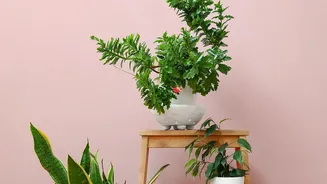
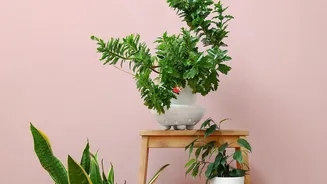
are natural air purifiers is deeply rooted in a famous 1989 NASA study. Researchers, looking for ways to clean the air in sealed space stations, found that common houseplants could absorb volatile organic compounds (VOCs) like benzene and formaldehyde in small, sealed chambers. This finding grew into a popular belief that placing a few plants around your living room could scrub the air of harmful pollutants. The appeal is obvious: a beautiful, natural, and low-cost solution to a modern problem. Plants also offer proven psychological benefits, reducing stress and boosting mood, making them a welcome addition to any home.
The Reality: A Jungle in Your Living Room?
While the NASA study was scientifically sound for its specific conditions, modern research has shown its findings don't translate well to a typical home or office. The key issue is that our homes are not sealed chambers; they have constant air exchange from windows, doors, and ventilation systems. This natural ventilation dilutes pollutants much faster than plants can absorb them. A 2019 review of decades of research concluded that to match the air-cleaning rate of a building's standard ventilation, you would need an impractically large number of plants — anywhere from 10 to 1,000 plants per square meter of floor space. That means turning your home into a dense jungle to achieve a measurable effect. Furthermore, while plants can absorb some gases, they are ineffective against common airborne particles like dust, pollen, and PM2.5.
Enter the Machine: How Air Purifiers Work
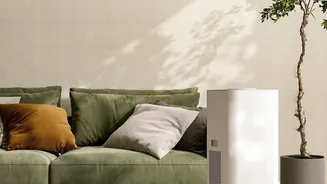
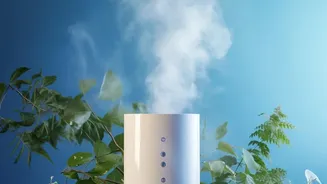
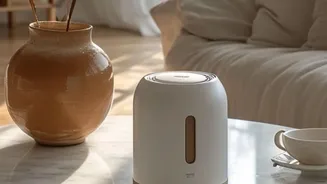
Unlike plants, mechanical air purifiers are engineered specifically to clean the air at high volumes. Most quality purifiers use a multi-stage filtration process. The key component is the HEPA (High-Efficiency Particulate Air) filter, a standard that guarantees removal of at least 99.97% of airborne particles down to 0.3 microns in size. This includes dust, pollen, mold spores, pet dander, and the fine particulate matter known as PM2.5, which can penetrate deep into the lungs. Many purifiers also include an activated carbon filter, which is crucial for adsorbing VOCs, gases, and odours that a HEPA filter alone cannot trap. By actively pulling air through these filters, a single purifier can cycle the air in a room multiple times per hour, offering immediate and significant improvement.
The Evidence: Purifiers Win on Power and Speed
When comparing effectiveness, the numbers are clear. The Clean Air Delivery Rate (CADR), which measures an air cleaner's performance, shows an average purifier processes over 100 cubic meters of air per hour, while a plant's rate is less than one. Studies consistently show that HEPA purifiers can reduce indoor PM2.5 concentrations by 50% or more, providing measurable health benefits. While a plant might take 24 hours to remove a small fraction of a single pollutant in a sealed box, an air purifier cleans a whole room of a wide range of pollutants in minutes. For anyone serious about tackling allergens, dust, or pollution from external sources like traffic or smoke, a purifier is the only solution shown to be effective in a real-world home setting.
The Verdict: Not a Competition, but a Collaboration
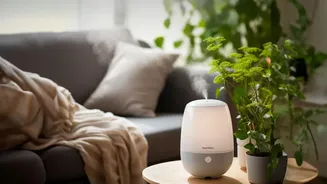
Pitting houseplants against air purifiers is ultimately a flawed comparison. If your goal is to measurably reduce airborne pollutants, allergens, and particulate matter, an air purifier is unquestionably the superior and only truly effective tool. The science is clear that a handful of houseplants will not have a significant impact on your indoor air quality. However, that doesn't mean plants are useless. Their value lies in their aesthetic beauty and their proven ability to improve mental well being, lower stress, and add a touch of humidity to a dry room. The best approach is to see them as complementary. Use a high quality air purifier to do the heavy lifting of cleaning the air, and fill your home with plants for the joy and tranquility they bring.