



A Flood of New Worlds
Imagine discovering more planets in a few years than have been found in all of human history combined. That isn't science fiction; it's the mission of NASA's Nancy Grace Roman Space Telescope, set to launch as early as August 30, 2026. While telescopes
like Hubble and James Webb capture stunningly deep images of specific targets, Roman is built for something different: speed and scale. Its primary mirror is the same size as Hubble's, but its field of view is at least 100 times larger. This allows it to survey enormous patches of the night sky with incredible speed and resolution, creating a vast, dynamic map of the cosmos. Scientists anticipate Roman will identify a staggering 100,000 new exoplanets, a monumental leap from the roughly 6,300 confirmed to date.
The Power of a Wide-Angle View
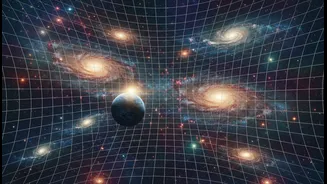
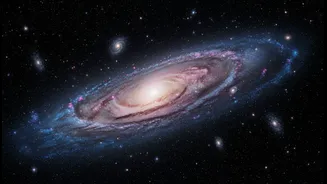
Roman's power comes from its Wide Field Instrument (WFI), a nearly 300-megapixel infrared camera designed for cosmic census-taking. Instead of zooming in on one star, it will stare at the crowded central bulge of our Milky Way galaxy, monitoring the brightness of hundreds of millions of stars over time. This repeated observation is key. By watching for the telltale dimming of a star as a planet passes in front of it (the transit method), Roman will catch thousands of planetary candidates. But it will also employ a technique called gravitational microlensing. This happens when a star and its planet pass in front of a more distant star, causing the background starlight to briefly magnify. Microlensing is powerful because it can detect planets far from their stars and even rogue planets that don't orbit a star at all.
More Than Just Planets
While exoplanet discovery is a headline goal, Roman’s wide-angle survey will revolutionize many other areas of astronomy. The telescope is a key tool in the quest to understand two of the universe's biggest mysteries: dark energy and dark matter. By mapping the distribution of billions of galaxies across cosmic time, astronomers can measure how the universe's expansion has accelerated. This data will provide crucial tests for our theories about the nature of dark energy, the mysterious force driving this expansion. The same survey will also map the distribution of dark matter, the invisible substance that structures galaxies and clusters. Roman's data will offer a clearer picture of how these cosmic building blocks have evolved over billions of years.
A New Era of Cosmic Movies
Roman isn't alone in this new approach to observing the universe. On the ground, the Vera C. Rubin Observatory in Chile has officially begun its own decade-long survey of the sky. With the world's largest digital camera, Rubin is capturing a new image of the entire southern sky every few nights. This creates what scientists are calling the 'greatest cosmic movie ever made,' a time-lapse record that will capture everything that changes or moves. In its early testing phases alone, Rubin has already discovered thousands of previously unknown asteroids. Together, Roman and Rubin represent a shift in astronomy from taking static snapshots to creating a dynamic, high-definition chronicle of the universe in motion, revealing transient events like supernovae and the subtle dance of distant worlds.
Preparing for a Data Deluge
The sheer volume of information from these new observatories presents its own monumental challenge. Roman's mission alone will generate an immense data deluge that will need to be processed, archived, and analyzed. This firehose of data will require new computational tools and AI-driven techniques to sift through and identify the most promising discoveries. For years to come, scientists will be mining this treasure trove, making discoveries that are currently impossible. The telescope, which recently arrived at Kennedy Space Center for its final launch preparations, is not just another eye on the sky; it's a new kind of visual engine for discovery, promising to redraw our map of the cosmos.