








From National Ambition to On-the-Ground Action
The narrative around India's green transition has fundamentally changed. What was once a story of ambitious targets and policy frameworks—like the National Green Hydrogen Mission and Production Linked Incentive (PLI) schemes—is now about execution. The country
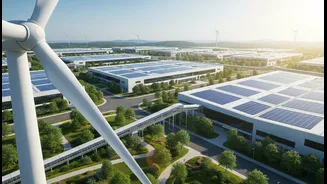
is moving to translate its goal of 500 GW of non-fossil fuel capacity into tangible assets: sprawling solar parks, advanced battery gigafactories, and green hydrogen production hubs. This shift represents one of the most significant industrial opportunities in a generation. However, this transition from paper to production creates an urgent demand for a new class of skills. While long-term hiring in the sector has seen a significant surge, recent trends indicate a pivot from investment-driven expansion to a more execution-focused strategy, highlighting a need for specific, practical expertise.
The Chemical Core of Clean Technology
At the heart of this industrial revolution is chemistry. The entire clean-tech value chain, from energy generation to storage, is built on chemical processes and material science. Think of the polysilicon used in solar panels, the electrolyte chemistries that determine battery performance, or the catalysts essential for producing green hydrogen. As India aims to build domestic manufacturing capacity and reduce import reliance, demand for chemical engineers and material scientists is set to soar. Professionals who understand how to develop, scale, and optimise these processes will be indispensable. This includes expertise in everything from sustainable polymers and waste reduction to creating eco-friendly chemical alternatives, a field broadly known as green chemistry.
The Operations Engine: Building and Running the Future
Ambitious projects require masterful execution. The industrial build-out phase is less about strategy and more about operations. This creates immense demand for professionals who can manage complex projects, optimise supply chains, and run large-scale manufacturing facilities efficiently. Roles like operations and maintenance managers, production engineers, and supply chain specialists are becoming critical as companies move from pilot projects to gigawatt-scale deployment. Given that India's clean energy supply chains are still developing and face geopolitical risks, experts in logistics, procurement, and inventory management will be vital for ensuring projects are delivered on time and within budget. These are the people who turn blueprints into functioning power plants and ensure they run smoothly for decades.
The Compliance Compass: Navigating a New Landscape
Building the green economy is not a free-for-all; it is happening within a complex and evolving regulatory framework. As a result, skills in compliance are no longer a secondary concern but a core business function. This includes a deep understanding of environmental regulations, safety protocols, and land acquisition laws. Furthermore, with global investors and customers placing a premium on sustainability, expertise in Environmental, Social, and Governance (ESG) reporting is becoming a sought-after skill. Companies need professionals who can not only ensure they meet statutory requirements but also navigate international standards and transparently communicate their sustainability performance to stakeholders. These experts act as the essential compass guiding businesses through the legal and social landscapes of the green transition.
Charting Your Course in the Green Economy
For those looking to build a career or business in this sector, the message is clear: specialise and acquire tangible skills. For engineering students, this means complementing core degrees with knowledge of battery tech, green hydrogen systems, or sustainable materials. For existing jobseekers, upskilling in project management, data analytics for energy efficiency, or ESG compliance can open new doors. And for clean-tech businesses, the focus must be on building a workforce that blends deep technical knowledge with strong execution capabilities. The talent shortage is real, with demand for skilled professionals growing much faster than supply. Companies that invest in training and development will not only secure their own future but also help build the human capital necessary for India's clean energy leadership.