

An Oasis in the Abyss
Imagine a world of total darkness, freezing temperatures, and pressure that would crush a car like a soft drink can. This is the deep sea, an environment long thought to be a barren desert. But in 1977, near the Galápagos Rift, scientists in the submersible
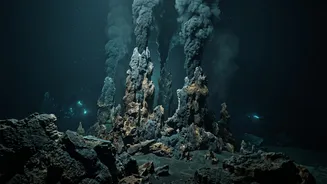
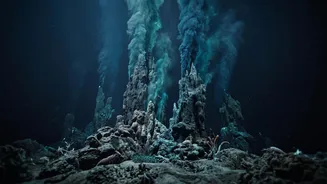
Alvin stumbled upon something astonishing: bustling ecosystems clustered around cracks in the seafloor. These formations, called hydrothermal vents, are like underwater hot springs. Seawater seeps into fissures in the ocean crust, gets superheated by underlying magma, and then erupts back into the ocean, carrying a cocktail of dissolved minerals and gases. Instead of a wasteland, scientists found chimneys spewing hot, mineral-rich water, surrounded by dense communities of giant tube worms, clams, crabs, and shrimp.
The Chemical Kitchen
The existence of this vibrant life posed a fundamental question: without sunlight, what were they eating? The answer turned out to be revolutionary. Instead of photosynthesis, the process plants use to convert sunlight into energy, these ecosystems are powered by chemosynthesis. At the base of this food web are incredible microbes—bacteria and archaea—that have evolved to do something amazing. They harness the chemical energy from compounds like hydrogen sulfide, which smells like rotten eggs and is toxic to most life, gushing from the vents. They use this chemical energy to convert carbon dioxide into sugars and other organic molecules, creating food from scratch in total darkness.
A Symbiotic Feast
These chemosynthetic microbes are the foundation of the entire vent community. They grow on every available surface and form the basis of a complex food web. Many of the larger animals have formed incredible partnerships, or symbioses, with these microbes. The iconic giant tube worms, some growing up to eight feet long, have no mouth or digestive system. Instead, their bodies contain vast colonies of chemosynthetic bacteria. The worms absorb chemicals from the vent water and deliver them to their internal bacteria, which produce all the nutrients the worm needs to survive and grow. Similarly, the mussels and clams that cluster around the vents also host these bacteria in their gills, relying on them for nourishment. Crabs, shrimp, and octopuses then prey on these organisms, completing the food chain.
Rewriting the Rules of Life
The discovery of chemosynthesis did more than just introduce us to a few new species; it fundamentally altered our definition of what is required for life to exist. It proved that sunlight is not a universal necessity. Life, it turns out, is incredibly adaptable, capable of building complex biological communities powered entirely by geothermal and chemical energy. This insight has profound implications, not just for understanding our own planet, but for the search for life elsewhere in the universe. If life can thrive in such extreme and seemingly inhospitable conditions on Earth, it opens up the possibility that it could exist in similar environments on other worlds.
Looking for Life on Other Worlds
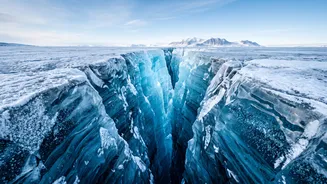
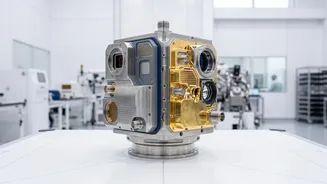
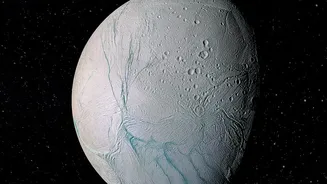
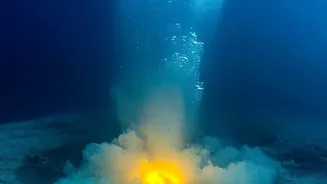
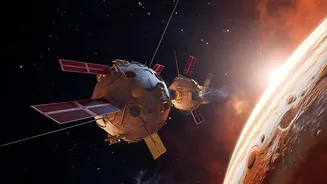
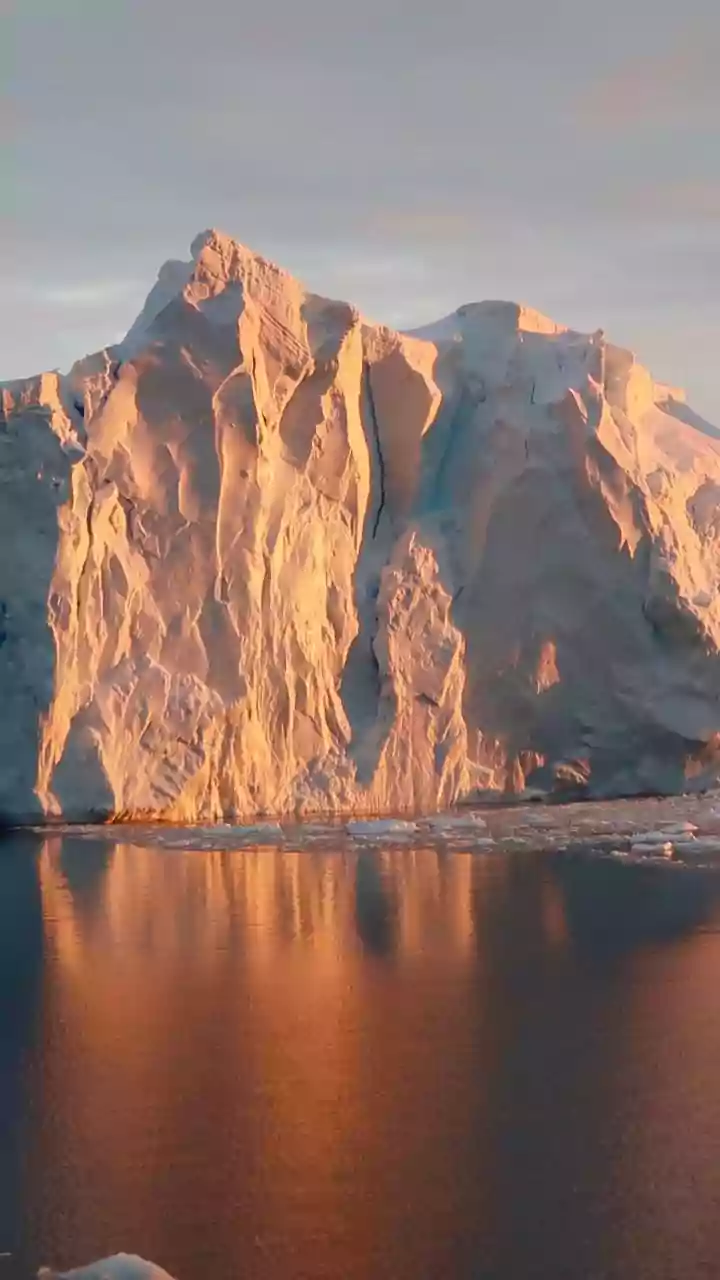
Astrobiologists are now looking at icy moons in our own solar system with new eyes. Jupiter's moon Europa and Saturn's moon Enceladus are both believed to have vast liquid water oceans hidden beneath their frozen shells. While sunlight can't reach these deep alien oceans, there is evidence to suggest they may have hydrothermal vents on their seafloors. These vents could provide the same mix of heat and chemical energy that fuels life in Earth's deep sea. Finding thriving ecosystems in the crushing darkness of our own planet has given scientists a powerful template for where to look and what to look for in the search for extraterrestrial life. It suggests that the galaxy could be filled with habitable niches far from the gentle warmth of a star.