




Stuck in a culinary rut? It happens. But before you look for inspiration elsewhere, consider the vast, unexplored corners of Indian cuisine. There's a world of flavour in ingredients that are often forgotten or regionally specific.
Vazhaipoo Poriyal (Banana Flower Stir-Fry)
The banana flower, or
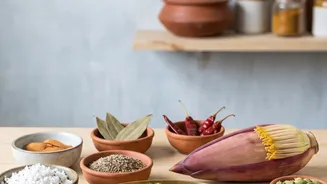
'vazhaipoo', is a large, purplish blossom that grows at the end of a banana bunch. While it requires some prep work, its tender, flaky texture is worth the effort. In South India, it's often made into a 'poriyal', a simple stir-fry. The florets are chopped and cooked with mustard seeds, lentils, onions, and fresh coconut, resulting in a subtly sweet and savoury dish with a satisfying bite. It’s a brilliant way to use a part of the banana plant that’s often discarded.
Patra (Colocasia Leaf Rolls)
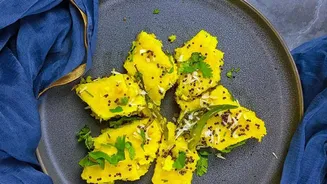
Colocasia leaves, or 'arbi ke patte', are large, heart-shaped greens popular in Western and Northern India. Because the leaves can cause irritation if not cooked properly, they are always prepared with care. For 'patra', the leaves are slathered with a thick, tangy paste of gram flour (besan), tamarind, jaggery, and spices. They are then rolled, steamed until tender, sliced into pinwheels, and often tempered or shallow-fried for a crispy finish. The result is a delightful snack that is sweet, sour, and spicy all at once.
Moringa Dal (Drumstick Leaf Lentils)
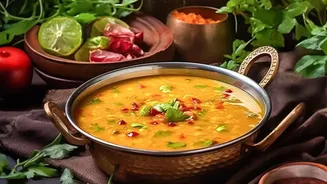
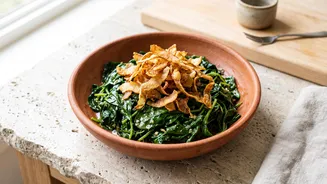
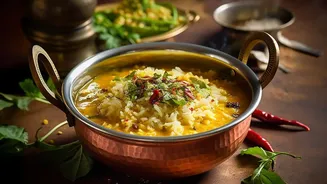
While drumsticks (the vegetable) are common, their leaves, known as moringa, are a nutritional powerhouse often overlooked in urban kitchens. These tiny leaves are packed with vitamins and have a unique, earthy flavour similar to spinach. One of the easiest ways to enjoy them is in a simple dal. The leaves are cooked along with lentils like toor or moong dal, then tempered with ghee, mustard seeds, cumin, garlic, and dried red chillies. This comforting dish transforms a regular dal into a flavourful and incredibly healthy meal.
Chakka Kuru Curry (Jackfruit Seed Curry)
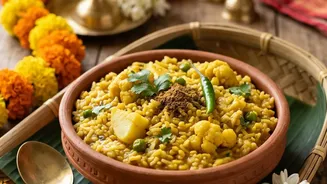
After enjoying sweet, ripe jackfruit, don't throw away the seeds! Known as 'chakka kuru' in Kerala or 'palakottai' in Tamil Nadu, these seeds are delicious when cooked. Once boiled and peeled, they have a texture somewhere between a potato and a chestnut, with a mild, nutty flavour. They are used across India in various dishes, from simple stir-fries to rich curries. A popular preparation is a coconut-based curry where the boiled seeds are simmered in a gravy spiced with turmeric, chillies, and curry leaves.
Nadru Yakhni (Lotus Stem in Yogurt Curry)
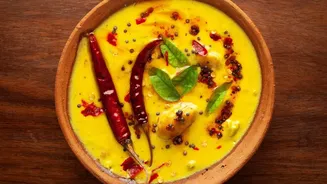
Lotus stem, or 'kamal kakdi', is prized for its beautiful lace-like pattern and crunchy texture. While it's used in stir-fries and pickles, the Kashmiri 'Nadru Yakhni' is a standout dish. In this recipe, tender lotus stem pieces are cooked in a fragrant, yogurt-based gravy. The 'yakhni' is subtly flavoured with whole spices like black cardamom and cinnamon, and ground fennel and ginger powder, without the addition of onion, garlic, or turmeric. It’s a creamy, aromatic, and truly unique curry.
Kantola Sabzi (Spiny Gourd Stir-Fry)
Available during the monsoon season, 'kantola', or spiny gourd, is a small, green vegetable covered in soft spines. Despite its intimidating appearance, it has a mild, slightly bitter taste and a tender texture when cooked. It’s a favourite in many regional cuisines, from Gujarat to Goa. A simple 'sabzi' involves sautéing the chopped gourd with basic spices like mustard seeds, turmeric, and chilli powder, sometimes with a hint of tamarind and jaggery to balance the flavours. It’s a quick, healthy, and delicious way to enjoy this seasonal vegetable.
Patholi (Turmeric Leaf Dumplings)
Fresh turmeric leaves are a seasonal monsoon delight, especially along India's west coast. Their most famous use is in making 'patholi', a sweet steamed dumpling. A smooth, thick rice paste is spread thinly onto a whole turmeric leaf. This is then filled with a sweet mixture of grated coconut, jaggery, and cardamom powder. The leaf is folded and steamed, infusing the rice dumpling with its incredible floral and earthy aroma. It is a fragrant, festive treat.
Vazhaithandu Poriyal (Banana Stem Stir-Fry)
Another forgotten part of the banana plant, the inner stem or 'vazhaithandu', is a treasure trove of texture and nutrition. Known for its high fibre content, the stem has a crisp, mild taste. After being carefully chopped and its fibres removed, it is often made into a South Indian 'poriyal'. The crunchy stem pieces are stir-fried with a simple tempering of mustard seeds, lentils, and curry leaves, and finished with a generous amount of grated coconut. It’s a light, healthy, and wonderfully crunchy side dish.