




A Doctor in the Stars
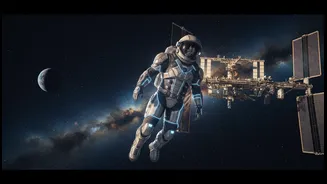
When Colonel Dr. Anil Menon, a US Space Force officer of Indian and Ukrainian heritage, launched to the International Space Station (ISS) in July 2026, he carried more than just the dreams of a nation. He brought a unique and critical skill set honed
over years as an emergency physician, a US Air Force flight surgeon, and a medical director at SpaceX. Born in Minneapolis, Minnesota, Menon’s journey to becoming a NASA astronaut is a story of diverse expertise. With degrees in neurobiology and mechanical engineering, he has treated wounded soldiers in Afghanistan, aided earthquake victims in Haiti and Nepal, and even provided medical care to climbers near Mount Everest. This extensive experience in extreme and remote medicine made him the ideal candidate to help solve one of space travel's biggest problems: the human body.
The Ultimate Engineering Challenge
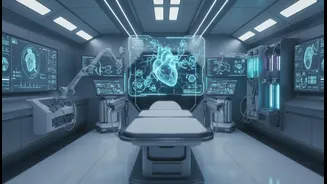
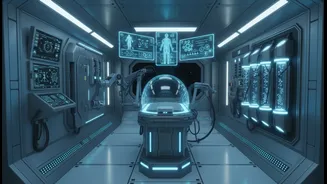
Designing a vehicle for a multi-year mission to Mars involves more than just propulsion and navigation. The spacecraft must also be a self-sufficient hospital, habitat, and laboratory. Long-duration spaceflight takes a significant physiological toll, from bone density loss and muscle atrophy to vision changes and immune system disruption. Menon’s career has been dedicated to this intersection of medicine and machine. Before his selection as an astronaut, he served as SpaceX's first flight surgeon, where he helped build the company's medical program and supported its historic first human launches, including Inspiration4, the first all-civilian mission to orbit. His work there, and previously as a NASA crew surgeon, directly involved developing the very systems and protocols needed to support human life on future missions to the Moon and Mars, including work on the Starship vehicle.
Research on the Orbital Frontier
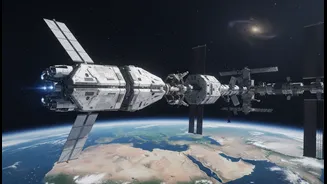
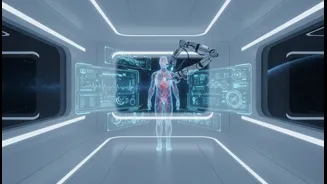
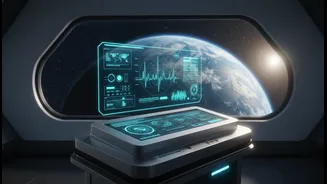
Now aboard the ISS for an eight-month mission as part of Expedition 74/75, Menon is no longer just designing the support systems—he is living the experiment. He serves as a flight engineer, a role he describes as being the crew’s hands on the vehicle, acting as test subject, lab tech, and operator for hundreds of experiments. His duties directly feed into deep-space vehicle design. For instance, he is conducting experiments to study how microgravity affects blood flow and composition. He is also helping test technology that could produce intravenous (IV) fluids from the station's drinking water—a critical capability for Mars missions where resupply is impossible. Another key area is testing augmented reality and AI-powered ultrasound systems, which could one day allow astronauts to perform complex medical diagnostics without real-time guidance from Earth.
From Human Data to Spacecraft Hardware
The data Menon and his fellow astronauts collect is foundational for NASA's Human Research Program (HRP). This program uses the ISS as a testbed to understand and mitigate the risks of deep space travel. Information gathered through programs like the 'Spaceflight Standard Measures'—which systematically collects a wide array of biological samples and performance data from astronauts—creates a comprehensive picture of how the human body adapts. This data directly informs engineering decisions for vehicles like the Orion spacecraft, which is designed for Artemis missions to the Moon and eventually Mars. For example, understanding how an astronaut's sensorimotor skills are affected by gravity shifts helps engineers design better landing controls and cockpit interfaces. Studying the psychological effects of isolation helps in designing crew quarters that promote well-being. In essence, every health datapoint is an engineering requirement for the next generation of spacecraft.