



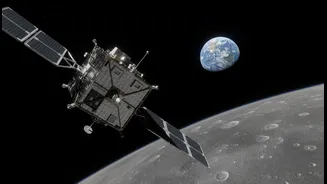


A Small Satellite on a Big Mission
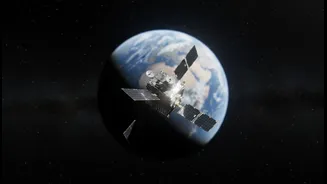
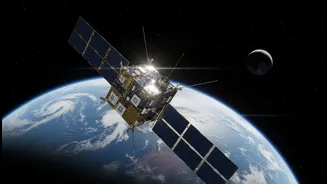
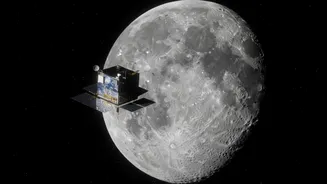
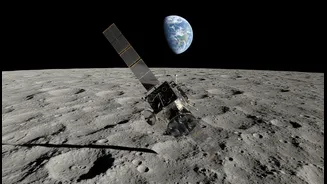
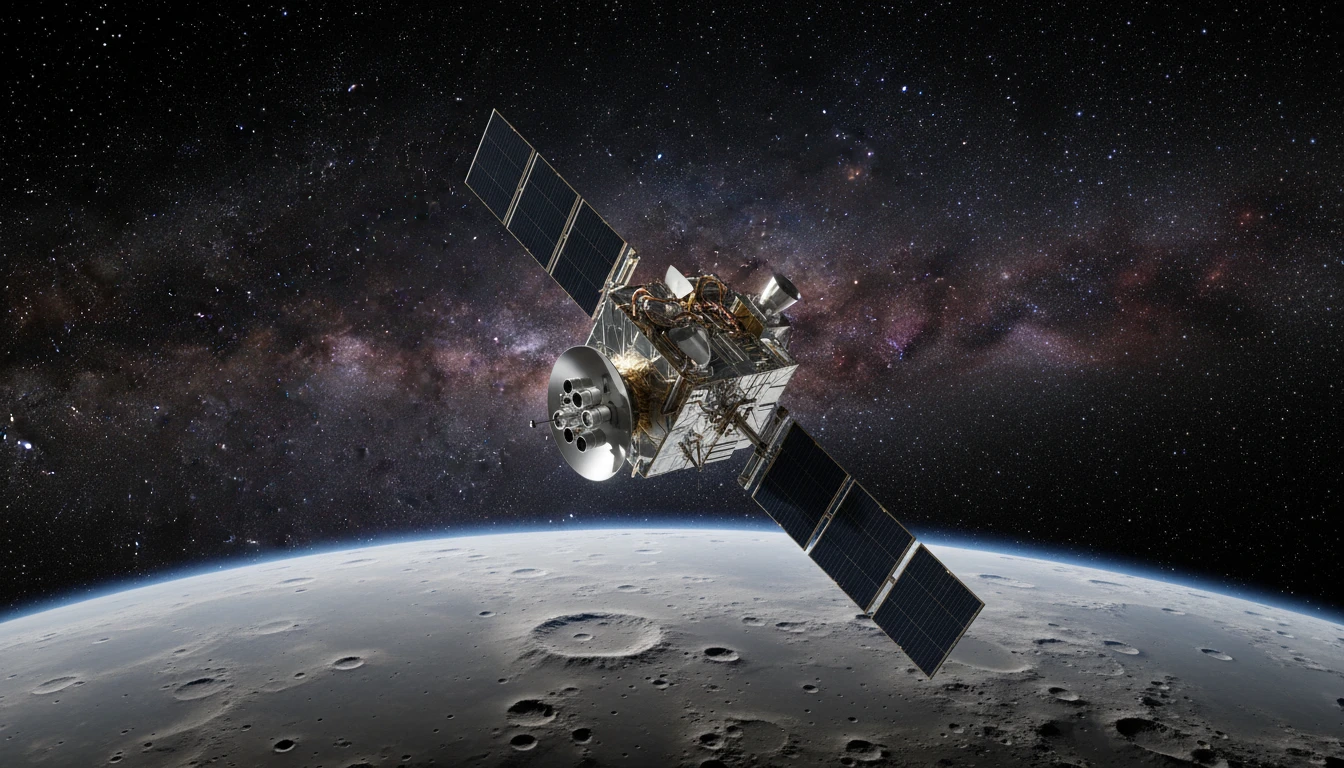
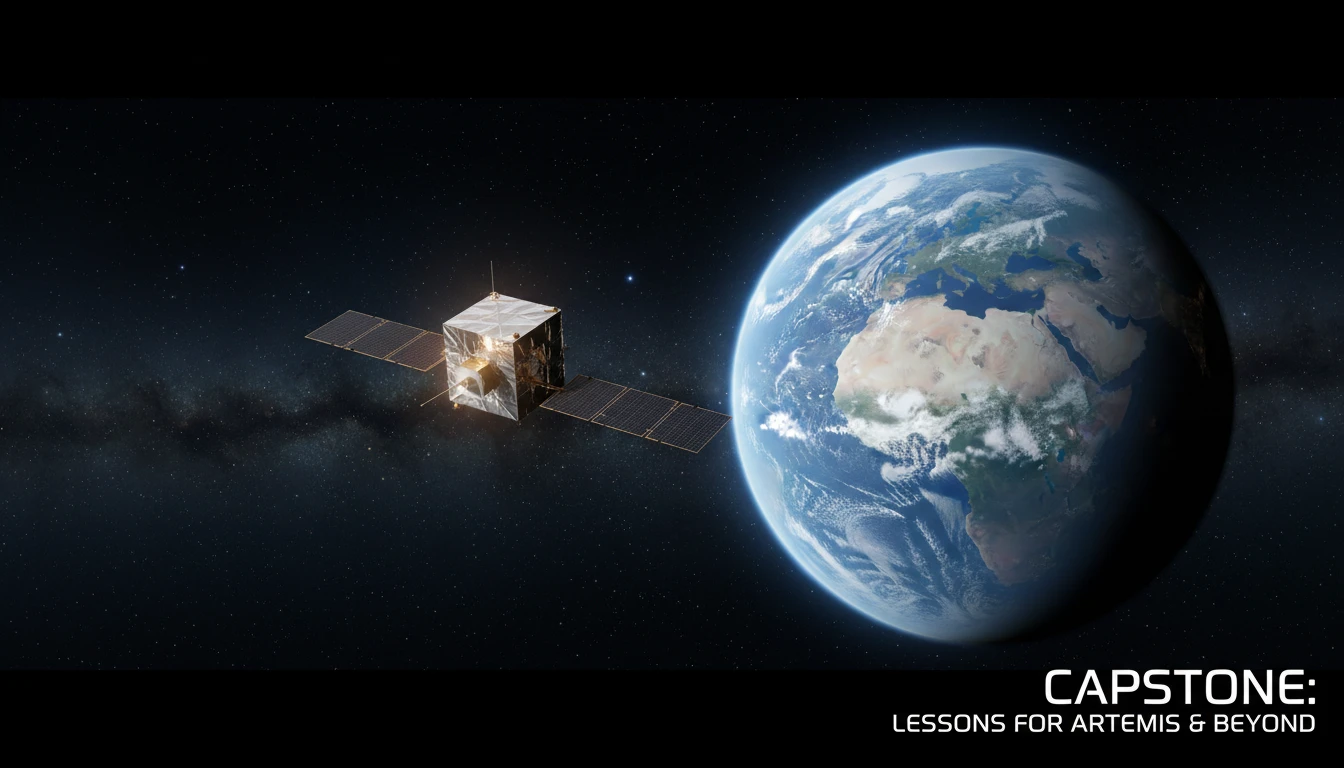
Launched in June 2022, the CAPSTONE mission was a bold and cost-effective pathfinder. Weighing just 55 pounds (25 kg), the CubeSat was designed to tackle enormous questions for NASA's lunar ambitions. Its full name is a mouthful—the Cislunar Autonomous
Positioning System Technology Operations and Navigation Experiment—but its purpose was clear: to reduce risk for the Artemis program. Managed by the private company Advanced Space, CAPSTONE represented a new, nimble way of doing business for NASA, using a small, relatively inexpensive mission to validate critical technologies before committing to multi-billion dollar human spaceflight hardware. The mission officially concluded its NASA-funded activities in June 2026 after achieving all its goals.
Charting a New Path: The NRHO
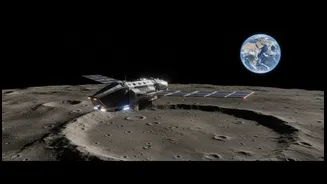
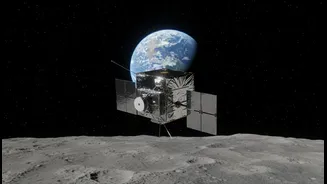
One of CAPSTONE's primary jobs was to be the first spacecraft to enter and operate in a unique and challenging lunar orbit called a Near-Rectilinear Halo Orbit (NRHO). This highly elliptical path is located at a precise balance point between the gravity of the Earth and the Moon. This stability means it requires very little fuel for a long-term mission to maintain its position, making it the ideal location for the future Gateway lunar space station. During its mission, CAPSTONE swooped to within 1,600 kilometers of one lunar pole before swinging out to 70,000 kilometers from the other. By successfully flying in this orbit for an extended period, CAPSTONE proved that the complex computer models were correct and that the NRHO is a stable and viable staging area for missions to the lunar surface.
A GPS for the Moon
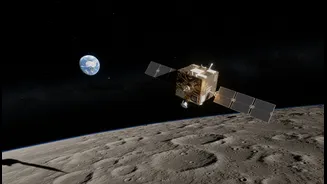
Beyond testing the orbit, CAPSTONE had another groundbreaking task: to test a new, autonomous navigation system. Future lunar missions will need to know their exact location without constantly relying on tracking signals from Earth. To solve this, CAPSTONE was equipped with the Cislunar Autonomous Positioning System (CAPS). This technology was designed to allow spacecraft to determine their position by communicating directly with other spacecraft. CAPSTONE successfully demonstrated this by performing crosslink experiments with NASA’s Lunar Reconnaissance Orbiter (LRO). By sending a signal to LRO and analyzing the return, CAPSTONE could calculate its own position in space, a critical step towards creating a 'GPS-like' service for the Moon.
Lessons from Adversity
The mission wasn't without its challenges, and these provided some of the most valuable lessons. Shortly after launch, the team briefly lost contact with the spacecraft. Later, a stuck valve on a thruster sent the satellite tumbling through space. The recovery effort, which took over a month, was a testament to the skill of the mission operators at Advanced Space. Successfully regaining control and getting the mission back on track demonstrated the resilience of both the hardware and the team. Furthermore, overcoming these anomalies provided crucial data on how to handle unexpected problems in deep space—experience that is invaluable for the far more complex and high-stakes crewed Artemis missions.
The Legacy for Artemis
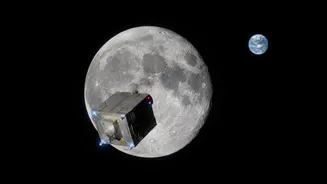
Every success and every problem solved by CAPSTONE directly benefits the Artemis program. By validating the stability of the NRHO, it gave NASA the confidence to place the multi-billion-dollar Gateway station there. The autonomous navigation technology tested by CAPS will be essential for the dozens of robotic and human missions planned, allowing them to operate more efficiently and safely. Even the fuel-saving ballistic lunar transfer trajectory CAPSTONE used to get to the Moon, a journey that took four months, proved that smaller, lower-cost missions can efficiently reach deep space. The mission demonstrated how a small, commercial-led project can pave the way for monumental exploration, confirming operational models and reducing risk for future astronauts.