



Saturn Shines Brightest
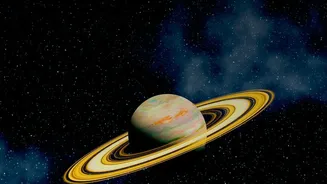
October kicks off with a brilliant planetary display. On October 4, Saturn will be at opposition, meaning Earth is positioned directly between the Sun and the ringed planet. This alignment makes Saturn appear at its largest and brightest for the year,
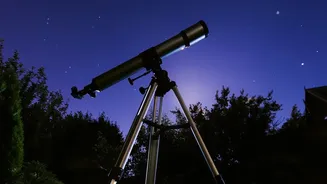
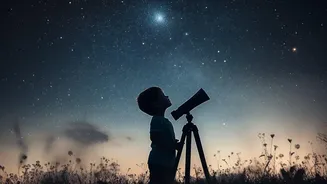
shining steadily in our night sky. Visible all night long, this is the perfect opportunity to spot it. While the planet itself is visible to the naked eye as a bright, yellowish point of light, a small telescope or even a good pair of binoculars will reveal its magnificent rings, making the first week of October a prime time for Saturn-gazing. Look towards the east after sunset to catch it rising.
The Draconid Meteor Shower
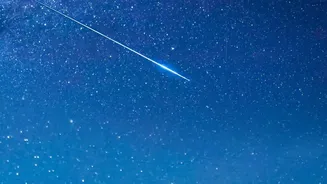
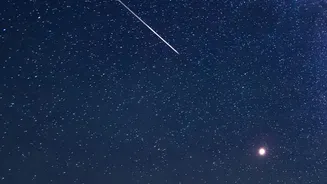
Get ready for the first of two meteor showers this month. The Draconid meteor shower is active between October 6 and 10, peaking on the night of October 8-9. Unlike many other showers that are best viewed in the pre-dawn hours, the Draconids are best seen in the early evening, just after nightfall. This is because their radiant point, the constellation Draco, is highest in the sky at that time. In 2026, viewing conditions are excellent as the peak coincides with a nearly moonless sky, making it easier to spot the meteors. While it's considered a minor shower, typically producing about 5 to 10 meteors per hour, the Draconids are known for occasional outbursts of much greater activity.
The Orionid Meteor Shower
The second and more prolific meteor shower of the month, the Orionids, will peak on the night of October 21-22. These meteors are famous for being fast and bright, as they are fragments left behind by the one and only Halley's Comet. Under ideal dark-sky conditions, you could see between 15 and 20 meteors per hour. The radiant of the shower is the constellation Orion the Hunter, which rises in the east after midnight. This year, a bright waxing gibbous Moon will be present during the shower's peak, potentially washing out some of the fainter meteors. For the best views, head out in the pre-dawn hours of October 22, after the Moon has set.
Close Encounter: Moon and Mars
Mark your calendars for a beautiful celestial pairing in the early morning sky. On October 5, the crescent Moon will have a close approach with Mars. Look towards the eastern horizon before sunrise to see the Red Planet shining brightly near our natural satellite. For those with binoculars, this event offers a great photo opportunity and a chance to see Mars alongside the Moon. A few days later, on October 11, Mars will appear to pass through the Beehive Cluster, a famous open star cluster, providing another wonderful sight for binocular users.
The Full Hunter's Moon
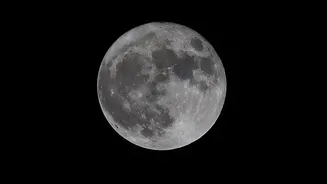
October's grand finale is the full Hunter's Moon, which will reach its peak illumination on October 26. This full moon follows the Harvest Moon and is traditionally named because it provided bright moonlight for hunters preparing for the winter. In India, the Moon will become full in the morning, which means the best time to watch it will be the evening before, on October 25, when it rises in the east around sunset. Watching the large, orange-tinted orb of the full moon emerge above the horizon is a breathtaking sight that requires no special equipment.