




The Old Yardstick: A Focus on Size
For decades, the primary way we measured a forest's value and health was through its physical stature. Metrics like tree height and diameter at breast height (DBH) are relatively easy to measure and serve as a good proxy for a forest's total biomass and carbon
storage. This was particularly important in the early days of climate science, when quantifying the carbon sink capacity of global forests was a top priority. A forest full of large trees was seen as a successful, mature ecosystem, doing its job of pulling carbon from the atmosphere. This approach, while useful, is like judging a company's health based solely on its revenue, ignoring its culture, innovation, and ability to adapt. It gives you one number but misses the full picture of resilience and long-term stability.
The New Paradigm: Understanding Functional Traits
Enter the concept of 'functional traits'. Think of these not as what a tree is, but what it does. These are measurable characteristics that influence a tree's survival, growth, and reproduction. They are the tools in a species' toolkit for dealing with its environment. Instead of just measuring height, scientists are now looking at a suite of traits like wood density, specific leaf area (the area of a leaf relative to its dry mass), seed size, and rooting depth. This approach, known as functional ecology, shifts the focus from static properties to dynamic strategies. It reveals how different species are adapted to acquire resources, compete with others, and respond to disturbances like drought, fire, or pests.
What Traits Tell Us That Size Can't
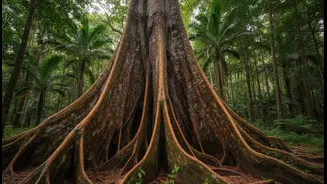
A tree's functional traits tell a detailed story. For instance, wood density is a powerful indicator of a tree's life strategy. Species with low-density wood often grow fast, capturing light quickly in disturbed areas, but may be more vulnerable to storms or drought. Conversely, trees with dense wood grow slowly, are more resilient to physical damage and water stress, and can thrive long-term in stable conditions. Similarly, specific leaf area (SLA) provides insight into a tree's resource strategy. A high SLA suggests a 'live fast, die young' approach, maximizing photosynthesis in high-light, resource-rich environments. A low SLA indicates a more conservative, resource-hoarding strategy, typical of plants in tougher, low-nutrient, or dry environments. By analysing these and other traits, ecologists can predict how a forest will function.
Diversity of Traits Equals Resilience
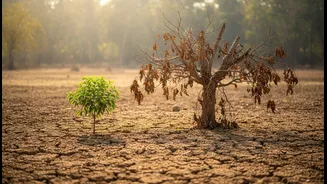
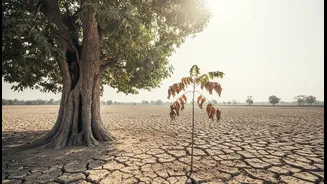
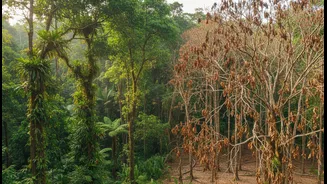
The real power of this approach comes when we look at the diversity of traits within an entire forest. A forest containing only large, fast-growing trees might look impressive and store a lot of carbon, but it could be catastrophically vulnerable to a single threat, like a specific pest or a prolonged drought. In contrast, a forest with a high diversity of functional traits is far more resilient. If a drought hits, the deep-rooted, dense-wooded trees will survive. If a fire sweeps through, species with thick bark and the ability to resprout will recover. This functional redundancy, where multiple species perform similar roles, acts as an ecological insurance policy, ensuring the forest can withstand and recover from the increasing pressures of climate change.
Implications for India's Forests
This shift in perspective is critically important for managing India's incredibly diverse forests, from the Himalayan pine forests to the tropical rainforests of the Western Ghats. A recent study in the Western Himalayas used machine learning to show that tree size, regeneration rate, and soil erosion were key drivers of forest health, highlighting the need to look beyond simple metrics. For example, managing the Himalayan forests to prevent landslides requires promoting species with traits that contribute to soil stability, not just those that grow tall. In the biodiversity hotspots of the Western Ghats, conservation efforts that foster a wide range of functional traits will be more effective at protecting these ecosystems from variable monsoon patterns and rising temperatures. By understanding the 'jobs' of different tree species, forest managers can make more informed decisions about conservation, restoration, and sustainable use, ensuring our forests are not just big, but strong and adaptable for generations to come.