





More Than Just Decoration
Before we dive into our two plant heroes, let's talk about why your desk needs a green companion in the first place. Studies have shown that adding plants to a workspace can have a tangible impact on your well-being and performance. Research suggests
that the presence of indoor plants can reduce stress and anxiety, boost productivity by as much as 15%, and enhance concentration. A bit of greenery can turn a sterile cubicle or home office corner into a more calming, welcoming, and creative environment. They provide a 'micro-break' for your eyes, a natural element to ground you during a hectic day, and can even help absorb some background noise. In short, a desk plant isn't just decor; it's a silent, leafy partner in your productivity.
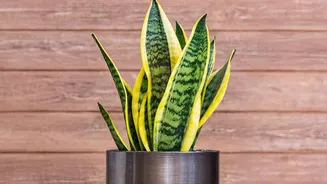
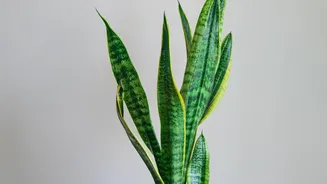
The Unkillable Icon: Snake Plant
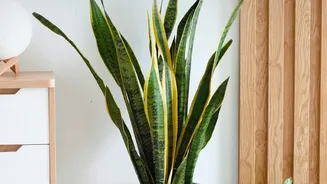
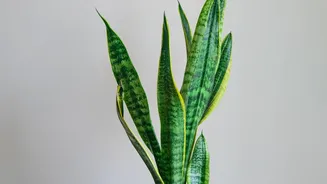
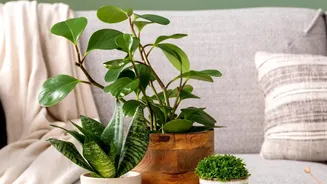
If you're convinced you have a 'black thumb', the Snake Plant (Dracaena trifasciata, formerly Sansevieria) is here to prove you wrong. Nicknamed 'mother-in-law's tongue' for its sharp, upright leaves, this plant is the definition of resilient. It thrives on neglect. Snake Plants are succulents that store water in their leaves, meaning they prefer their soil to dry out completely between waterings. For a desk plant, this could mean watering as infrequently as every 2-4 weeks, or even less in the winter. They are also famously tolerant of low light, although they grow best in bright, indirect sunlight. Their architectural, vertical shape makes them perfect for small desks where surface area is at a premium. They add a modern, clean look without getting in your way.
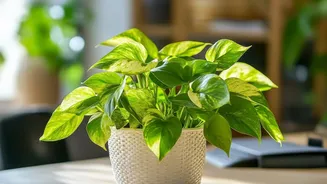
The Cascading Classic: Pothos
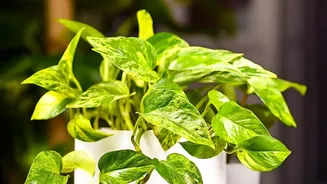
If you prefer a softer, more traditional plant look, the Pothos (Epipremnum aureum) is your perfect match. Also known as Devil's Ivy, this plant features heart-shaped leaves on trailing vines that can be left to cascade elegantly off the side of your desk or a shelf. Pothos is incredibly easy to care for and is great for beginners. It's more communicative than the stoic Snake Plant; its leaves will visibly droop when it's thirsty, taking the guesswork out of watering. It is adaptable to various light conditions but prefers bright, indirect light to maintain its vibrant leaf variegation. Like the Snake Plant, it’s best to let the soil dry out between waterings to avoid root rot. Its fast-growing nature provides a satisfying sense of progress, quickly making your workspace feel lusher and more alive.
A Note on Air Purification
Both Snake Plants and Pothos are famous for their air-purifying qualities, a reputation that stems largely from a 1989 NASA study. The study showed these plants could remove toxins like formaldehyde and benzene from the air within a sealed chamber. While this is scientifically accurate, it's important to have realistic expectations. In a typical home or office with normal ventilation, you would need a very large number of plants to significantly impact air quality. So, while your desk plant is helping in its own small way, its primary benefits are aesthetic and psychological. Think of any air cleaning as a minor bonus, not the main feature.
Which One Is for You?
So, how do you choose? It comes down to your space and personality. Choose the Snake Plant if: - You are a true beginner or notoriously forgetful with watering. - You have limited desk space and prefer a vertical, architectural look. - You have a low-light corner that needs a touch of green. Choose the Pothos if: - You enjoy a lush, trailing, or 'jungle' aesthetic. - You want clear visual cues for when to water. - You have space for it to cascade down a bookshelf or the side of your desk. It's also worth noting that both plants are mildly toxic to cats and dogs if ingested, causing gastrointestinal upset, so they are best kept out of reach of curious pets.