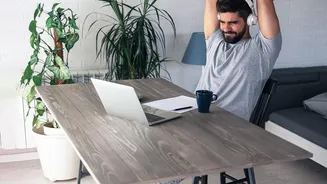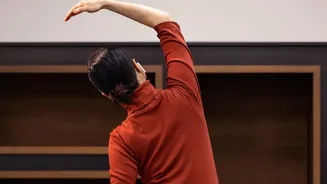






That stiff feeling in your neck, back, and hips after a long day at the desk is more than just an annoyance. Prolonged sitting can silently damage your joints by reducing lubrication and weakening supporting muscles. Here's the good news.
Why Movement Matters
Our joints are
designed to move. Movement circulates synovial fluid, which acts as the body's natural lubricant, reducing friction and keeping joints flexible. When you sit for hours, this process slows down, leading to stiffness and discomfort. Over time, this inactivity can weaken the muscles that support your joints, placing extra stress on your knees, hips, and spine. The key isn't to run a marathon on your lunch break, but to integrate small, consistent movements throughout your day. Breaking up long periods of sitting every 30 to 60 minutes can make a significant difference.
Mobilise Your Neck and Shoulders
Hunching over a keyboard often leads to a forward head posture, straining your neck and upper back. To counteract this, practice simple neck stretches. Gently tilt your right ear toward your right shoulder, hold for 15-30 seconds, and repeat on the left side. Follow this with shoulder rolls, lifting your shoulders up towards your ears, rolling them back, and then down. Squeezing your shoulder blades together for a few seconds also helps activate muscles that are often weakened by poor posture.
Activate Your Spine
A stiff spine can contribute to back pain and reduced mobility. Seated spinal twists are an excellent way to keep it mobile. Sit upright with your feet flat on the floor and gently rotate your upper body to one side, using your chair for a light assist. Hold for 15 seconds before twisting to the other side. You can also try a seated cat-cow stretch. Place your hands on your knees, and as you inhale, arch your back and push your chest forward. As you exhale, round your spine and drop your chin to your chest.
Care for Your Wrists and Fingers
Constant typing and mouse use can lead to repetitive strain injuries. To relieve tension, extend one arm in front of you with your palm facing up. Use your other hand to gently pull your fingers down toward the floor, feeling a stretch in your forearm. Hold for 15–20 seconds and then repeat with your palm facing down. Afterwards, make a fist and then spread your fingers wide, repeating this several times to improve circulation and range of motion.
Awaken Your Hips and Legs
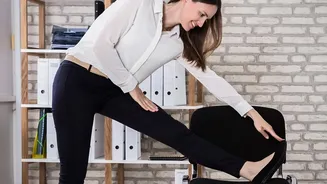
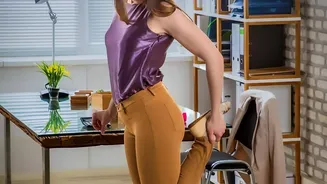
Sitting for long periods keeps your hips in a fixed position, which can lead to tightness and discomfort. While seated, you can perform hip flexions by raising one foot a few inches off the floor with your knee bent at a 90–degree angle and holding for 10 seconds. Another effective stretch is the seated figure–four. Place one ankle on your opposite knee and gently press the bent knee toward the floor to stretch your glutes and hip. Under–the–desk leg extensions and ankle rotations can also help promote blood flow.
Embrace Micro–Breaks
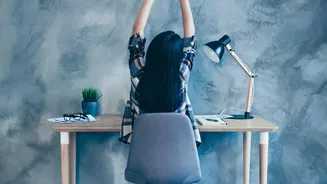
The most effective strategy is to simply get up and move. Frequency matters more than any single exercise. Set a reminder to stand, stretch, or walk for a few minutes at least once an hour. Instead of emailing a colleague, walk over to their desk. Take the stairs instead of the lift. Use the time waiting for a document to print or water to boil to do a few standing calf raises or back extensions. These small bouts of activity break the cycle of sedentarism and contribute significantly to your overall joint health.