




The Great National Unifier
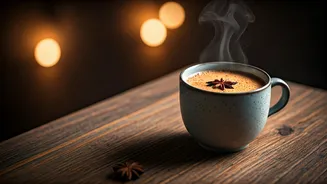
Before the sun fully rises, the ritual begins. In millions of homes across the subcontinent, the familiar clatter of a saucepan, the gentle crushing of ginger and cardamom, and the rich aroma of boiling tea leaves signal the start of a new day. Masala
chai is more than a morning beverage; it's a national constant. It transcends class, caste, and religion. The millionaire in their high-rise sips it from bone china, while the daily wage labourer cradles a glass of 'cutting chai' at a street corner. It is the default offering to any guest, the silent truce in a family argument, and the fuel for late-night study sessions. In a nation of staggering diversity, the shared love for a cup of spiced, milky tea is one of the most powerful, unifying threads.
A History of Delicious Rebellion
While tea cultivation was aggressively promoted by the British in the 19th century to break the Chinese monopoly, the drink they popularised was black tea, often taken with a spot of milk and sugar. The Indian transformation of this colonial import into masala chai was an act of quiet, flavourful rebellion. Indians took the strong, inexpensive CTC (Crush, Tear, Curl) tea and made it their own. They infused it with a symphony of local spices—cardamom, cloves, ginger, cinnamon, black pepper—that were already staples in Ayurvedic traditions and regional cuisines. This was not just about adding flavour; it was about domesticating a foreign product, infusing it with Indian identity and wellness wisdom. Every family developed its own secret blend, a legacy passed down through generations, making each cup a unique expression of home.
The Engine of Indian Social Life
Walk down any street in India, and you are never far from a chai-wallah. These humble stalls are the epicentres of community life. Here, office gossip is exchanged, political manifestos are debated, business deals are struck, and friendships are forged. The phrase 'Chalo, chai peete hain' ('Come on, let's have tea') is an invitation to connect, to pause the relentless pace of life and share a moment. The office 'chai break' is a non-negotiable institution, a vital pressure-release valve in the corporate machine. Unlike a formal coffee meeting, a chai break is informal, egalitarian, and accessible to everyone. It is the social lubricant that keeps the complex machinery of Indian society running smoothly, one small cup at a time.
An Enduring Symbol of Comfort
In the face of global café culture, with its Frappuccinos, macchiatos, and matcha lattes, chai's dominance seems almost illogical. Yet, it thrives. A fancy coffee might be a treat or a status symbol, but chai is comfort. It's the warm hug on a cold monsoon day, the first thing you crave when you have a sniffle, and the familiar taste of home when you're far away. The spices are not just for flavour; they are deeply entwined with a sense of well-being. Ginger soothes a sore throat, cardamom aids digestion, and the warmth of the brew itself feels restorative. While new-age wellness trends come and go, chai has been the original, unassuming wellness drink for over a century. It doesn't need slick marketing because its value is felt, not just seen.