




Why Your Plant's Roots Need to Breathe
It might sound strange, but plant roots need oxygen to survive just as much as we do. While leaves perform photosynthesis, turning sunlight and carbon dioxide into energy, the roots are busy underground performing respiration. This process uses oxygen to break
down sugars, releasing the energy needed for the roots to grow and absorb water and nutrients. When a potting mix becomes dense and compacted, it squeezes out the tiny air pockets that hold this vital oxygen. Without enough air, roots essentially begin to suffocate. This condition, known as anoxia or aeration deficit, slows growth, stunts the plant, and can eventually lead to root death and the loss of the entire plant.
The Dark Side of 'Overwatering'
Many common plant problems, like yellowing leaves or wilting, are often blamed on "overwatering." However, the real culprit is often poor aeration. When a mix is waterlogged, it means all the pore spaces in the soil are filled with water, leaving no room for air. This creates the perfect storm for root rot, as weakened roots become susceptible to water-borne pathogens that thrive in low-oxygen environments. You can spot the signs of compacted, poorly aerated soil in a few ways: water pools on the surface instead of soaking in, the soil pulls away from the sides of the pot, or water runs straight through the gap without moistening the root ball. In these cases, the problem isn't just too much water, but not enough air.
Meet the Aeration All-Stars
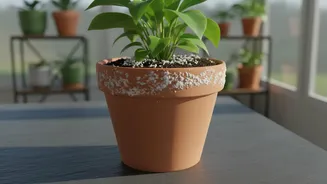
To create a light, fluffy structure with plenty of air pockets, a good potting mix relies on coarse ingredients. These are the components that prevent the mix from turning into a dense brick. Perlite, the little white specks you see in most commercial mixes, is a super-heated volcanic glass that is lightweight and excellent for creating air tunnels. Pumice, another volcanic rock, serves a similar purpose but is heavier, making it great for stabilizing top-heavy plants. Other valuable additions include pine or orchid bark, which provide larger air gaps, and coarse sand, which improves drainage. These materials resist compaction and ensure that even after watering, there's still plenty of space for roots to breathe.
Balancing Air with Moisture Retention
Of course, a mix that's all air would dry out in an instant. The art of a great potting mix is balancing aeration with moisture retention. This is where ingredients like peat moss or its more sustainable alternative, coconut coir, come in. Both have a phenomenal capacity to absorb and hold water, acting like a sponge that releases moisture to the roots as needed. Vermiculite is another common additive that holds water well. A well-balanced mix will contain both aerating ingredients (like perlite or bark) and moisture-retentive ones (like coir or peat). The ideal ratio depends on the plant; succulents and cacti need a grittier, faster-draining mix with more aeration, while ferns prefer a mix that holds more moisture.
Choosing a Mix or Making Your Own
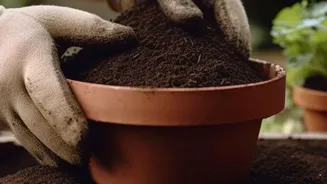
When buying a bagged potting mix, look beyond the marketing and read the ingredients list. A quality mix should clearly state that it contains components for both aeration and moisture, such as perlite, pine bark, and peat moss or coir. For those who want more control, creating your own mix is surprisingly simple. A great all-purpose recipe for many houseplants is a blend of one part moisture-retentive base (like coco coir), one part aeration (like perlite or pumice), and one part organic matter (like compost or worm castings for nutrients). For example, you could mix two parts coir, one part perlite, and one part compost. This allows you to customize the texture and properties perfectly for your specific plants and their needs.