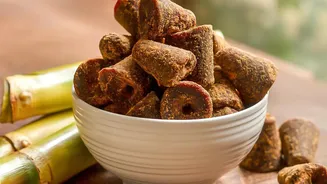

What Exactly Is Palm Jaggery?
Palm jaggery is an unrefined natural sweetener made from the sap of palm trees, most commonly the palmyra, date, or toddy palm. The process is beautifully simple and traditional: skilled tappers collect the sweet, milky sap, known as 'neera', which is then
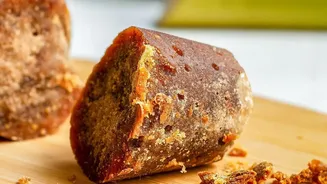
boiled in large vats over a fire. This slow boiling prevents fermentation and concentrates the liquid until it thickens into a rich, dark paste that is poured into moulds—often coconut shells—to solidify. Unlike refined sugar, this method involves no chemicals, preserving the natural mineral content of the sap.
The 'Healthy' Halo: Fact vs. Fiction
The primary driver behind palm jaggery's popularity is its health perception. Unlike white sugar, which provides 'empty calories', palm jaggery contains trace minerals like iron, magnesium, potassium, and calcium. It's particularly noted for its iron content. Some studies also suggest it has a lower glycemic index (GI) than white sugar—around 35–45 compared to sugar's 60-70—meaning it may cause a slower, more gradual rise in blood sugar. However, it's crucial to be realistic. Palm jaggery is still a form of sugar and has a similar calorie count to table sugar. While it is more nutritious, it is not a low-calorie health food and should be consumed in moderation, especially by those managing blood sugar levels.
A Unique Flavour for Baking
Beyond the health benefits, what truly excites bakers is the flavour. White sugar is neutral; its only job is to provide sweetness. Palm jaggery, however, brings a complex, layered taste profile. It has deep, rich notes of caramel, molasses, and a distinct smoky undertone that can elevate baked goods from one-dimensional sweetness to something far more interesting. This unique flavour pairs exceptionally well with whole grains like wheat and ragi, spices like ginger and cardamom, and in desserts featuring nuts, oats, and chocolate. It lends a beautiful, dark, rustic colour to cakes and cookies.
A Practical Guide to Baking with Palm Jaggery
Thinking of making the switch? Here are a few practical tips. For most recipes, you can substitute palm jaggery for white sugar in a 1:1 ratio. However, since it's often sold in solid blocks, it needs some preparation. It's best to grate or chop it finely before use. A more reliable method is to gently melt the jaggery with a small amount of water to create a syrup, strain it to remove any potential impurities, and then allow it to cool before adding it to your batter. Be mindful that its strong flavour may not be suitable for very delicate desserts. It shines brightest in dense loaf cakes, spiced cookies, brownies, and traditional Indian sweets like payasam or halwa. Also, due to its composition, it can sometimes make baked goods slightly denser or cause them to brown faster, so keep an eye on your oven.