




A New Look at the Cigar Galaxy
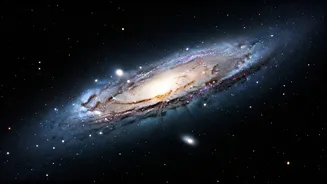
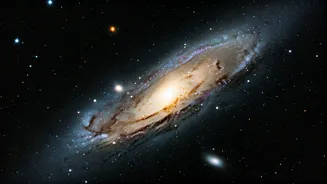
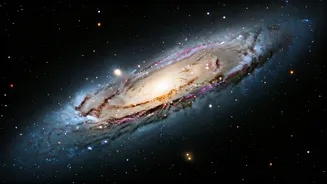
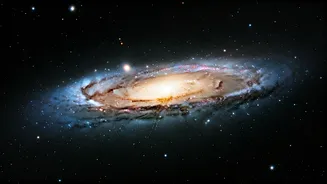
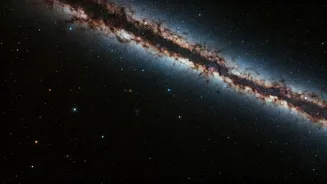
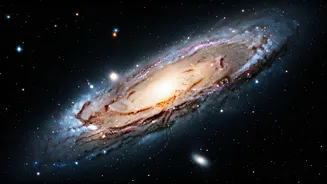
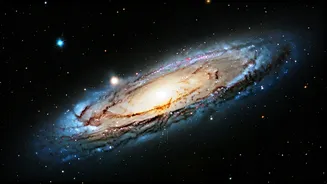
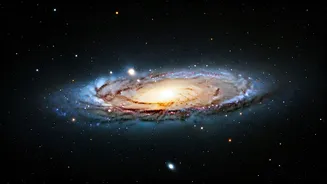
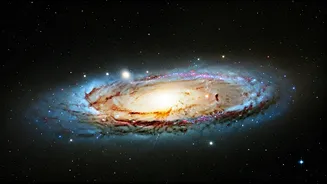
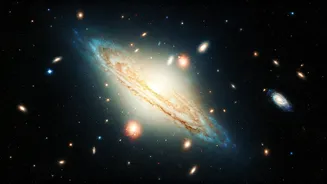
NASA recently unveiled an astonishingly detailed image of the Messier 82 galaxy, famously known as the Cigar Galaxy. Located 12 million light-years away, this galaxy is a hotbed of intense star formation, a so-called "starburst" galaxy. While other telescopes,
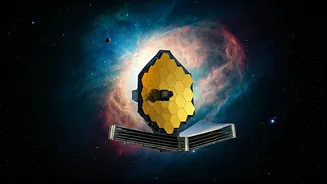
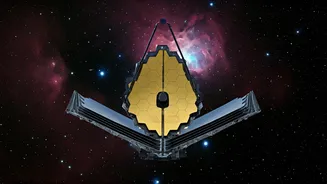
including Hubble, have observed it before, their views were limited by vast clouds of cosmic dust. But now, using its powerful Near-Infrared Camera (NIRCam), the James Webb Space Telescope (JWST) has pierced through that dusty veil. The result is the clearest view yet of the galaxy's core, revealing approximately 16.5 million individual stars that were previously hidden. This unprecedented clarity provides a fossil record of the galaxy's history, helping scientists understand the triggers behind its frantic pace of creating new stars.
The Superpower of Infrared Vision
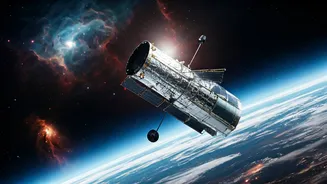
So, how does Webb see what other telescopes can't? The secret lies in its ability to detect infrared light. Visible light, the kind our eyes see, is easily scattered or absorbed by cosmic dust, which is plentiful in places where stars are born. This is why images from telescopes like Hubble often show dark, opaque clouds obscuring the action within. Infrared light, however, has a longer wavelength that allows it to slip past these tiny dust particles. This gives Webb a kind of X-ray vision for the cosmos, enabling it to peer inside stellar nurseries and dusty galaxies to witness processes that are otherwise invisible. JWST is designed specifically for near- and mid-infrared astronomy, making it the premier observatory for studying the hidden universe.
Decoding a Starburst
The new image of Messier 82 is more than just a pretty picture; it's a treasure trove of scientific data. The galaxy is forming stars at a rate ten times faster than our own Milky Way. This intense activity is believed to have been triggered by a past gravitational interaction with a neighboring galaxy. By resolving millions of individual stars, astronomers can now analyze the galaxy's structure in stunning detail. They can trace the history of star formation and see how the energy from massive young stars creates galactic-scale “superwinds” that blow gas and dust out of the galaxy. This incredible, short-lived phase of star formation will help scientists answer fundamental questions about how galaxies evolve. The detail is so profound that one scientist described it as a "whole different world" from what was previously possible.
Beyond the Cigar Galaxy
While the Messier 82 image is a powerful example, it's just one demonstration of Webb's infrared capabilities. The same technology allows the telescope to achieve its other primary goals: looking back in time to see the universe's first galaxies and studying the atmospheres of distant exoplanets. As the universe expands, light from the most distant objects is stretched, or "redshifted," into infrared wavelengths. This means only a telescope like Webb can see the faint glow of the first stars to ever ignite. Similarly, by analyzing the infrared light that passes through the atmosphere of a planet orbiting another star, Webb can detect the chemical fingerprints of gases like water and methane, key ingredients for life as we know it.